Get Full Government Meeting Transcripts, Videos, & Alerts Forever!
Get email alerts on the Hr Budget topic
No spam. Unsubscribe anytime.
Bonner County HR workshop limits travel, moves Safety Plus costs into HR budget and flags drug-testing review
Summary
At a Bonner County HR budget workshop, staff and commissioners discussed limiting travel to the Munis conference, clarifying who pays for professional memberships, allocating copier costs across departments, adding a Safety Plus line to HR’s budget, and reviewing the county’s approach to pre-employment drug testing and background checks.
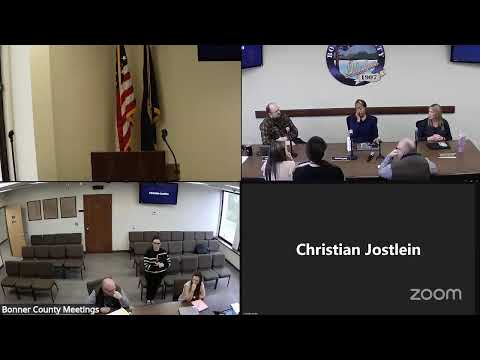
Bonner County held an HR budget workshop beginning at 10:30 a.m. to review proposed line items for training, travel and software subscriptions; the meeting adjourned at 11:17 a.m.
County officials and HR staff prioritized limiting travel to expensive conferences and tying attendance to clear training outcomes, debated whether the county should pay for employees’ personal professional development, agreed to add Safety Plus as a budget line for onboarding and training, and flagged a separate policy review of pre-employment drug testing and use of background-check results.
The discussion opened with a proposed travel allowance for two HR staff members to attend the Munis users conference (the county noted the event is expected to be in Las Vegas next year). HR staff said the request included airfare, hotel and per diem for two people; workshop speakers urged the county to limit the number of attendees, require returning employees to train colleagues and to evaluate course offerings before approving travel. The HR presenter said the county should “confirm we need to and doing our work to see these are courses we'd like to take,” and argued for training that produces internal training capacity rather than sending multiple staff to the same sessions.
Commissioner Legg called for remote participation options at outside conferences. “I have asked them, please do a Zoom link so that those of us out in the middle of nowhere can go for free or just pay the registration costs without the mileage of hotel,” Commissioner Legg said, urging the county to push partner organizations for virtual options to reduce travel costs.
On subscriptions and memberships, HR staff described the county’s existing use of an online learning platform (referred to in the meeting as “Prior Plus”) and said the county has sometimes covered individual memberships that primarily advance an employee’s personal career rather than maintain a required credential. The HR presenter told the group the county should fund continuing education that is “germane to the role that you're in” but not necessarily training that prepares an employee for a different position, and suggested team- or organization-level licenses be used to let trained staff teach co-workers.
Speakers reviewed several specific line items: a $50 membership estimate for one user of a training platform; a $250 figure for an annual task renewal (described as covering HIPAA-related updates); a proposed $6,000 line to hold steady for drug-testing costs pending policy review; a proposed $3,500 placeholder for background checks noted to vary with turnover; a $500 placeholder for cell phones; and a reduced Canon capital lease estimate of $3,539. HR and other departments also proposed keeping $5,000 for outside professional services split between Milliman (Northwest benchmarking) and ACA reporting support (the meeting referenced an outside vendor described in the transcript as "10 99 fire").
Workshop participants also agreed on a practical allocation for shared copier costs after an IT usage report: HR would be charged 70 percent of meter/contract costs, the county’s risk function 20 percent and the weeds (parks/roads) budget 10 percent. Christian (staff member) requested a clear GL line to track the lease or supplies split rather than mixing lease and office-supply lines.
The group discussed moving Safety Plus — an online platform used for onboarding and for risk/claims management — into HR’s budget as a distinct line item. Christian (staff member) described his operational use of the platform for claims reporting and said the county is “moving away from Google potentially” for claims work; he told the group Safety Plus is used for claims management in risk as well as for HR training. Participants agreed to add an internal-training subline under education or an explicit Safety Plus line so the county can track costs and splits across departments.
On drug testing and background checks, HR raised inconsistencies in how positive findings have been handled across departments. The HR presenter said some departments that require testing (for example Justice Services and road-related safety-sensitive roles) maintain stricter standards, while across other departments the county has been inconsistent in denying or accepting candidates with positive results. The HR presenter asked the board to review whether universal pre-employment testing remains appropriate given cross-state variations in detectability and enforcement. For budget purposes, workshop participants agreed to “leave what's in the budget right now until we make a decision to change the policy.”
The meeting closed with several administrative follow-ups: HR will identify an appropriate GL line for the copier lease and supplies split; staff will add a Safety Plus/internal-education line and estimate its dollar amount; the board asked HR and risk to confer on how much of Christian’s risk-related work (and any associated personnel costs) should be budgeted to HR; and the county will schedule a separate policy review of drug-testing and background-check procedures outside the immediate budget decision.
Next steps recorded at the workshop included keeping certain line-item dollar amounts unchanged until the separate policy review is completed, and coordinating with Munis and other vendors to determine whether in-house options or vendor-offered reporting could reduce outside-contract costs.