Get Full Government Meeting Transcripts, Videos, & Alerts Forever!
Get email alerts on the Public Safety Ems topic
No spam. Unsubscribe anytime.
Miami County EMS seeks restored ambulance capacity, plans Hillsdale station and equipment upgrades
Summary
EMS leaders told commissioners they plan to use ARPA and encumbered funds to remount an ambulance, pursue a seventh unit, staff a Hillsdale station and replace aging ventilators and monitors; call volume and so‑called ‘0‑status’ events are rising.
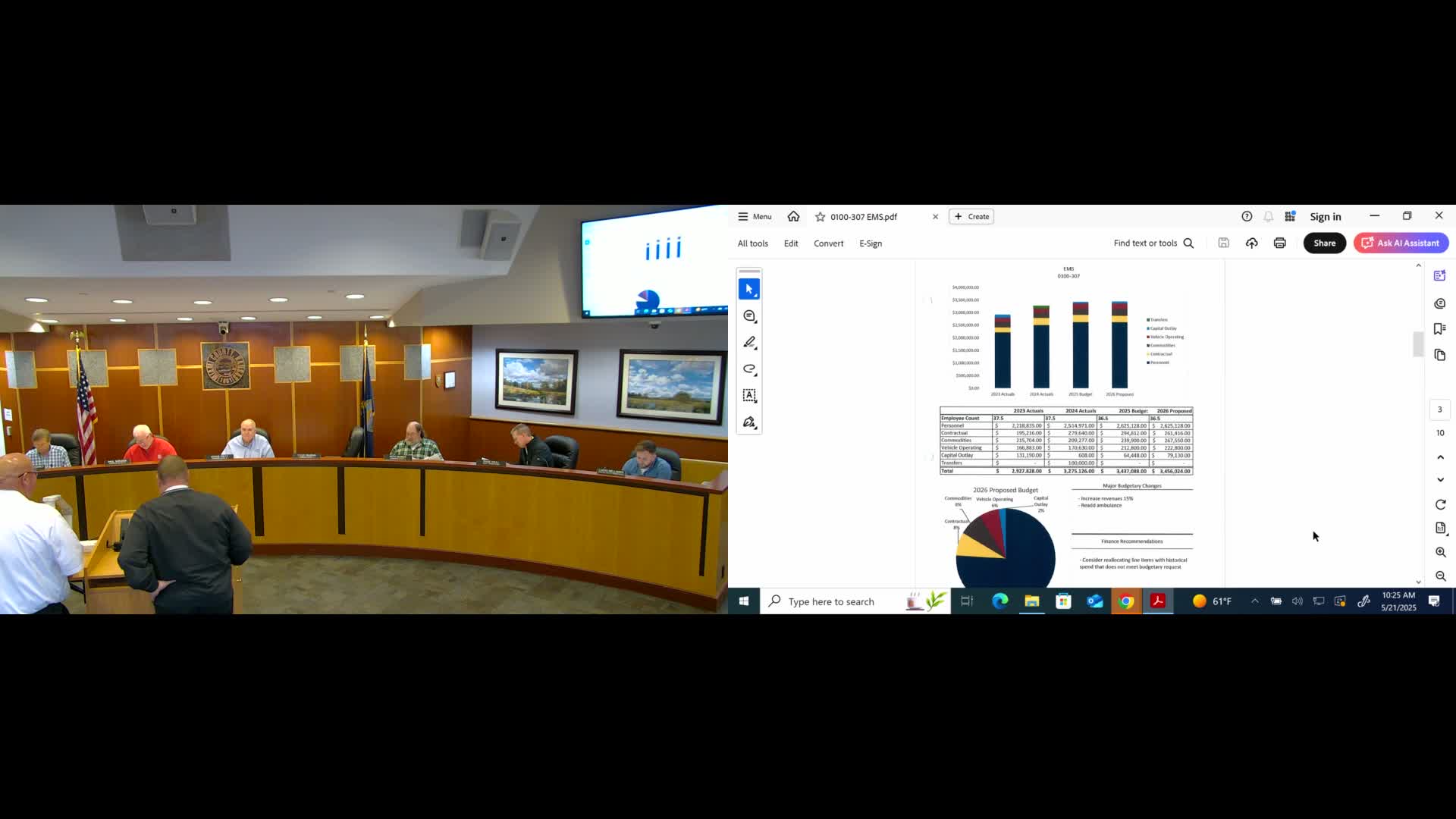
Miami County EMS officials presented their 2026 budget request at a county budget hearing, outlining vehicle remount plans, equipment replacement timing and a new west‑side station intended to improve coverage.
The summary: EMS leaders said they expect to restore a seventh ambulance using ARPA funds and encumbered money, project roughly $1.7 million in fee revenue for 2026 if current trends continue, and asked the county to approve capital plans for remounts and phased equipment replacement to reduce operational risk from aged vehicles and monitors.
“Frank Burrow, Miami County EMS,” opened the presentation with staffing and program highlights, and Deputy Chief Matt Gamblin joined the discussion. Burrow said the department tries to save taxpayers money by using remounts where feasible and reported an ARPA allocation of roughly $172,174 that the department intends to use toward an ambulance remount. He said remounting medic 5 saved about $131,000 compared with a new build and that the department’s target for fee revenue in 2026 is “1,700,000.0.”
Burrow and staff described growing demand: 2024 call volume was reported at 1,779 calls and 2025 year‑to‑date volume at 1,913 (an increase of 134 calls). The department said it is generally meeting demand under the current budget but that higher call volumes raise the risk of “0‑status” periods, when no county ambulances are available. Staff said 0‑status events are trending back up toward about 100 occurrences per year; during those times neighboring counties have been paged for coverage.
Operational pressures and capital needs included: recent engine and transmission failures that required replacement or heavy repair; the need to phase in replacement ventilators because a vendor acquisition left one ventilator line without ongoing long‑term support; and life‑support monitor replacement (department representatives cited newer Lifepak models at roughly $53,000 per unit). Officials explained lead times: a new ambulance build can require about two years from order to delivery, so the department is balancing remounts, buy‑used options and new builds to keep frontline capacity.
Hillsdale station was a key capital discussion. Staff said the West Elm (Hillsdale) EMS station project bid package ran a little over $2 million overall, with roughly $1 million of that attributed to EMS building costs and the remainder for site infrastructure; the planned building was described as about 5,400 square feet with three bays and living quarters. Staff said they hoped to be into the Hillsdale station near the end of the month and that staffing there should provide more advanced‑level coverage in the northwest part of the county around the clock instead of the current daytime schedule.
On vehicles, the department reported recent unplanned downtime after crashes and mechanical failures, and said it had installed newer engines and transmissions on some units; one unit recently required a heavy transmission rebuild that staff characterized as a “heavy‑duty” rebuild package. Burrow and commissioners discussed options for stronger rebuild specs, but staff noted chassis choices (van vs. pickup) affect ride quality and weight handling, and that heavier chassis can increase cost and reduce crew comfort.
Burrow described billing and collections: the county’s new billing vendor has improved collections and the department is pursuing a mix of payment‑plans and state recovery routes for uninsured accounts; staff estimated the uninsured share of transports at the “high 20s” percent. The department reported average transport cost to a distant hospital at roughly $900–$1,000 for a single transport to Olathe.
Commissioners and staff asked for follow‑up detail on the Hillsdale operating costs (water, sewer, electric and custodial) and asked EMS to present firm timing and funding sources for any new ambulance order. The department said it will prioritize phased replacements for ventilators and monitors and will seek to spread major purchases across multiple budget years.
No formal vote was taken. Commissioners thanked EMS leaders for revenue improvements and for pursuing remount strategies that reduce capital outlay; they asked staff to return with final cost estimates and a purchase timetable.