Get Full Government Meeting Transcripts, Videos, & Alerts Forever!
Get email alerts on the Public Safety Budget topic
No spam. Unsubscribe anytime.
Miami County sheriff seeks more patrol cars, jail staff and a new mobile command center as software costs rise
Summary
Sheriff Frank Kelly and county staff detailed requests for vehicle replacements and staffing at a Miami County budget work session, highlighted a roughly $100,000 mobile command‑center request, and warned of large contract increases for public‑safety software that will raise the sheriff's 2026 budget.
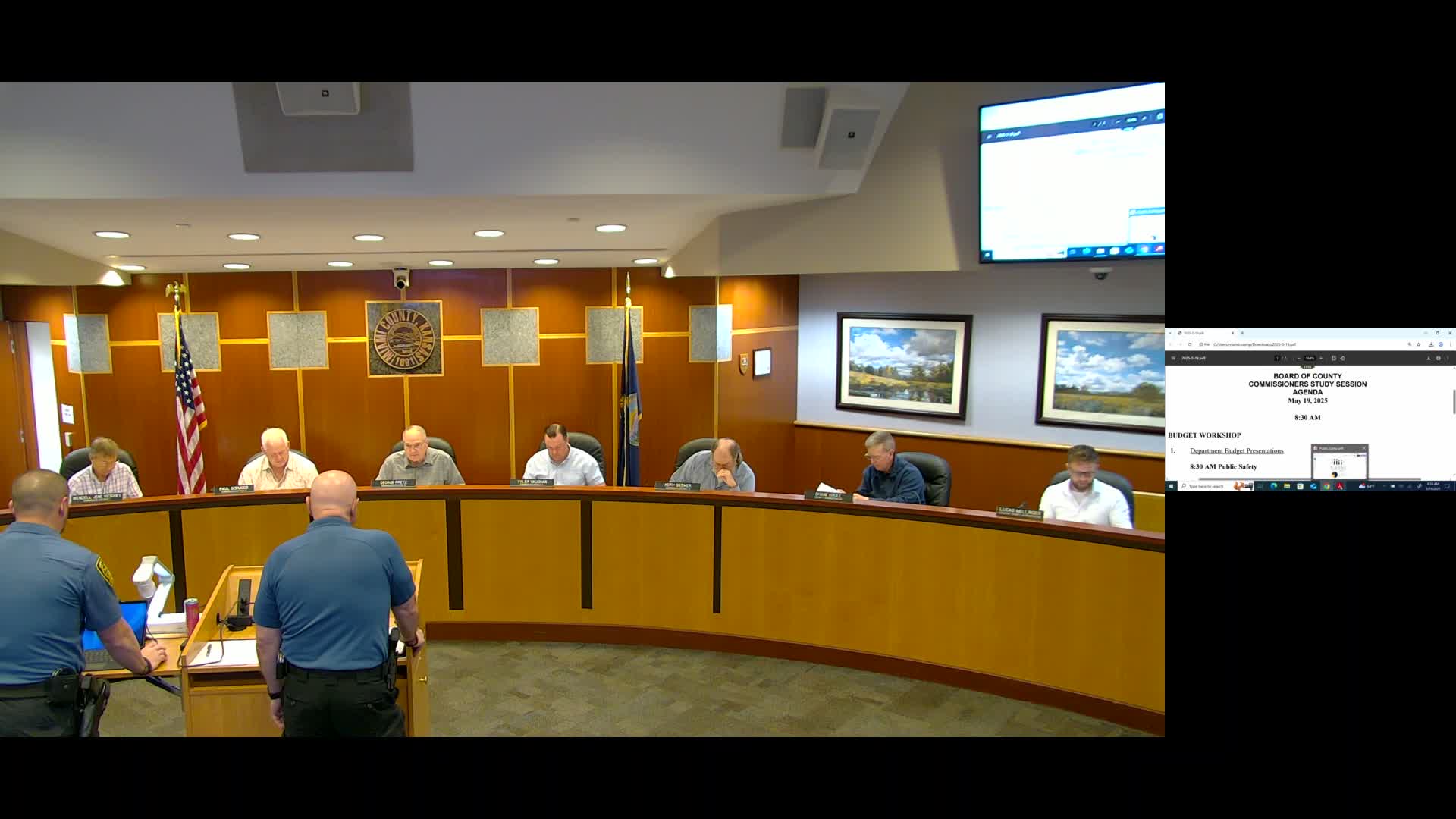
The Miami County sheriff's office asked county commissioners on Wednesday to approve additional funding for patrol vehicles, three more jail positions and a mobile command center, and warned that software and maintenance contracts are driving a large portion of the department's 2026 requested increase.
Sheriff Frank Kelly told commissioners the department is requesting three more jail positions and new patrol staffing, and said public safety will require more resources as the county grows. "Public safety is number 1 and it's going to cost money to provide those services," Kelly said.
The sheriff's office said its fleet and equipment needs are the largest recurring expense after payroll. Lucas Mellinger, assistant county administrator, walked commissioners through budget cover sheets and told the panel how the finance team annotated department submittals. "Yellow is kinda you can look at that line," Mellinger said, describing the packet color coding used to flag lines for review.
The sheriff and jail officials described the county fleet and repair history. The office reports roughly 40–43 vehicles in total, about 18 marked patrol units in current frontline rotation and a number of high‑mileage vehicles used as spares. Sheriff Kelly said several patrol vehicles are reaching 150,000–190,000 miles and that heavy mileage has led to repeated major repairs: "We've replaced two engines and several cylinder heads," he said, citing repairs that ran several thousand dollars each. He said the department budgeted roughly $300,000 in 2025 for vehicles; that funding purchased two Durango patrol vehicles and one F‑150, with upfitting still pending.
Commissioners questioned whether fewer or used vehicles could bridge needs and whether the county should accept non‑standard vehicle paint. Commissioner Caleb suggested a white vehicle might be repurposed as an administrative car; Kelly replied he prefers the traditional black‑and‑white patrol look but that the office will buy what is cost‑effective.
A separate request in the sheriff's budget is for a new mobile command center. Kelly said the existing unit dates to about 2005, has had frequent repairs and is nearing the end of its useful life. He estimated a replacement sprinter‑style mobile command center would cost about $100,000 fully upfitted and said the department is pursuing Homeland Security grants to offset that cost. Commissioners asked for a tour of the current unit to better judge condition and resale value.
Captain Andrew Rausch, who oversees jail operations, walked commissioners through contracts and staffing needs inside the detention center. Rausch said the jail requests three additional jailer positions to reach safer staffing levels during shifts; he described situations where only three corrections staff were on duty, and said, "Having one person that is trying to do everything and trying to take care of stuff by themselves is grossly unsafe." He told commissioners the jail is currently staffed with about 13 deputy jailers plus sergeants and supervisors, and that the facility often operates with understaffing for certain shifts because of training, court transports and sick leave.
Rausch also described recurring facility maintenance needs. He said crews recently replaced a boiler after a failure and that bids indicate replacing a second boiler could be necessary; the jail budget includes a contingency line to cover such work. Rausch said the jail's commissary and inmate population levels affect revenue and that the county currently charges roughly $95.17 per day for out‑of‑county boarding when allowed by state rules.
The sheriff's technology and software contracts were another major topic. Kelly and staff said the Central Square contract for CAD/RMS/JMS support will increase materially in 2026 and that the county expects to use a portion of 9‑1‑1 funds to offset the CAD cost. "Central Square will be our biggest one starting in 2026, with it being over a hundred thousand dollars a year for our CAD," Kelly said. The sheriff also identified Axon (body cameras, evidence cloud and taser contracts) as a recurring annual cost (about $60,000 per year for body‑camera hosting and support). Finance staff confirmed that one line item in the sheriff's budget is rising from roughly $50,000 previously to $200,000 to align the budget with contract maintenance realities.
Commissioners pressed on overtime, maintenance and vehicle‑replacement cadence. Sheriff Kelly and county staff described a historic rotation of roughly five new vehicles a year that was interrupted by supply‑chain and reallocation choices in recent years. Commissioners asked the sheriff to provide an up‑to‑date vehicle inventory and mileage report and to tour the command center and jail with them; the sheriff agreed to provide those details.
On other program items, Kelly and Rausch discussed the county's tactical canine and evidence seizures, noting the K‑9 unit is used regionally and that seizure proceeds are sometimes split with other counties. Rausch said the K‑9 also covers supervisor duties and training when needed.
The commissioners did not take a formal vote at the session. They asked staff to provide vehicle inventory and mileage detail, to schedule a tour of the command center and jail, and to provide follow‑up information on the Central Square cost breakdown and on grant opportunities for the command center.
The sheriff's office presentation will return to the budget docket as staff gathers the inventory, repair histories, and contract allocation details commissioners requested.