Get Full Government Meeting Transcripts, Videos, & Alerts Forever!
Get email alerts on the Sewer Districts topic
No spam. Unsubscribe anytime.
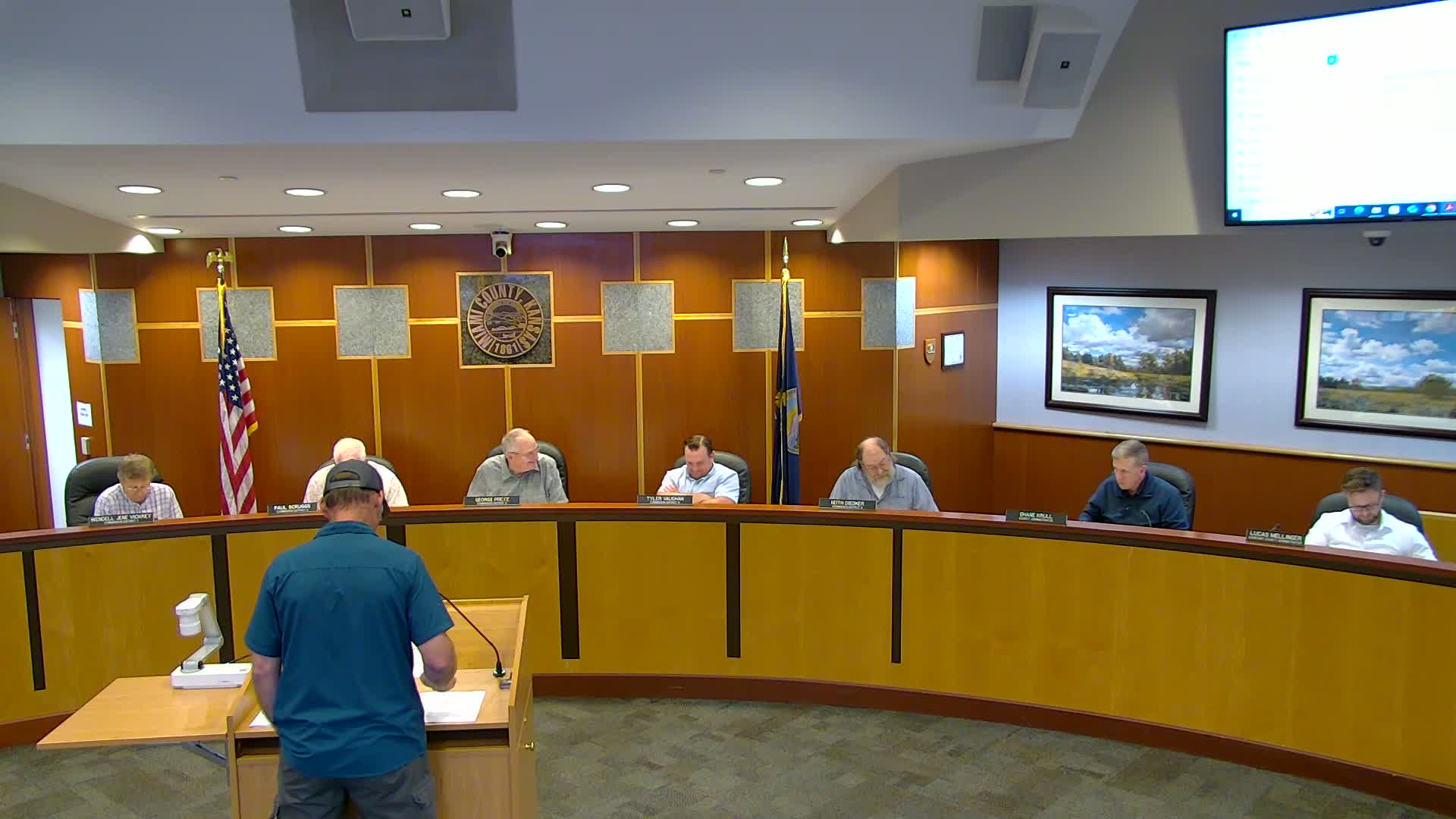
Miami County commissioners discuss finances, upgrades and potential transfer of three small sewer systems
Summary
Commissioners and county staff reviewed the budgets and operational risks for three county-managed sewer systems — Club Estates, Bucyrus and Walnut Creek — discussed potential fee increases, possible transfer or sale to the city of Spring Hill and USDA bidding for a related project.
Miami County commissioners spent the largest portion of a budget workshop reviewing three small county-managed sewer systems and options to avoid long-term subsidy.
The discussion focused on Club Estates, Bucyrus and Walnut Creek sewer plants, their operating costs, customer bases and possible paths including fee increases, developer connections and a potential sale or transfer to the City of Spring Hill.
County Code Services Director Jason Ledbetter summarized plant operations and maintenance needs, saying the county "take[s] care of the weekly, daily operations of those plants" and that plants are aging and “start taking a little more tender loving care to keep them running properly.” Ledbetter said Club Estates serves roughly 37 households and that he estimates the system’s annual expenses at about $18,000, which equates to roughly $45–$47 per household per month under current assessments. For Walnut Creek, staff estimated fees in the same general range and said the system had become more efficient after recent process reconfigurations.
Commissioners pressed staff for options to reduce county subsidy, including gradual fee increases. Commissioner Lucas asked staff to prepare scenarios for 10%, 15% and 20% increases and how those would affect individual assessments. Commissioner comments repeatedly pushed for incremental rate adjustments rather than a single large jump: "I would look at it in 5 or 10% increments myself," one commissioner said.
Staff and commissioners also discussed development as a possible long‑term solution for Club Estates. Ledbetter said the “best thing” for the Club Estates system would be redevelopment of the adjacent former golf course and a tie-in to a nearby lift station; that, he said, would allow the county plant to be retired. Commissioners said that development would require both sewer connection work and road/culvert improvements and suggested potential negotiations with developers or the city that could trade infrastructure work for transfer of the plant.
The board and staff also discussed Spring Hill’s potential role. County staff reported conversations with Spring Hill officials and their city attorney about a prospective transfer and noted USDA reviewers are evaluating the county’s bid package for a related project; the USDA review could clear the project to be put out to bid. Commissioners asked staff to re‑contact Spring Hill staff (identified in the workshop as “Lane” and “Joe” in discussion) and to update the board on the city attorney’s response and any timeline, with the understanding that a sale or formal agreement would be a governing‑body decision for Spring Hill.
Commissioners flagged long lead‑time and cost risks for Bucyrus, which previously required larger investments and where the county has pursued a piping-to‑Spring Hill alternative. For Walnut Creek commissioners noted the plant had shown improved effluent results after recent operational changes and recommended staff continue adjustments while preparing fee scenarios that would close operating gaps: "It's worth the conversation to say we're $6 to the bad on it, and maybe add $5 to the fee, or $3 to the fee, whatever it is that gets us whole," one commissioner said.
Board members asked staff to return with specific numbers, including historical fee changes, the current fee schedule, the likely resident impact of percentage increases and the systems’ reserve balances and debt schedules. Staff identified one existing note associated with a system that they expect to retire around 2030 and said the county currently makes annual payments on it.
The board did not take any formal vote; commissioners directed staff to prepare financial scenarios and to continue discussions with Spring Hill and USDA so the county can decide whether to bid work or pursue a transfer.
If commissioners decide to raise assessments, staff said they would propose gradual increases and public outreach, noting past public resistance to large, abrupt assessments for small systems. Commissioners indicated a preference to avoid using general‑fund subsidies for ongoing sewer operations.
Ending: The board asked staff to bring back fee scenarios and financing details at a future meeting and to report any response from Spring Hill’s attorney on a possible sale or transfer of affected infrastructure.