Get Full Government Meeting Transcripts, Videos, & Alerts Forever!
Get email alerts on the Criminal Justice Substance Treatment topic
No spam. Unsubscribe anytime.
Delaware County sheriff seeks $200,000 from Ohio attorney general grant to subsidize jail MAT medications
Summary
At the May 8 commissioners meeting the sheriff’s office asked the board to authorize applying for the Ohio attorney general’s OVIA remediation grant to fund medications for the county’s Medicated Assisted Treatment (MAT) program in the jail, citing a correlation between prior incarceration and local overdoses.
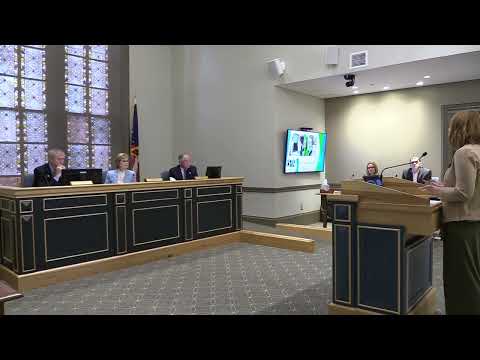
The Delaware County sheriff’s office on May 8 asked commissioners to authorize an application to the Ohio attorney general’s OVIA remediation grant program to subsidize medications for the county’s jail‑based Medicated Assisted Treatment (MAT) program.
A sheriff’s office representative told the board that local data show a notable correlation between overdose incidents and prior incarceration, and described the county program as a fully in‑house MAT effort that couples medication with counseling and case management. The sheriff’s office said it is applying for $200,000 to offset medication costs.
The presenter said roughly half of people who experienced overdoses in 2024 had prior jail involvement and that many overdose fatalities involved individuals previously known to the jail, underscoring a need for jail‑based treatment and reentry supports.
Commissioners asked about the source and availability of funds from the state and the county’s use of settlement dollars. County staff said the county has more than $1.5 million from a local settlement allocation and described local working groups reviewing use; they also explained the Ohio attorney general set aside $20 million for county jails and community corrections facilities and was awarding grants in multi‑year increments.
The sheriff’s office representative said the county’s MAT program is run by existing jail staff; that organizational model has sustainability benefits but also means staff are stretched. The presenter noted that people in incarceration status cannot access Medicaid to pay for medications while jailed, which creates the need for local subsidy.
Commissioners voted to authorize the submission of the grant application; the motion passed unanimously.
The sheriff’s office emphasized the grant is competitive and not guaranteed; if awarded, the funds would be used specifically to subsidize medications for inmates enrolled in the county MAT program as part of an integrated treatment and reentry plan.