Get Full Government Meeting Transcripts, Videos, & Alerts Forever!
Get email alerts on the Public Safety 911 topic
No spam. Unsubscribe anytime.
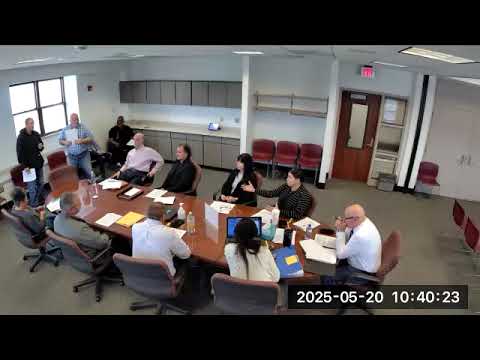
Trumbull County officials debate $93,000 design phase for troubled 911 center and ways to pay for a long‑term fix
Summary
County 911 director urged commissioners to authorize a design and engineering phase to determine costs for relocating or renovating the county dispatch center, while commissioners debated funding options including a parcel assessment and sales‑tax increase; the board tabled a final decision pending more information.
Casey McDonald, Trumbull County 911 director, asked the Board of Commissioners to approve a Phase 1 design and structural testing package to determine what it would cost to move or renovate the county dispatch center.
"This project would be below $93,008.61," McDonald said, adding that the structural testing alone could cost about $30,000 and that the total relocation work — mechanical, consulting, furnishings, technology and network migration — would be confirmed only after the feasibility work.
McDonald told commissioners the existing dispatch facility was built as a temporary space in 1999, has flooded twice and is deteriorating. He showed photographs and described cramped, damaged workspaces and recurring maintenance problems that he said make recruitment and retention difficult. "We're at the point where we need to move. We can't just keep kicking the can down the road," he said.
The director proposed several potential funding paths. He suggested using an earmarked special fund left by a previous clerk for the Phase 1 work, pursuing voter approval of a county sales tax increase or asking voters to approve an improved‑parcel assessment of about $40 per improved parcel annually. McDonald said an improved‑parcel assessment could bring in roughly $3 million a year based on preliminary auditor figures and that similar measures elsewhere funded 911 upgrades.
Commissioners pressed on affordability and sequencing. One commissioner questioned whether the county should pay for design of a building if a local city (Cortland) was negotiating temporary occupancy of the same site and whether the county had the funds to follow through if the feasibility study returned a multimillion‑dollar price tag. Another commissioner said the board did not have a clear revenue source and signaled reluctance to place a tax question on citizens without more study.
County staff and commissioners noted a prior feasibility study that cost about $400,000 and evaluated multiple buildings; any new site would likely require another full study, potentially increasing consultant costs. McDonald recommended proceeding with Phase 1 to buy four months while the county considers funding strategies and potential ballot measures. He also suggested that, if an assessment or sales tax passed, the county could stop charging municipalities dispatch fees and redirect revenue locally.
The board did not approve Phase 1 at the meeting. Commissioners agreed to seek additional information, confirm whether the Cortland option remains available, and revisit the item when more members were present and funding options were clearer. McDonald said he would provide follow‑up material and welcomed calls from commissioners.
Ending
Commissioners left the request unresolved; McDonald said Phase 1 would take about three to four months and that confirming costs would be necessary before any bond, levy or ballot measure. The board asked staff to gather additional budget and feasibility details and to report back.