Get Full Government Meeting Transcripts, Videos, & Alerts Forever!
Get email alerts on the Property Dispute Pole topic
No spam. Unsubscribe anytime.
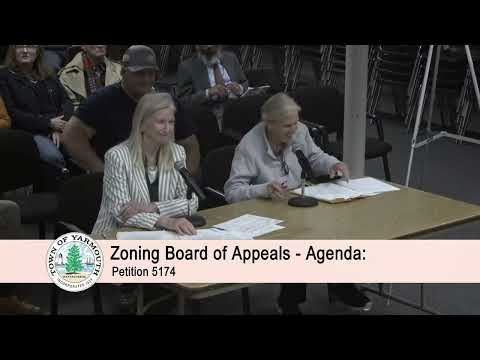
ZBA upholds building commissioner; will not order removal of 40 Crosby Street osprey pole
Summary
The Yarmouth Zoning Board of Appeals on May 22 declined to overturn the building commissioner’s decision after a neighbor petitioned to force enforcement against a 40–50 foot utility pole used as an osprey nesting platform; the board found the pole falls under exemptions in the town bylaw and upheld the building commissioner’s decision 4–0.
The Yarmouth Zoning Board of Appeals on May 22 voted to uphold the building commissioner’s determination not to enforce zoning removal against a utility pole and osprey‑nest platform at 40 Crosby Street Extension, rejecting a neighbor’s appeal that the pole is an unsafe, unpermitted structure.
Petitioner Maria Marasco, trustee of the Rosemarie Marasco Living Trust, asked the board to direct the building commissioner to treat a 40‑ to 50‑foot wooden pole with added platforms, electrical wiring and surveillance equipment as a regulated structure requiring permits, a fall‑zone setback or removal. Marasco said the pole “weighs 1 ton or more” and is within roughly 10–20 feet of her property line; she told the board she fears collapse and cited accumulated bird droppings on her beach as a health hazard.
Town staff and counsel reviewed the petition before the hearing and advised the board that the language in the zoning bylaw excludes poles from the list of “customary yard accessories” only insofar as it lists fences, poles and posts separately; a separate paragraph that governs fall zones and communication towers (cited as 408.7.8 in the staff memo) applies to communications towers specifically and does not by its terms cover a private utility pole used for an osprey platform. The building commissioner’s memo concluded the zoning bylaw’s tower provisions address communication towers and not utility poles, and therefore the commissioner could not enforce removal under those cited sections.
At the hearing Marasco argued the use of the pole — its height, attached equipment and placement near property lines — changes its character from a “customary yard accessory” into a regulated structure and asked the board to require review, relocation or removal. She said the pole had cracked and fallen in the past in the same area and that the current pole’s platforms create a substantial fall zone over adjoining property. “This is a 40 to 50 foot above ground 1‑ton utility pole or piling with extensions, electricity, surveillance equipment and a platform,” Marasco said in the hearing record.
Neighbors and property owners in the area told the board they support leaving the platform in place and value the osprey nesting activity. Conservation staff previously reviewed the platform as part of a mitigation plan, and records in the file show prior conservation and Board of Health contacts; the board noted those administrative history items during deliberations.
After discussion the ZBA voted to uphold the building commissioner’s decision not to act on the enforcement request. Board members said the petition raised questions best addressed by the Building Department and legal counsel and that the current bylaw language and prior staff advice limited the board’s ability to compel removal under the sections cited by the petitioner. The motion to uphold the building commissioner carried by roll call; the petitioner was informed of the 20‑day appeal period that begins when the board’s decision is filed with the town clerk.
The board did not order an independent structural or safety study; a number of residents at the hearing urged further review of potential public‑safety liability if the pole were to fail, but the ZBA’s decision was narrowly framed as an administrative determination about the building commissioner’s scope to act under the zoning bylaw.