Get Full Government Meeting Transcripts, Videos, & Alerts Forever!
Get email alerts on the Municipal Finance topic
No spam. Unsubscribe anytime.
Concord finance officials report $15.9 million certified free cash, staff asked to detail sources and options
Summary
The Town of Concord’s free cash was certified at $15,898,216 on May 16. Finance staff explained drivers — higher interest income, underspending and accounting cleanup — and the Finance Committee asked staff for a detailed breakdown and options for using the one‑time funds, including stabilization accounts and debt reduction.
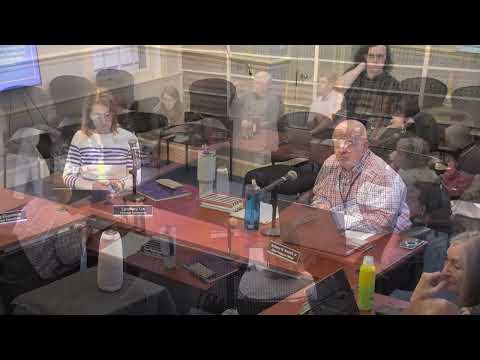
The Town of Concord’s free cash was certified on May 16 at $15,898,216, town finance staff told the Concord Finance Committee, prompting committee members to ask for a detailed accounting of how that total was reached and how the funds should be used.
Finance staff member Anthony, briefing the committee, said the certification “was more than even what we thought” and walked through the main contributors: a large interest return on temporarily held bond proceeds for the middle school borrowing, higher‑than‑expected local receipts (particularly interest income), jet fuel excise receipts tied to Hanscom, salary savings from vacancies, and a one‑time accounting cleanup tied to closing prior‑year purchase orders and the migration to a new accounting system. Anthony said, “our free cash was certified on May 16, and the dollar amount was, $15,898,216.”
Committee members pressed for specifics because the certified amount is large relative to the town budget. Eric Dahlberg, chair of the Finance Committee, asked how the figure translated into a percentage of the town budget; committee member Colin calculated the amount equals roughly 11 percent of a $144 million budget. Anthony reported a working projection that four warrant articles planned against free cash would leave a projected balance of about $13.7 million (about 13.3 percent by the town’s calculation) but cautioned that outstanding items could reduce that figure.
Why it matters: free cash is unrestricted, one‑time town money that the Massachusetts Department of Revenue (DOR) certifies annually. Anthony summarized the DOR timing and constraints: certification allows use of free cash between May 16 and June 30 for the fiscal year, and the balance becomes part of the town’s fiscal position for the coming year. He warned that some legacy COVID reimbursement issues could reduce available balances: “There’s a FEMA account that has it’s about 750,000 to the negative right now. So that has to get cleaned up,” Anthony said, and he recommended conservatively treating part of the certified amount as already needed to close that gap.
Committee discussion and direction: members repeatedly requested a more detailed breakdown showing which years and line items produced the one‑time cleanup and savings. Dawn Kupka asked for a report “that actually says, here's where it came from, and here's what we're doing to type, you know, what we've changes we've made so that we don't have these kinds of surprises again.” Anthony agreed to provide additional, drilled‑down information from the accounting consultants and staff. The committee also discussed options for using the funds: Anthony recommended moving money into stabilization accounts, saying that stabilization avoids consuming one‑time revenue for recurring costs. “If the state aid was cut a million dollars to Concord… the only option would be no cushion — we’d have to immediately reduce services,” Anthony said, urging prudence and recommending stabilization and debt‑stabilization savings as priorities.
Several committee members reiterated long‑standing budget principles: avoid using one‑time revenue to permanently reduce the tax levy and prefer one‑time uses such as pay‑downs of debt or contributions to stabilization funds. The group also noted that DOR certifies the free cash figure and performs its own verification; Anthony said that the Department of Revenue “spends 2 weeks and verifies everything, and then they're the ones that certify.”
Next steps: the Finance Committee directed Anthony to return with a detailed breakdown of the certified free cash (sources by year and by account), an accounting of the one‑time cleanup that produced the $3.4 million and how much of the total reflects vacancies versus other adjustments, and a short menu of policy options (stabilization, debt pay‑down, one‑time capital). The committee also noted an apparent obligation related to outstanding FEMA/CARES accounting that the staff flagged as likely to reduce the usable balance by about $1 million if the negative FEMA balance must be closed from free cash.
The committee’s request for additional detail and the staff recommendation to prioritize stabilization funds closed the discussion; Anthony and staff will report back before town meeting.