Get Full Government Meeting Transcripts, Videos, & Alerts Forever!
Get email alerts on the Border Reimbursement topic
No spam. Unsubscribe anytime.
Senate committee urges Congress to reimburse Texas $11.2 billion for Operation Lone Star
Summary
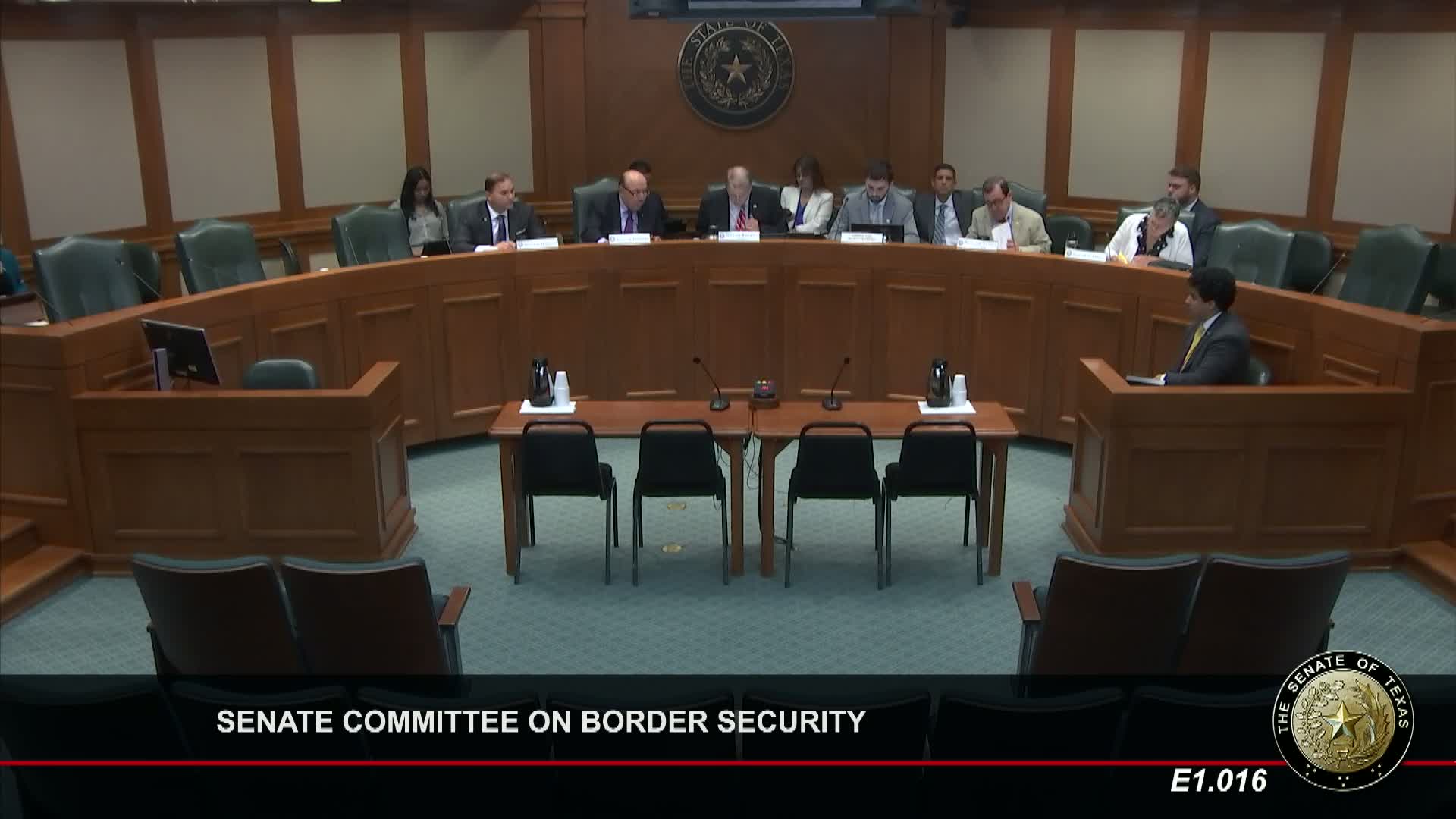
The Senate Committee on Border Security voted 5-0 to recommend HCR 40 to the full Senate. The resolution urges Congress to reimburse Texas $11.2 billion for border-security costs the state says it incurred under Operation Lone Star; no public testimony was offered.
The Committee on Border Security voted to recommend HCR 40 to the full Senate, urging Congress to reimburse Texas $11.2 billion for border-security costs the state says it incurred under Operation Lone Star. Senator Flores, speaking on behalf of sponsor Senator Creighton, laid out the resolution and moved that it be reported to the full Senate.
HCR 40, as described in committee, “urges Congress to reimburse Texas $11,200,000,000,” citing state expenditures tied to Operation Lone Star. The resolution was recommended to the full Senate by a 5-0 vote and placed on the local and uncontested calendar.
Senator Flores framed the resolution as a response to what he called federal inaction: “For several years, Texas has been forced to step up and defend itself, costing taxpayers billions of dollars and highlighting the federal government's lack in upholding their constitutional duty.” He told the committee the resolution seeks reimbursement for state funds spent since the launch of Operation Lone Star in 2021.
Senator Juan Hinojosa (committee member) voiced support during questions, noting ongoing congressional budget negotiations that could affect reimbursement. “I really support and like your resolution,” Hinojosa said, and observed that parts of the reimbursement discussion may be on the House side of Congress.
The committee received no registered public testimony for or against HCR 40 during the hearing. After Senator Flores moved to report the resolution favorably, the clerk called the roll; the committee recorded five ayes and no nays and recommended the measure to the full Senate.
The committee’s action is a procedural step that sends HCR 40 to the full Senate; the resolution itself requests federal reimbursement but does not create a binding state expenditure or appropriation.
Members and staff said they would monitor federal budget negotiations and keep the committee informed as the measure moves forward.