Get Full Government Meeting Transcripts, Videos, & Alerts Forever!
Get email alerts on the Liability Medical Funerals topic
No spam. Unsubscribe anytime.
Funeral industry seeks limits on mental-anguish lawsuits; trial lawyers, families oppose proposed cap
Summary
Senate committee heard competing testimony on Senate Bill 2027, a measure that would set standards for mental-anguish claims involving funeral service providers and raise a statutory cap in the committee substitute; supporters cite insurance and small-business risk, opponents cite recent investigative reports of mishandled remains.
Senators considered Senate Bill 2027, which would amend the Civil Practice and Remedies Code to define standards and limits for mental-anguish claims against funeral service providers. The committee substitute circulated in the hearing increased a statutory cap on awards and established an elevated mental-anguish threshold for recoveries tied to mishandling of human remains.
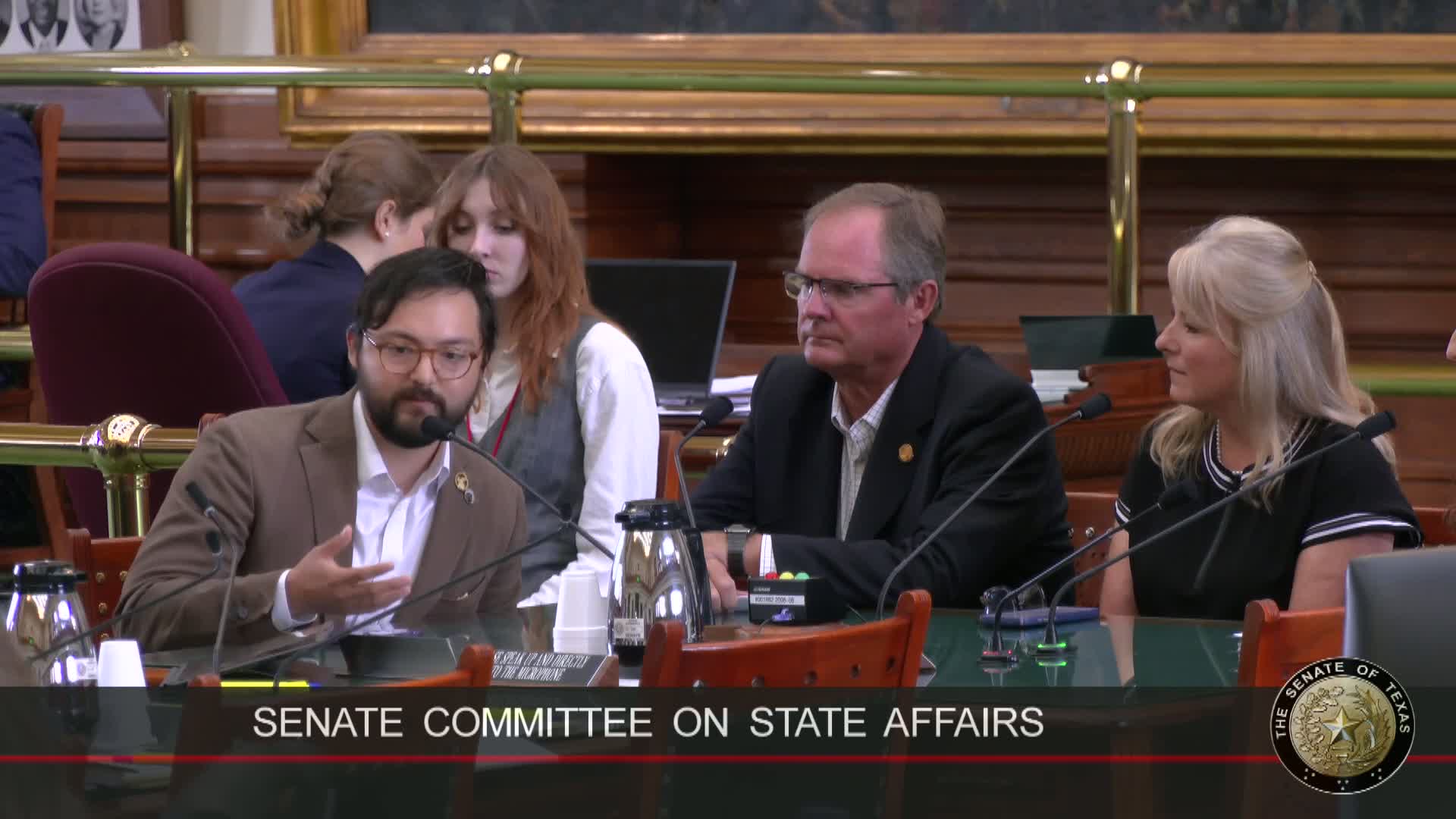
Supporters from the funeral industry said the measure was necessary to protect small, community-based funeral homes from a surge in litigation and sharply rising insurance costs. Bill Valley, representing the Texas Funeral Directors Association, said small rural funeral homes cover vast areas and that litigation exposure threatens their financial viability. Kristin Tipps, presiding officer of the Texas Funeral Service Commission (speaking personally), described funeral professionals as “last responders” who operate under public-health pressures and said they currently lack liability protections other first responders enjoy. Multiple funeral directors told senators their liability premiums have increased materially in recent years — some witnesses reported premiums doubling or rising 100% since a 2017 Texas Supreme Court decision.
Opponents — including the Texas Trial Lawyers Association and family members of victims — warned that a narrow statutory cap and elevated proof standard would deny meaningful remedies in serious incidents of body mishandling, experimental treatment of remains and other cases documented in recent investigations. Charlie Gann of the Trial Lawyers Association said the bill’s mental-anguish standard is stricter than usual tort law standards and could block recovery in cases in which families opened caskets to discover decomposed remains, switched bodies, or other extreme harms. Gann referenced recent, ongoing investigations and argued the cap proposed in the bill substitute (increasing the cap from $50,000 to $250,000 in one referenced amendment) may be inadequate in the most egregious instances.
Committee members asked witnesses whether existing regulatory sanctions, licensing penalties and criminal statutes provide adequate remedies. Witnesses on both sides said those mechanisms exist but differ in effect from civil recovery. Supporters emphasized that punitive-damage remedies would remain available for truly egregious conduct and that ordinary negligence suits were not the target of the bill; opponents said the bill’s changes could undercut civil accountability for serious misconduct.
The committee did not vote on the measure during the hearing. Senators heard testimony from funeral operators, regulators, defense advocates and plaintiff attorneys and asked for additional information about recent incidents under investigation.
(Ending) The committee left the bill pending; sponsors and critics said they are open to working on language to preserve accountability for severe misconduct while limiting exposure from nuisance litigation.