Get Full Government Meeting Transcripts, Videos, & Alerts Forever!
Get email alerts on the Agriculture Wine Policy topic
No spam. Unsubscribe anytime.
Senate committee divided as wine industry debates new "farm winery" permit and 75% Texas-fruit threshold
Summary
Lawmakers heard hours of testimony for and against House Bill 3385, a TABC-recommended measure to create an optional Texas farm winery permit that rewards use of Texas-grown grapes (75% threshold) with benefits including up to five off-site tasting rooms and a raised production cap.
The Senate Committee on State Affairs heard detailed testimony on House Bill 3385, a proposal backed by the Texas Alcoholic Beverage Commission’s interim industry study that would create an optional Texas farm winery permit for producers using Texas-grown grapes. The measure would allow qualifying producers to operate up to five tasting-room locations beyond their main winery, raise the production cap tied to a farm winery designation, and establish a dedicated farm winery marketing assistance fund.
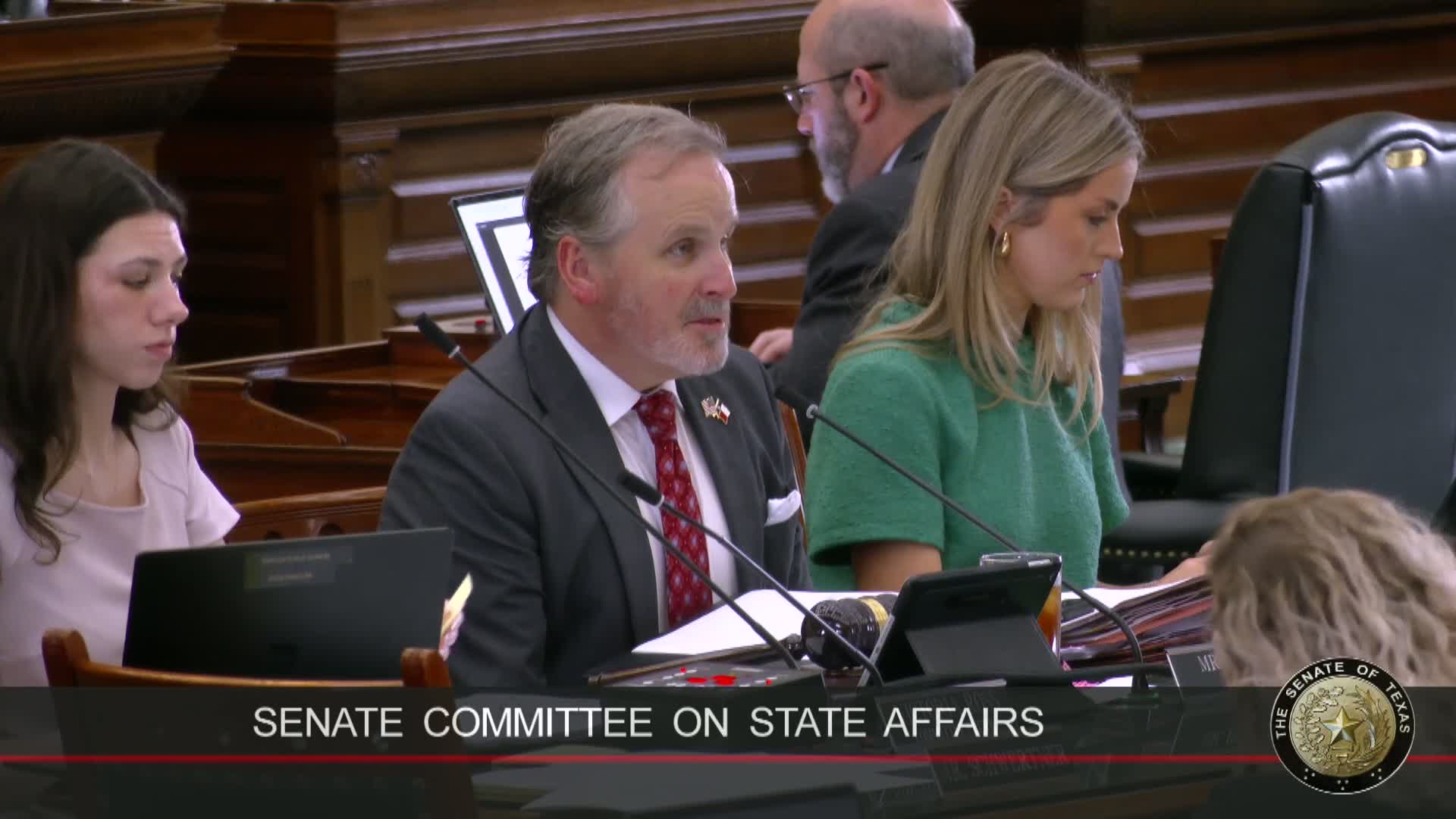
Senator Hancock, the Senate sponsor, framed the bill as a tool to promote agriculture: the optional permit would “promote the agricultural side of the wine industry,” he said, and would be permissive rather than mandatory. He described it as modeled on permits used in other states and said it would help Texas vineyards and growers compete with established wine states.
Matthew Cherry, senior counsel for the Texas Alcoholic Beverage Commission, appeared as a resource witness and told senators the bill would be an additional authorization layered on top of the existing winery permit; it would not strip away rights currently authorized under a Chapter 16 winery permit. Cherry also said the proposed farm winery permit would require 75% of the fruit used for wines labeled under the permit to be Texas grown and would allow five additional off-site tasting rooms without requiring separate winery permits for each.
Supporters said the bill would build local demand and spur planting. John Rivenberg, president of Texas Wine Growers, said an estimated 4,000 tons of Texas-grown grapes went unsold last year and called the measure a way to expand demand, potentially generating additional plantings and rural economic growth. Several winery owners said the optional permit would lower the regulatory friction to open additional tasting rooms and help market Texas wine.
Opponents, including representatives of the Texas Wine and Grape Growers Association (TWIGA) and some small and mid-size wineries including Messina Hof, warned the measure as drafted could create market distortions. Witnesses raised unanswered implementation questions: how the 75% test would be measured (per bottle, per vintage, per year), how producers would demonstrate compliance, whether large buyers could buy up scarce Texas fruit and disadvantage smaller wineries, and whether the measure would reintroduce permit complexity that a recent TABC sunset review had sought to reduce. TWIGA’s president, Julie Herbert, said the bill was “vague” on core details and could create “duplication” with the current G permit system.
Committee members pressed TABC and witnesses on traceability and enforcement. Cherry said TABC does not currently audit grape origin at the state level for winery permits; if the farm-winery permit were enacted the agency would need to review additional records to determine compliance. Some witnesses said wineries already keep bills of lading and lot records that would show fruit origins for audits; others warned that large producers with multiple vintages and sales channels accumulate many records and that audits could be administratively heavy.
Senators did not vote on the measure at the hearing. The committee heard roughly balanced, extended testimony from growers, winery owners, and trade groups, and left the bill pending.
(Ending) The committee will consider the bill’s technical fixes and potential amendments that address the accountability and traceability questions raised by opponents and TABC before further action.