Get Full Government Meeting Transcripts, Videos, & Alerts Forever!
Get email alerts on the Crowdfunding Fraud topic
No spam. Unsubscribe anytime.
Senate committee hears bill to let victims sue creators of fake crowdfunding campaigns
Summary
Senators heard testimony on House Bill 4,281, sponsored in the Senate by Sen. Hancock, which would let people or the state pursue operators of fraudulent crowdfunding campaigns and allow victims to recover 25% of funds taken. A family that experienced a GoFundMe scam testified; the committee left the bill pending.
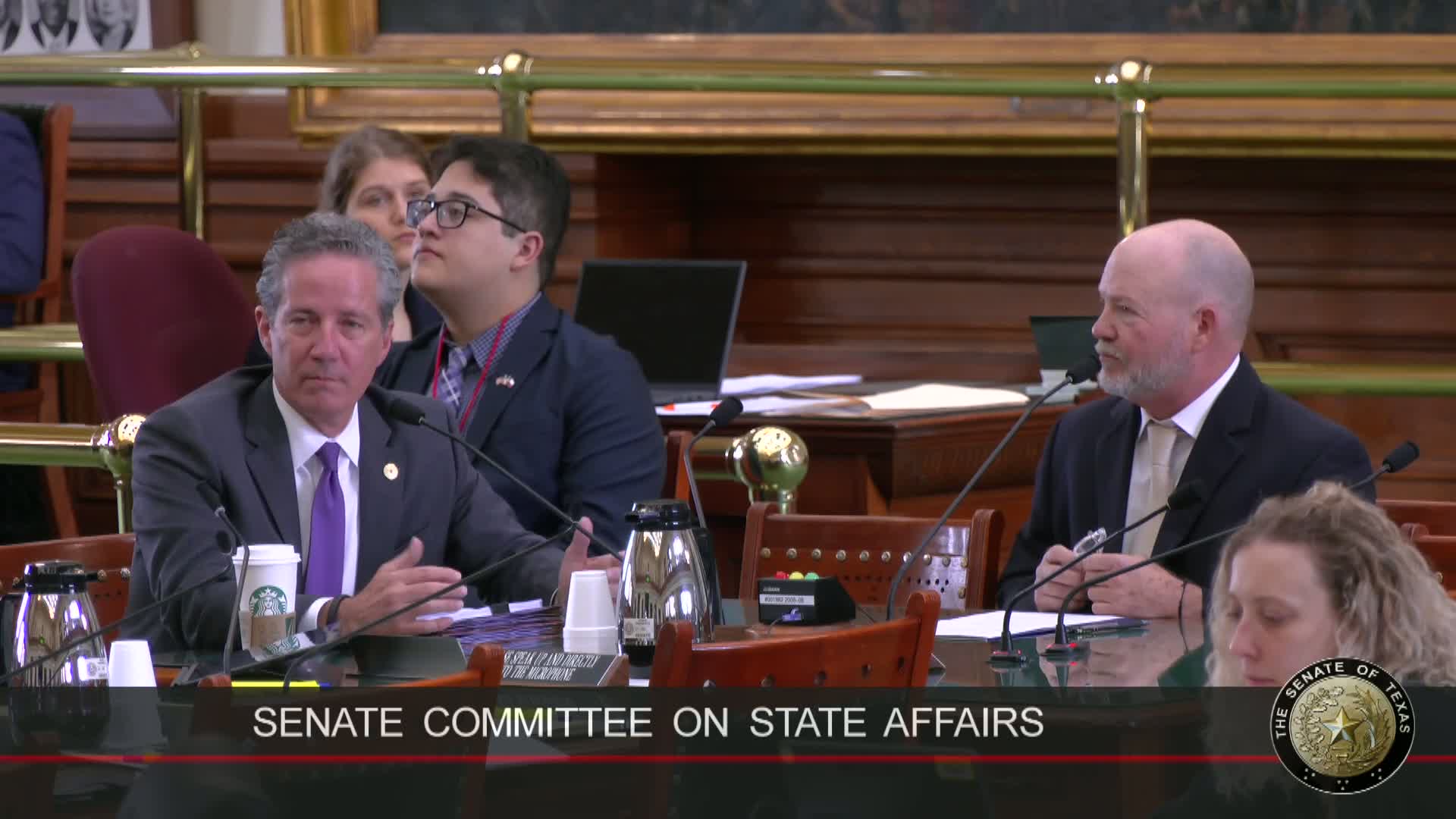
Senator Richard Hancock laid out House Bill 4,281 to the Senate Committee on State Affairs, saying the measure would allow individuals or the state to pursue people who set up fake crowdfunding campaigns and give victims a way to recover money taken from those campaigns.
Melanie Dowell, whose family’s experience in late 2023 motivated the bill, told the committee that while her twin sister, Lauren Muckleroy, survived a crash that killed her husband and two children, strangers created GoFundMe pages using the family’s photos and the wrong spelling of a child’s name to solicit donations. “It is truly unbelievable that someone could use another’s pain and suffering to falsely enrich themselves,” Dowell said. She asked senators to pass the bill so future families would not face similar harms.
Senator Hancock said the bill would provide a financial remedy and incentive to pursue culprits in cases that have been hard to police. “Because of the financial piece of it, this does provide an incentive to actually go after these people where I think typically … there’s not much you can do about it at this point,” Hancock said.
Committee members questioned whether existing criminal laws already apply and whether prosecutors could pursue these acts as fraud. The committee’s attorney and members discussed criminal remedies but also acknowledged civil recovery could provide an additional path for victims.
The chair opened and closed public testimony after Dowell’s remarks; no other witnesses spoke. The committee left the bill pending for further consideration.
The hearing focused on the bill’s civil-remedy provisions and on whether the provision that lets victims recover 25% of fraudulently collected donations is appropriate and enforceable. The committee did not vote on the measure during the hearing.
The measure will return to committee for further review and possible amendment; no formal action was adopted at the hearing.