
Senate approves tax exemption for border security infrastructure; constitutional amendment resolution clears
Get AI-powered insights, summaries, and transcripts
Subscribe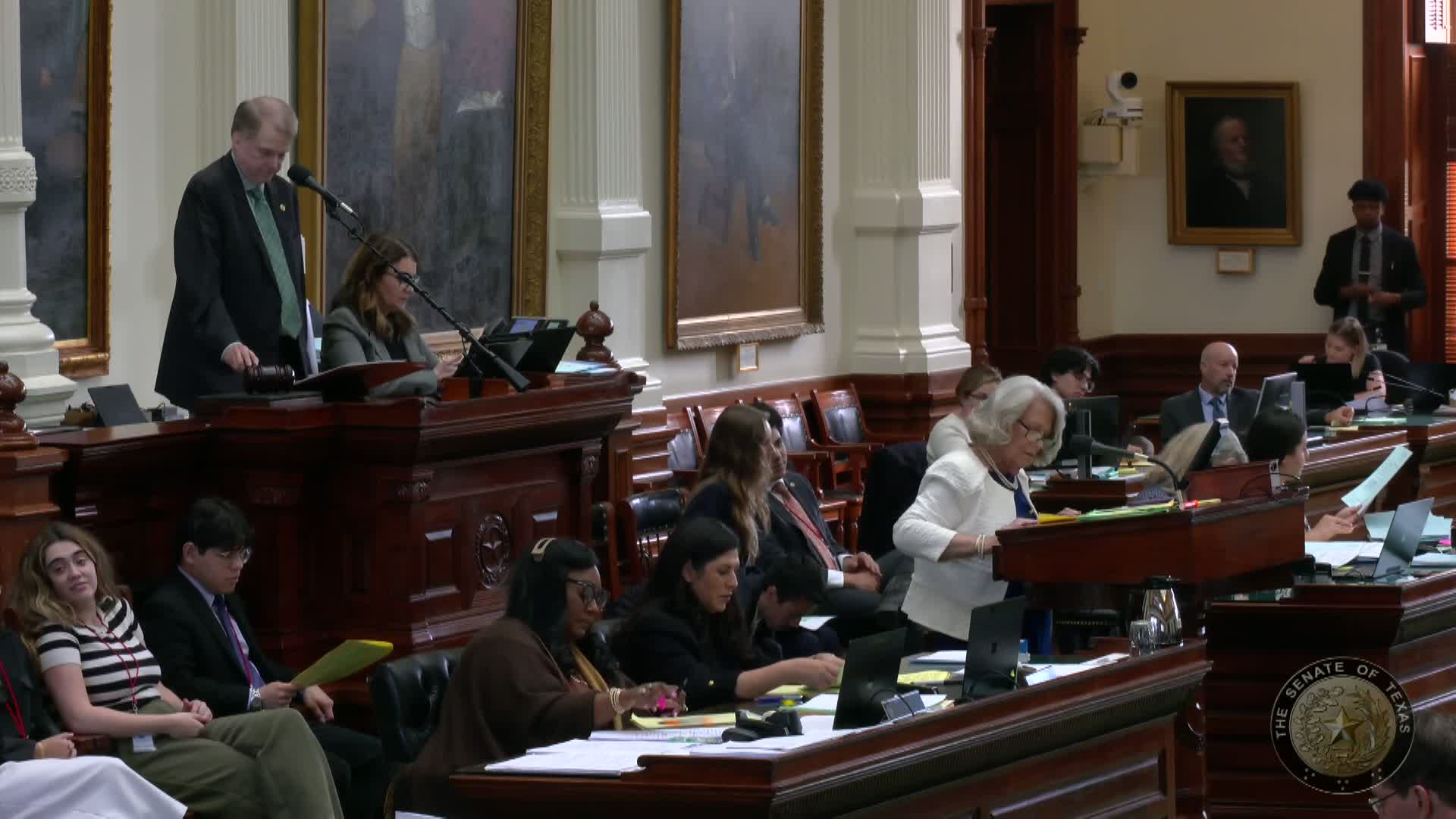
Summary
The Texas Senate passed House Bill 247 to exempt increases in appraised value caused by border security infrastructure from ad valorem taxation and approved a proposed constitutional amendment (HJR 34) to let voters decide whether the exemption may take effect. Lawmakers debated fiscal impacts and property-rights concerns before votes of 23–8.
The Texas Senate on a 23–8 vote approved House Bill 247, which exempts from ad valorem taxation the portion of a property's appraised value that results from the installation or construction of specified border security infrastructure. The chamber also adopted a companion resolution, HJR 34, to put a constitutional amendment on the November ballot that would allow the exemption to take effect if voters approve it.
The bill's sponsor, Senator Middleton, said the measure is designed to prevent landowners who grant easements or otherwise host border security improvements from facing higher property tax bills because those improvements increase appraised value. "The state's border security operations should not place an unexpected and unfair tax burden on Texans who own the land on which these border security easements are located," he told colleagues when introducing the bill.
Supporters said the exemption is limited to the appraised value attributable to border security improvements and does not affect other property or improvements on the land. Middleton said the exemption applies only to property owners who enter into the specific agreements for border security operations and is intended to encourage voluntary easements rather than force the state into condemnation processes.
Opponents and several questioners raised fiscal and policy concerns. Senator Menendez asked whether the amendment would reduce a private landowner's autonomy if property is "relinquished to the state," and expressed concern that the legislation could broaden state or municipal involvement in international border security matters. Middleton responded that "this has to do with an individual, so a landowner… It only has to do with those improvements for that limited, very limited purpose." Menendez also pressed the point that the bill could shift costs to local governments and require municipalities to adopt higher voter‑approved tax rates to offset revenue losses.
On the question of fiscal impact, Middleton noted the bill's fiscal note "says can't be determined" and that exact revenue impacts were not quantified in the fiscal analysis provided to the Legislature. He and supporters said the principal goal was narrow and practical: to avoid penalizing landowners who voluntarily grant easements for state border security projects.
The Senate suspended rules to take up the bill and later approved final passage, with the clerk recording 23 ayes and 8 nays. The chamber then approved HJR 34, which would submit a constitutional amendment to voters on Nov. 4, 2025, to permit the exemption. The resolution likewise carried on a 23–8 vote.
What the bill does not do, supporters and some questioners emphasized, is change the underlying policy about building border infrastructure or the larger role of state or federal agencies in border operations; it addresses only the tax treatment of appraised-value increases tied to that limited category of improvements.
Implementation will depend in part on further actions by county appraisal districts and local taxing units and, for the exemption itself to take effect on the schedule envisioned by sponsors, voter approval of the proposed constitutional amendment.
The Senate recorded the final passage votes for HB 247 and the adoption of HJR 34 during the day's session; the bills proceed to the next constitutional step and, for the amendment, to the November ballot if enrolled through the legislative process.