
Committee amends House Bill 40, removes and reallocates proposed judgeships for business courts
Get AI-powered insights, summaries, and transcripts
Subscribe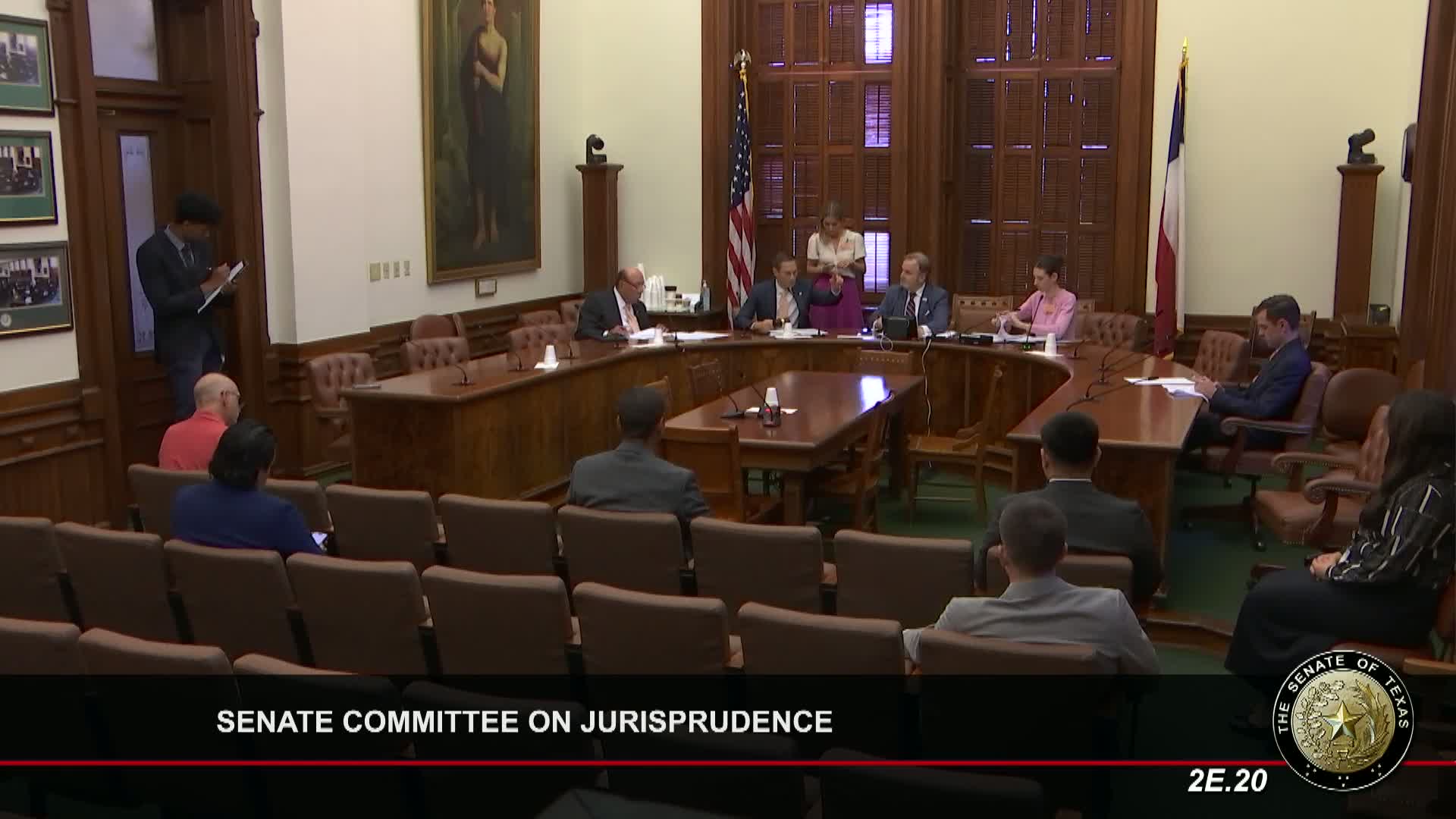
Summary
The Senate Committee on Jurisprudence adopted a committee amendment to House Bill 40 that deletes two proposed judgeships and replaces them with a different single judgeship allocation, then reported the bill favorably to the full Senate.
The Committee on Jurisprudence voted to adopt a committee amendment to House Bill 40 and reported the amended committee substitute favorably to the full Senate.
The committee amendment, offered and explained by Senator Hughes, made “a couple of conforming changes at the request of the finance committee, to make sure that we are in line with what’s in the budget,” and deleted language in the substitute that would have created two new judgeships. Hughes moved that the amendment be rolled into a new committee substitute; the committee adopted the amendment and then adopted the committee substitute as amended.
Committee members discussed whether the amendment was being applied to the original House bill or to the previously laid-out committee substitute and confirmed they were incorporating the amendment into a new substitute that would be prepared after the vote. The record shows the committee reported the committee substitute as amended to the full Senate and recommended certification for placement on the local and uncontested calendars.
The transcript indicates the amendment included changes to judgeship allocations: the substitute deletes the creation of two judgeships as previously drafted and replaces that language with the creation of a single judgeship allocated to different divisions (the amendment describes striking two judgeships in certain divisions and replacing them with one in other divisions). The committee adopted the amendment and recorded the committee’s favorable report; the clerk called the roll and the committee chair announced, "There being 4 ayes and 0 nays, the bill is passed."
The bill as discussed concerns the structure and update of business courts and related judgeships; committee members said the conforming changes were intended to align the substitute with the budget as reviewed by the finance committee.
If the full Senate adopts the committee substitute as reported, the change in judgeship allocations and the conforming budget-related language adopted by the committee will move forward to the next steps of the legislative process.