
Portland advocates outline $20 million plan for ‘Frog Ferry’ pilot connecting Cathedral Park to South Waterfront
Get AI-powered insights, summaries, and transcripts
Subscribe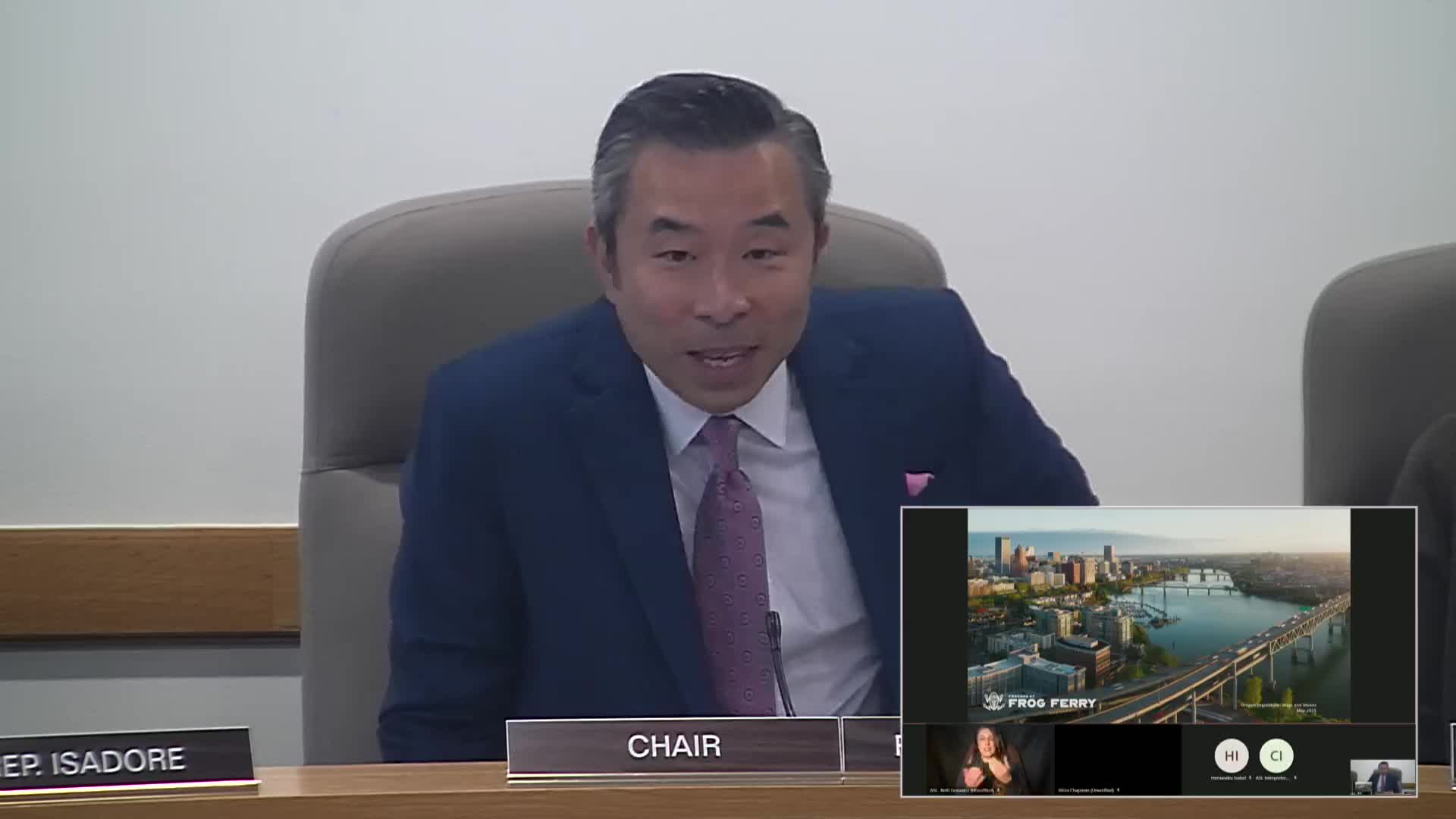
Summary
Supporters of the volunteer-run Frog Ferry told the House Committee on Economic Development, Small Business, and Trade on May 21 they have raised about $40 million in project value and are asking state and city officials for roughly $20 million to start a pilot passenger ferry connecting Cathedral Park and South Waterfront.
PORTLAND — Supporters of the volunteer-run Frog Ferry told the House Committee on Economic Development, Small Business, and Trade on May 21 they have raised about $40 million in project value and are asking state and city officials for roughly $20 million to start a pilot passenger ferry connecting Cathedral Park and South Waterfront.
"We've already derisked this project by $40,000,000," said Susan Bladholm, founder and president of Frog Ferry. "What we need to get us from today to putting a boat on the water is $20,000,000." Bladholm spoke during an informational presentation to the committee, along with Alicia Chapman, founder and CEO of Willamette Technical Fabricators.
Advocates said the pilot would run a single, fully electrified 70-foot passenger vessel carrying about 70 people, operating five to six days a week. The group proposed a $3.50 one-way fare and half-price fares for honored citizens. They told the committee the Cathedral Park–RiverPlace pilot trip would take about 25 minutes by ferry compared with roughly 57 minutes by current transit options.
Supporters argued the route would provide faster commutes for workers, connect underserved neighborhoods on the North Peninsula to jobs and medical services, and reduce vehicle miles. Bladholm told the committee a conservative ridership estimate of roughly 720 passengers per day (about 50% occupancy) could displace about 600 cars daily and reduce roughly 3,200 metric tons of carbon emissions.
Committee members asked technical and operational questions during the informational hearing. Representative Rob Osborne pressed advocates on shoreside charging, turnaround times and security, saying he wanted specifics about how charging infrastructure and onshore operations would be funded and managed.
Bladholm and Chapman described a combination of funding and partnerships the group has pursued: past local grants and volunteer-funded work that they said produced the $40 million in value; two pending state requests that together would supply $10 million in capital construction funding; a separate earmark from a state senator included in a transportation package; and an application for a Portland-specific grant program that supporters said they would seek in the next funding round. Bladholm said the group planned to ask Portland for $10 million from the city and to apply for $4 million in the immediate grant round and $10 million over three years from the Portland fund.
Advocates also described planning and technical work completed with city and regional agencies. They said earlier feasibility work involved PBOT, TriMet and Metro and that other partners include Photon Marine (electric outboard technology) and community groups working on shoreside charging infrastructure. Chapman told the committee the route would support statewide economic development and help employers recruit workers who live north of the river.
Speakers highlighted equity and emergency-response reasons for the ferry. Bladholm said the North Peninsula served by Cathedral Park has about 40% of residents identifying as people of color and about 15% living at or below the poverty line; she added the community faces local air-quality and Superfund concerns and limited transit options. On emergency preparedness, advocates told the committee Multnomah County and Portland emergency agencies are under-resourced for water-based response and that an additional passenger ferry could be another tool during disasters.
The presentation was informational; no committee action was taken. Bladholm told the committee the project will continue to pursue state and city funding and has solicited support letters from neighborhood associations and employers.
Next steps: advocates said a Portland grant application is due in about a week and city budget action is expected in June; they asked the committee and Portland caucus members to support state capital requests and grant applications.