
Senate committee advances bill to speed use of grid-enhancing technologies
Get AI-powered insights, summaries, and transcripts
Subscribe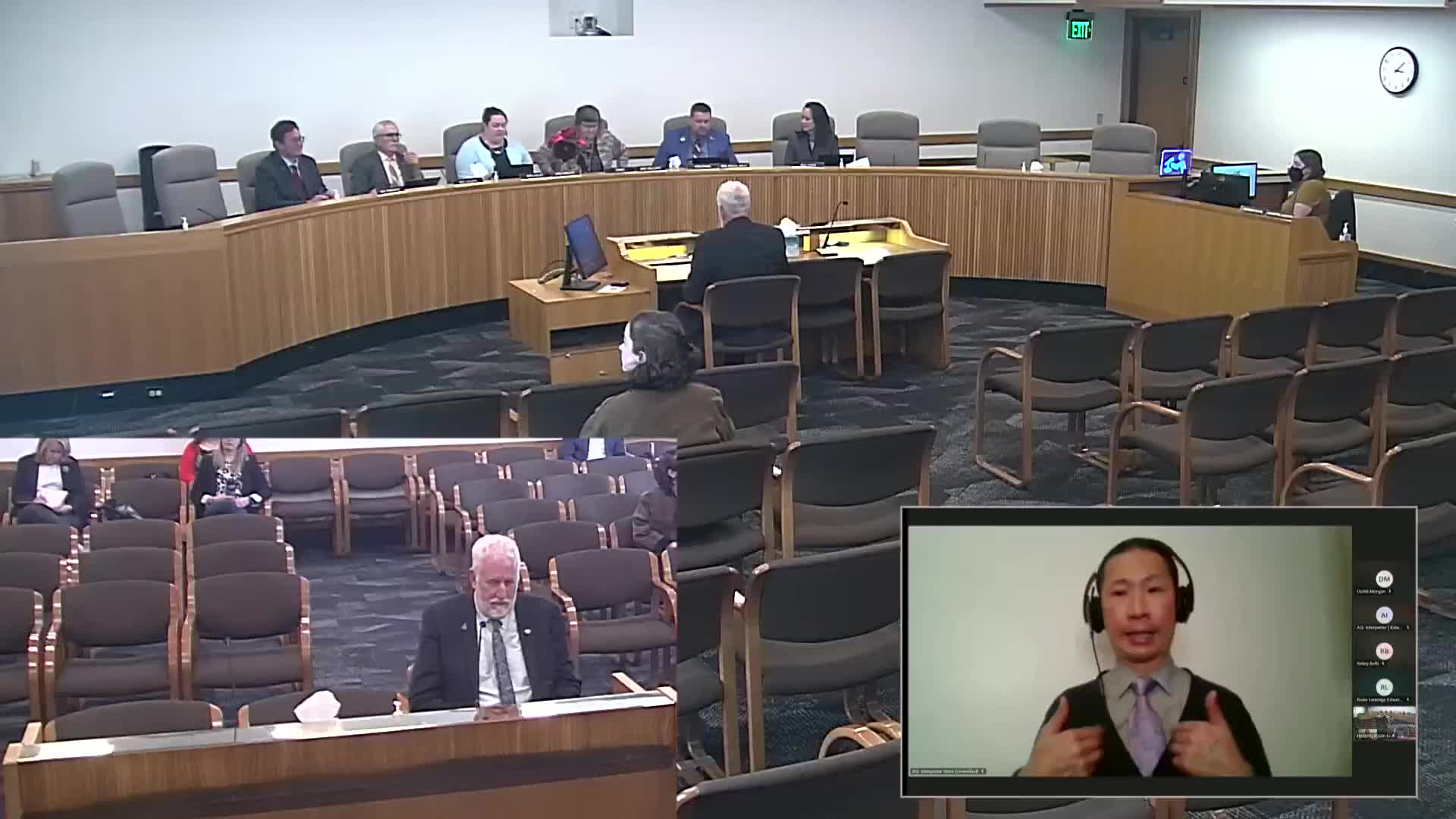
Summary
The Senate Committee on Energy and Environment voted May 21 to advance House Bill 3336 with a dash-4 amendment that tightens definitions, aligns planning requirements with the Oregon Public Utility Commission process and creates limited local-government decision steps for upgrades using grid-enhancing technologies.
The Senate Committee on Energy and Environment voted May 21 to advance House Bill 3336, which requires electric companies filing resource or grid-investment plans with the Oregon Public Utility Commission to analyze and propose grid-enhancing technologies (GETs) and other transmission upgrades.
The bill’s sponsor, Representative Mark Gamba, House District 41, told the committee the legislation aims to “make the most out of our existing transmission systems, which buys us some time to do the work to build more transmission.” The committee adopted a dash-4 amendment, which Chair Solman and members said refines timing, definitions and local-government procedures before the bill goes to the floor.
Why it matters: GETs are techniques and equipment that can increase capacity or performance on existing transmission lines without immediately building new lines. Supporters say using GETs can reduce near-term congestion on Oregon’s grid and postpone some costly new transmission construction; opponents raised concerns about tying the measure to statutory clean-energy requirements.
The dash-4 amendment narrows and clarifies several items raised during earlier negotiations. Committee staff described the base bill’s core requirement as an obligation for utilities to include proposals for additions, improvements or modifications to electric transmission systems in Integrated Resource Plans (IRPs) filed at the Oregon Public Utility Commission (PUC). Representative Gamba said the amendment adds a definition of “advanced reconductoring” that aligns with other states’ language, clarifies that nothing in the bill applies to consumer-owned utilities (COUs), and adds a defined “footprint” for work within existing rights-of-way.
The amendment also adds an explicit reference to the National Electric Safety Code, which Representative Gamba said provides federal minimum safety guidelines “for design, installation, operation, and maintenance of electric systems.” The dash-4 removes a cross-reference to utilities’ wildfire-mitigation plans from the IRP reporting language while retaining language in the bill’s policy section acknowledging that GETs can reduce wildfire risk. Committee staff said the amendment includes a minimal fiscal impact and a no-revenue impact statement.
Not all members supported the measure. Senator Robinson said, “There’s things in here that are good, but I just can’t vote for something that says we’ve got to meet our required clean energy targets. It seems like a really bad idea to me, an expensive idea, and I don’t think it was necessary, but I just I’m gonna be a no.”
Formal actions: Vice Chair Brock Smith moved adoption of the dash-4 amendment; the committee raised no objection and the chair announced, “Motion carries.” The vice chair then moved House Bill 3336 as amended to the floor with a due-pass recommendation. Roll-call votes recorded by the clerk showed four ayes (Senator Golden; Senator Pham; Vice Chair Brock Smith; Chair Solman) and one no (Senator Robinson); the motion carried.
Discussion versus decision: The record shows both substantive discussion of the bill’s technical scope and a formal decision to advance the amended bill to the floor. Committee remarks and questions focused on definitions (especially advanced reconductoring), coordination with IRP filing processes at the PUC, federal safety standards and limits on the bill’s applicability to COUs.
What’s next: With the committee’s due-pass recommendation, House Bill 3336 will proceed to the Senate floor for further consideration. Committee members said they plan additional hearings next week on related transmission and grid topics.