
Committee advances bill to allow unemployment benefits for striking workers with caps and school cost rules
Get AI-powered insights, summaries, and transcripts
Subscribe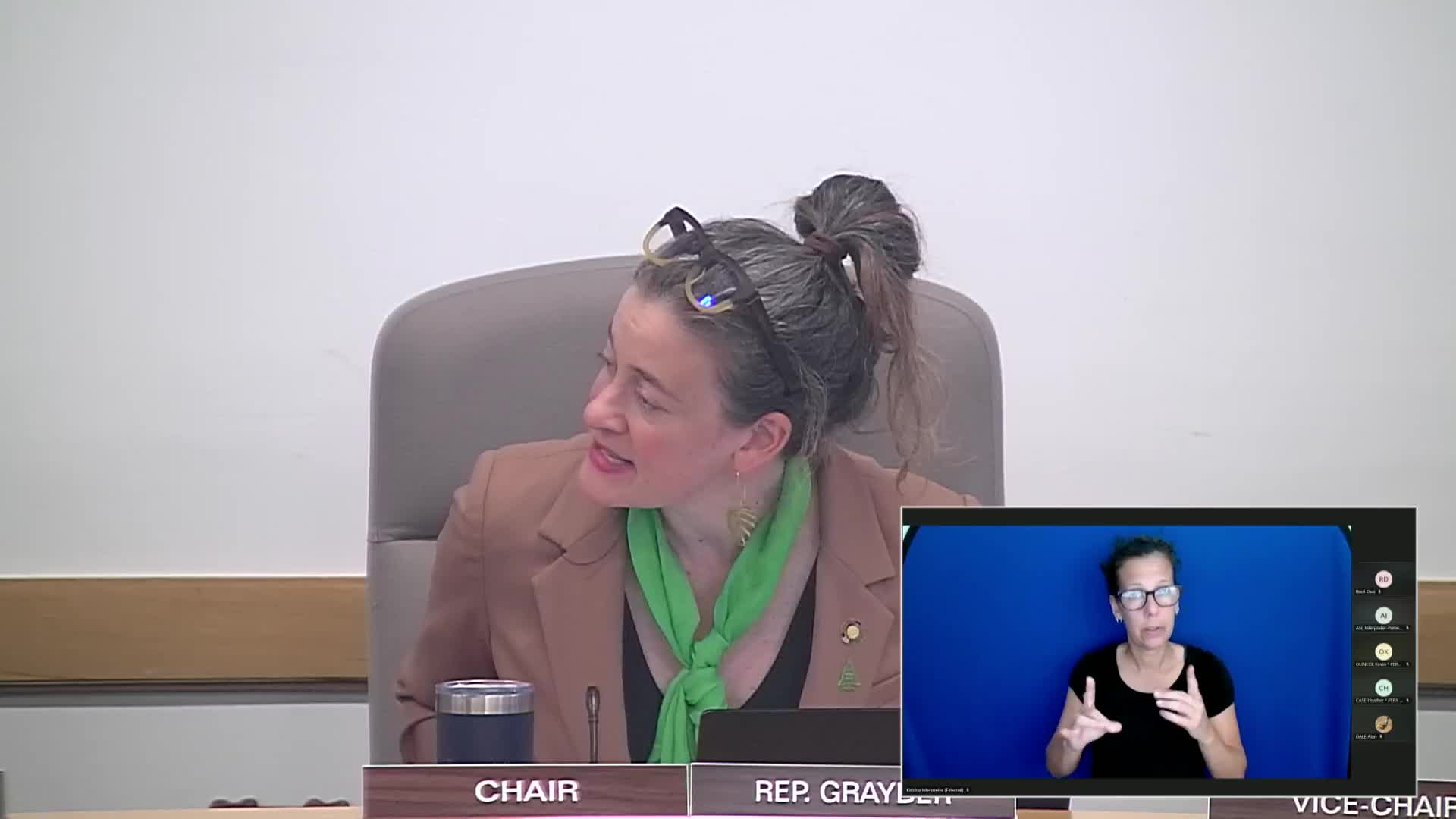
Summary
The House Committee on Labor and Workplace Standards voted May 21 to advance Senate Bill 916 A to the House floor with a due-pass recommendation after adopting two amendments that change how unemployment insurance (UI) benefits apply to workers locked out or on strike.
The House Committee on Labor and Workplace Standards voted May 21 to advance Senate Bill 916 A to the House floor with a due-pass recommendation after adopting two amendments that change how unemployment insurance (UI) benefits apply to workers locked out or on strike.
The committee adopted a conflict amendment (A23) to reconcile differences with House Bill 2236 and then approved the A24 amendment, which narrows when striking workers are disqualified and ties any cap on post-waiting-week benefits to the state's UI tax schedule. The committee voted to move the bill to the floor as amended; Chair Graber will carry the bill.
Why it matters: supporters say the bill helps striking workers and their families cover basic costs during labor disputes and could shorten strikes; opponents, including multiple school-district organizations, warned the measure risks significant new costs and administrative burdens for districts and local governments.
Key provisions and votes - Base bill (SB 916 A): Changes UI disqualification rules for weeks an individual is unemployed due to a lockout; retains a disqualification for the first strike week in some versions but the adopted amendments modify timing and caps. Vice Chair Munoz moved the final floor motion; the motion passed in committee. - A23 (conflict) amendment: Resolves conflicts with House Bill 2236 so both sets of definition changes can coexist if both pass. The committee adopted A23. - A24 (dash 8 24) amendment: Specifies that, after the first week a director of the Oregon Employment Department (OED) finds unemployment is due to a strike, an otherwise-eligible individual is not disqualified for benefits for subsequent weeks subject to caps tied to the UI tax schedule. It also requires UI benefits charged to a school district or education service district for weeks during a labor dispute to count toward the employee's total compensation and allows the school district to deduct those amounts from the employee's future wages for cost recovery. The committee adopted A24. - A15 amendment (failed): Would have replaced the measure with a version disqualifying the first two strike weeks, allowing six weeks of benefits after the two-week disqualification, added a Jan. 1, 2036 sunset, and required annual reporting by OED on strike claims and benefits; that amendment failed in committee.
Committee discussion and concerns Committee members split over whether the bill would substantially increase strikes or instead shorten them by reducing financial pressure on workers. Supporters, including Representative Mill, framed the bill as protecting families of union workers during strikes. Opponents, including Representative Sharp and members citing letters from superintendents and school associations, warned that fiscal statements were "indeterminate," that past UI changes unexpectedly cost school districts millions, and that new liabilities could force cuts to education programs or operations.
Oregon Employment Department testimony Lindsay Leahy, Unemployment Insurance Division director for the Oregon Employment Department, explained how OED interprets "back pay" versus "future pay": for UI purposes OED looks at the weeks a strike occurred and counts payments that cover those weeks as back pay; settlements that include payments for future makeup days are not considered back pay for OED's calculations. Leahy also described employer funding types: tax-paying employers remit payroll taxes on a schedule, while reimbursing employers repay benefits dollar-for-dollar after claims are paid.
Next steps The committee approved sending SB 916 A, as amended, to the House floor with a due-pass recommendation; Chair Graber said she will seek further reporting from OED and watch fiscal impacts closely. Representative Scharf announced she will file a minority report.
Quotes "It is my utmost intention'to protect that fund and make sure that we have a solvent, robust UI fund," Chair Graber said during debate.
"We look at the weeks of unemployment'and then what payment is covering that time period," Lindsay Leahy, director of OED's Unemployment Insurance Division, said when explaining back pay versus future pay.
"This is a bill about making sure that the families of union workers are taken care of'are able to eat, at least for the short term in the case of a strike," Representative Mill said in support.
"Fiscal statements like this, especially at the last minute, make me very, very nervous," Representative Sharp said, citing prior UI changes that increased school costs.
Ending The bill will go to the full House floor with a due-pass recommendation; committee members signaled they may press OED for more detailed reporting during the interim or ask for tailored information to monitor any fiscal impacts of the change.