
Senate Judiciary approves texting, time limits for telephone solicitation; sends bill to floor
Get AI-powered insights, summaries, and transcripts
Subscribe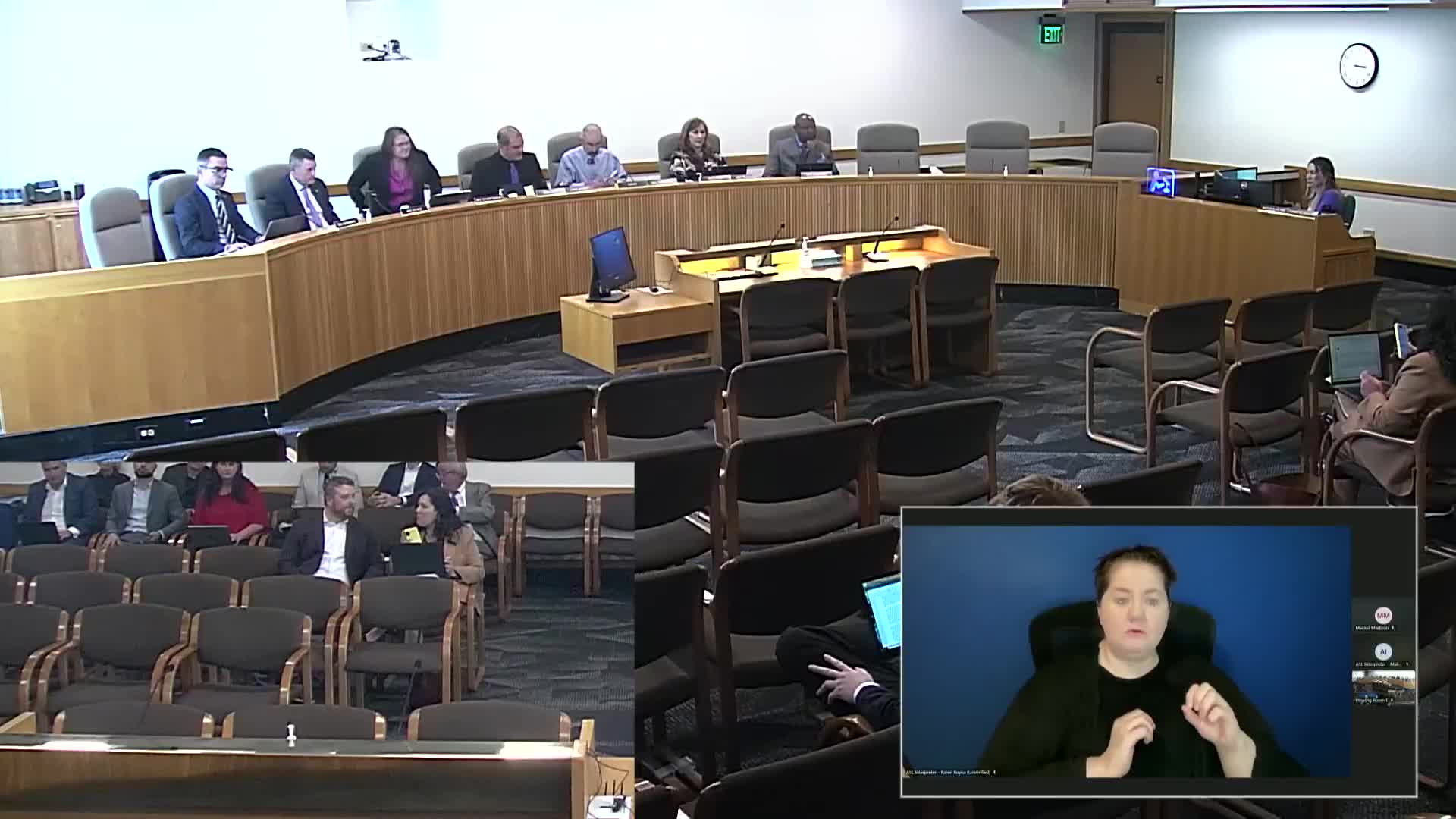
Summary
The Senate Committee on Judiciary adopted an A3 amendment to House Bill 3,865 A to expand Oregon's telephone-solicitation rules to cover text messages, set quiet hours at 8 a.m. to 8 p.m., cap solicitations at three contacts per 24 hours and create narrow exemptions; the committee then sent the bill to the Senate floor with a due-pass vote.
The Senate Committee on Judiciary on May 21 adopted an A3 amendment to House Bill 3,865 A that adds text messages to the state's telephone-solicitation rules, sets quiet hours from 8 a.m. to 8 p.m., and limits a solicitor to three contacts per 24 hours, then voted to send the bill to the Senate floor with a due-pass recommendation.
The amendment expands the definition of telephone solicitation in ORS 646.651 to include a call on a telephone or telephone line, a text message sent via a standard telephone network, e-mail sent as a text message, or a message sent using rich communication services. The A3 narrows quiet hours to 8 a.m. to 8 p.m., creates an established-business-relationship exemption, allows reliance on a customer's area code for compliance, and exempts certain categories (debt buyers subject to the Fair Debt Collection Practices Act, public safety and law enforcement, school districts and direct responses to a customer's message). The amendment sets the bill's effective date as Jan. 1, 2026.
Representative Nathan Sosa, sponsor on the House side, told the committee the A3 was "an attempt to address as many of those concerns as we could, while maintaining the purpose of the bill." He said the group simplified the text-message definition to "a text message" rather than trying to enumerate message types, and added the established-business-relationship exemption so existing vendors could reach customers outside quiet hours where appropriate.
Amanda Dalton of the E‑commerce Innovation Alliance told the committee the amendment improved clarity but left unresolved compliance problems. "The amendment fails to include ... prior express written consent," she said, arguing that telephone-disclosure requirements in ORS 646.611 do not translate cleanly to text messaging and that businesses need clearer, consolidated language to avoid inadvertent liability.
Committee members pressed for clarity about the amendment's scope. Senator Gelser Bloem asked whether modern calling platforms or masked caller IDs would violate a provision forbidding misrepresentation of the telephone number or location; the chair responded that the provision was aimed at willful misrepresentation and did not intend to reach standard campaign or political phone-banking practices. Senator Broadridge warned that some political campaign solicitations (for contributions or events) could fall outside the bill's exemption for polling or expression of opinion and said that might create an Unlawful Trade Practices Act enforcement risk.
Several senators urged more comprehensive statutory cleanup rather than a single-session patch. One committee member proposed forming an interim work group to harmonize ORS provisions covering robocalls, telephone disclosures and do-not-call rules; Representative Sosa and other stakeholders said they had begun discussions but some businesses remained unsatisfied and wanted more time for joint drafting.
The committee recorded votes that moved the A3 amendment into House Bill 3,865 A and then approved the bill as amended for the Senate floor with a due-pass recommendation. The record shows Bosanski voting aye when the A3 was adopted; on the final floor referral roll call, senators recorded included Senator Gallo (aye), Senator Manning (aye), Senator McLean (no), Vice Chair Zackcher (no) and Chair Posnick (aye). The committee chair announced the motion carried.
The bill had a previous public hearing on April 24 and carries an effective date of Jan. 1, 2026, per the A3 amendment. Supporters framed the changes as consumer-protection measures; business groups asked for clearer, medium-specific rules and proposed further statutory revision.
If enacted, the bill would allow businesses to rely on a customer's area code to determine local time for compliance, exempt communications made in direct response to a customer's message, and remove the previous 9 a.m. to 9 p.m. quiet-hours window in favor of the 8 a.m. to 8 p.m. standard in the amendment.
The committee closed the work session on House Bill 3,865 A after voting to send the amended bill to the floor with a due-pass recommendation.