
Committee hears amendments to SB 926 on wildfire liability as tax relief and PUC oversight draw scrutiny
Get AI-powered insights, summaries, and transcripts
Subscribe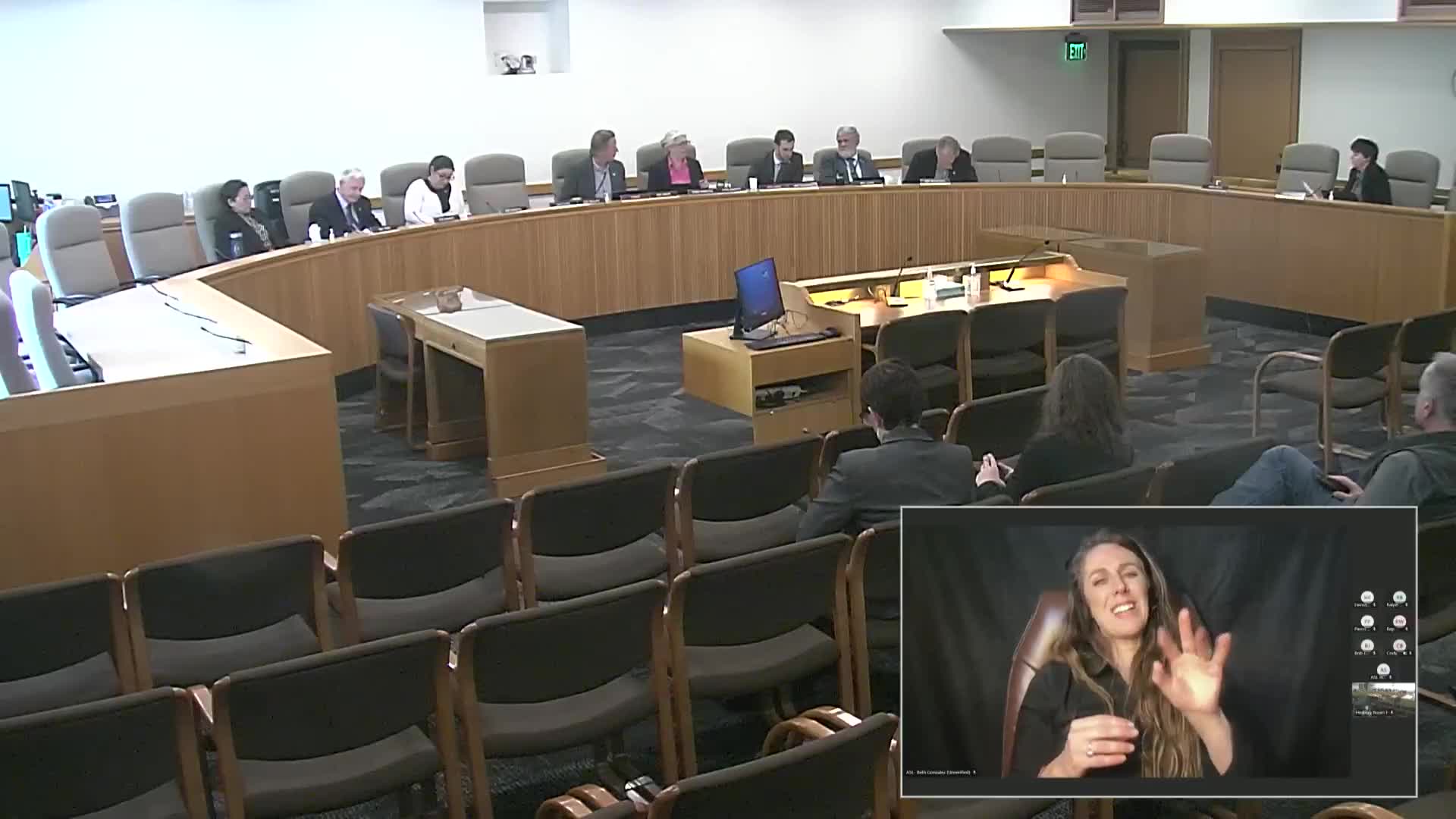
Summary
The House Committee on Judiciary opened public testimony on Senate Bill 926 A, a measure that would bar electric companies from recovering wildfire liability costs from ratepayers and revise how plaintiffs recover damages, including creation of a state wildfire recovery fund and new Public Utility Commission oversight.
The House Committee on Judiciary opened public testimony on Senate Bill 926 A, a measure that would bar electric companies from recovering wildfire liability costs from ratepayers and revise how plaintiffs recover damages from utilities, including creation of a state wildfire recovery fund and new Public Utility Commission oversight.
The amendment described to the committee would "replace the measure and create a state wildfire recovery fund to expeditiously provide designated wildfire victims with up to a hundred thousand dollars," according to a legislative staffer presenting the amendment on OLIS, and would require utilities to seek wildfire safety certification from the Public Utility Commission (PUC) and commission a third‑party catastrophic‑risk report for the legislature.
Why it matters: The bill addresses how wildfire victims are compensated and who ultimately bears liability and related costs. Witnesses said the measure also affects tax liabilities for victims, how investor‑owned utilities may move cash to parent companies, and whether the PUC should be empowered to block dividend or other distributions that would impair payment of judgments.
Public commenters focused on tax treatment for survivors and on procedural protections in litigation. Ralph Blomers, a public commenter, said survivors face severe tax consequences: "They get taxed on their lost house at ordinary income rates, and they end up with pennies on the dollar." Blomers urged the committee to change the bill’s language to ensure utilities bear tax liabilities caused by utility‑ignited fires rather than leaving survivors exposed because of the timing of federal or state tax relief.
Cody Byrne, speaking "on behalf of fire survivors," echoed that concern and faulted amendments that he said would increase delay and litigation. Byrne said the amendments remove earlier language intended to address insurance offsets and prejudgment interest and warned that the changes "will essentially generate more litigation and more delay. And it is that delay that Pacific Corp continues to use." He also noted ongoing trials in the James case and said liability was determined in June 2023 for the class, while damage amounts remain outstanding for many plaintiffs.
Senator David Brock Smith, the bill’s sponsor in the Senate, asked whether the PUC should not only receive notice before a utility distributes dividends or other returns but instead be required to approve such distributions. The sponsor said he was "hopeful" the PUC could have a larger role when the commission evaluates bond or security requirements tied to judgment exposure.
Nolan Moser, Executive Director of the Oregon Public Utility Commission, told the committee that under the amendment the PUC "could suspend that payment, really indefinitely," and that the commission could require utilities to retain a certain level of equity rather than distribute it to holding companies. Moser said the PUC would weigh whether a utility can continue to serve customers when deciding whether to permit dividend or other distributions.
Bob, representing the Citizens Utility Board (CUB) at the hearing, said the notice and suspension process mirrors typical PUC practice and that the commission could set a minimum equity level to keep capital available for system investments and for satisfying judgments.
Committee staff and witnesses also discussed tax relief. Multiple speakers cited federal disaster tax relief enacted by Congress (referred to in testimony as HR 5863 or the federal disaster tax relief act of 2023) and a 2024 Oregon legislative action extending state relief. Witnesses warned that a federal provision that excludes qualified wildfire relief from taxable income is slated to sunset on January 1, 2026, and that the bill’s current measuring date language (tied to the date liability was found in the James case, June 2023) could leave survivors without intended tax benefits if claims are resolved after the federal sunset.
Witnesses urged the committee to remove a hard anchoring date and instead state that tax consequences caused by a utility‑caused fire are the utility’s responsibility. As one commenter put it, "if there are tax consequences, the utility is responsible for them, period."
Committee action: The committee closed the public hearing and carried the SB 926 work session to a subsequent meeting for further drafting and discussion.
Background and next steps: The amendment also would direct the PUC to report expert findings and recommendations to legislative committees in 2026 and contemplate a stakeholder process for potential 2027 legislation. The committee said it expects additional technical drafting and will reconvene the work session at a later time to consider changes and next procedural steps.
No formal floor vote on SB 926 occurred at the meeting; the committee carried the item over for continued work.