Get Full Government Meeting Transcripts, Videos, & Alerts Forever!
Get email alerts on the Emergency Management Budget And Interoperability topic
No spam. Unsubscribe anytime.
Public Safety Subcommittee approves Oregon Emergency Management budget, moves related bills to full committee
Summary
The Public Safety Subcommittee accepted the Legislative Fiscal Office recommendation for the Oregon Department of Emergency Management budget, approved a dash‑1 amendment, and forwarded three related bills — the department budget and two implementation bills — to the Ways and Means full committee and the floors.
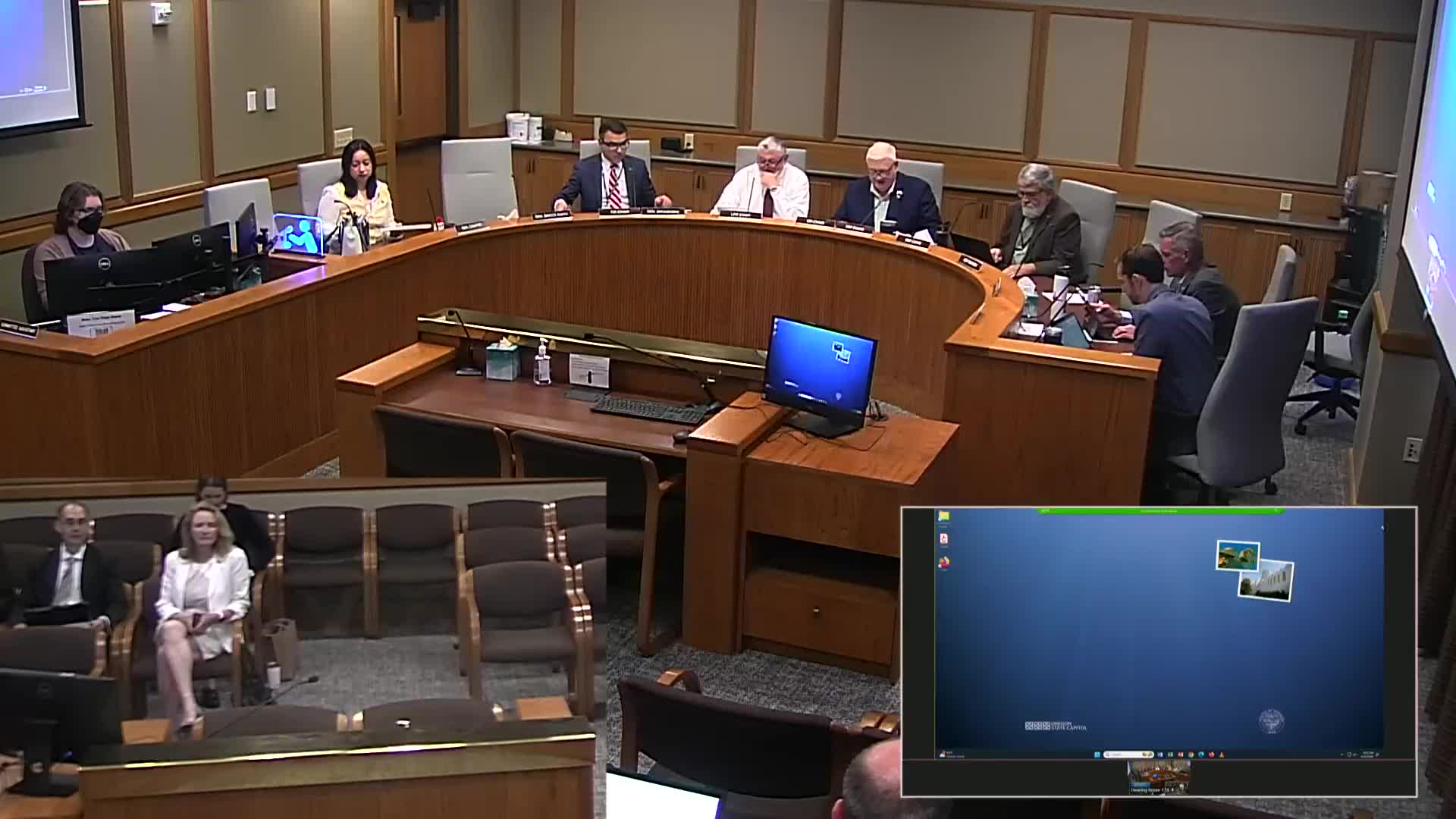
The Public Safety Subcommittee on May 22 approved the Legislative Fiscal Office recommendation for the Oregon Department of Emergency Management (ODEM) budget and moved the agency’s related implementing bills to the full Ways and Means committee.
The Legislative Fiscal Office analyst told the panel the recommended biennial budget for ODEM is $1,318,042,644, consisting of $33,276,618 General Fund, $186,207,711 other funds and $1,098,558,315 federal funds, and would fund 132 positions (128.5 full‑time equivalent).
The recommendation incorporated a dash‑1 amendment adopted by the subcommittee. “LFO recommends a budget of $33,276,618 General Fund, $186,207,711 other funds, $1,098,558,315 federal funds, and 132 positions, 128.5 FTE,” the Legislative Fiscal Office analyst said while walking the committee through division‑level packages and fund shifts.
Committee members discussed several packages included in the recommendation, including a finance staffing package that would establish five state positions to replace contracted shared financial services, fund shifts that rebalanced general, other and federal funds across divisions, and increased infrastructure and contract funding tied to the Oregon Emergency Response System transfer.
The subcommittee also considered policy and statutory changes packaged with the budget. Senate Bill 234 was described as extending the scheduled transfer date for the Oregon Emergency Response System from July 1, 2025, to July 1, 2026; the Legislative Fiscal Office said that change corresponds with a one‑time General Fund savings of $1,500,000 and a 3.5 FTE reduction in the upcoming biennium due to the delayed transfer. The subcommittee voted to move SB 234 to the full committee with a due‑pass recommendation.
Senate Bill 826 was presented as the vehicle to transfer the State Interoperability Executive Council and the statewide interoperability program from the Department of Administrative Services to ODEM, including records and funding. The LFO noted that assessments currently administered by DAS would require statutory authority for ODEM to continue charging the program’s assessments; the panel moved SB 826 to the full committee with a due‑pass recommendation.
The committee also approved changes to ODEM key performance measures. The subcommittee accepted LFO’s recommendation to replace or revise measures including (1) changing the emergency information accessibility metric to a Web Content Accessibility Guidelines compliance score tied to providing press releases in Oregon’s top three languages within 24 hours, (2) refocusing statewide exercise participation to community partners with a role in comprehensive emergency management plans, and (3) adding an employee engagement measure and an audit‑corrective‑action completion measure. Two measures tied to tracking unspent federal grants returned to FEMA were removed pending improved tracking systems.
A budget note adopted by the subcommittee requires ODEM to report to the Public Safety Subcommittee during the 2027 legislative session on existing emergency response mapping for critical public facilities, including state, local and tribal facilities with unique risk factors and interoperability standards needed for a common operating picture during critical incidents.
Committee leaders cautioned that the overall budget environment limited funding for some preparation and resilience grants the agency had sought. “The budget forecast is not great,” the co‑chair said, noting the subcommittee made selections intended to move the agency forward while acknowledging unmet needs.
All motions taken in the work session were approved without recorded roll‑call tallies and the bills and amendment were forwarded as recommended.