
Mass. House passes $529.8 million supplemental appropriation with education and campus law‑enforcement amendments
Get AI-powered insights, summaries, and transcripts
Subscribe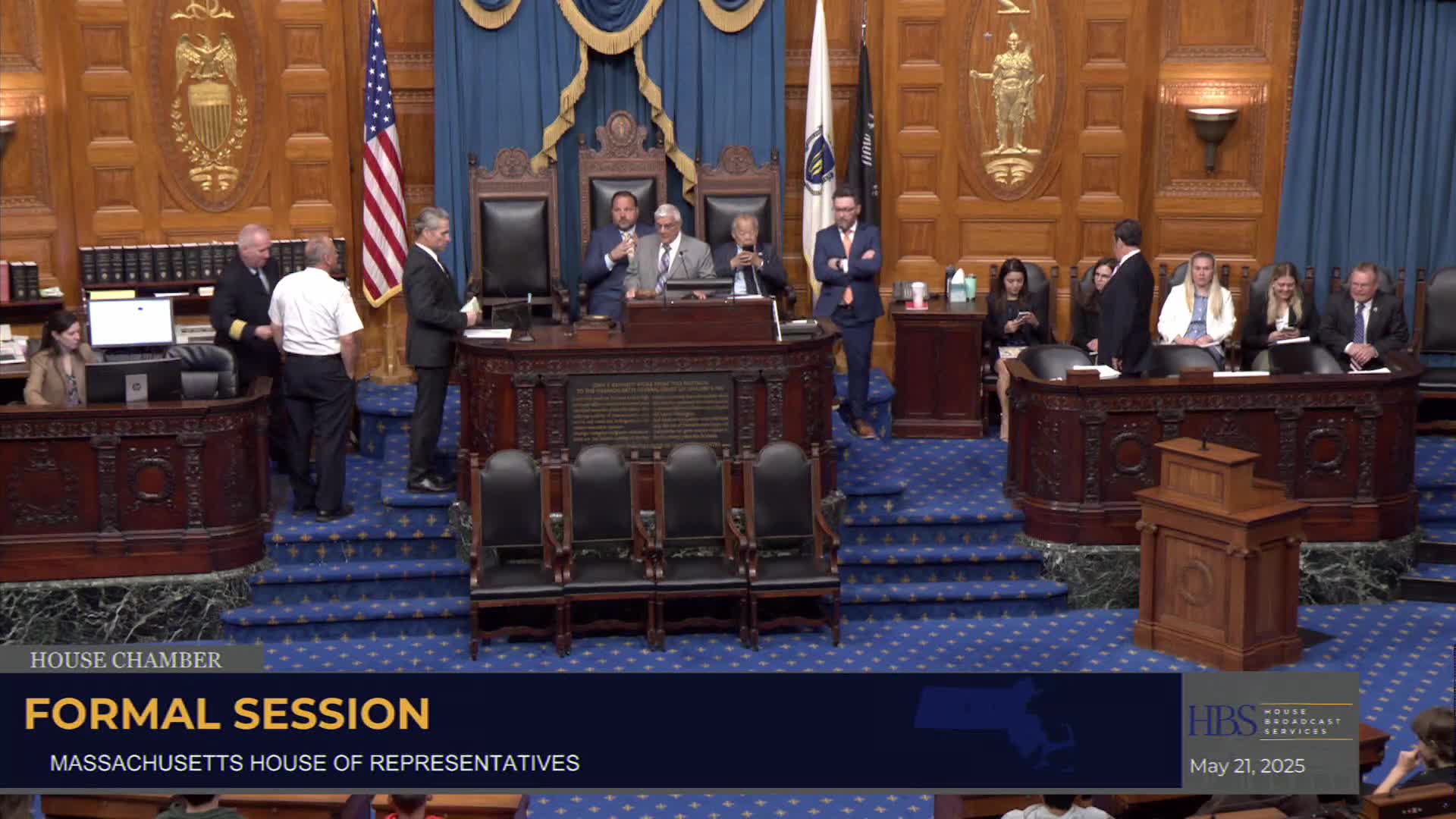
Summary
The Massachusetts House on May 20, 2025 passed a $529,832,564 supplemental appropriation bill (H.4150), adopting amendments that add statutory protections for English learners and students with disabilities and clarify a firearms exemption for post‑certified campus law enforcement.
The Massachusetts House of Representatives on May 20, 2025 passed an act making supplemental appropriations for fiscal year 2025 (House No. 4150), adopting the measure by a roll call of 49 in favor and 1 opposed. The bill carries a total appropriation of $529,832,564 and was ordered to be engrossed.
The amendment debated most extensively, amendment number 61, was offered by Representative Paich of Wellesley and co‑sponsored by Representative Moran of Lawrence. Representative Paich said the change “is not about creating new burdens. It is about affirming our commitment to equity, to accountability, and to the educational success of every student regardless of the language spoken at home or any disability of that student.” Representative Moran told colleagues the amendment would “codify into law the rights of English language learners and students with disabilities” and would bar discrimination in public schools based on immigration or citizenship status or disability.
According to debate, amendment 61 would insert several sections after Section 11 of chapter 69 of the General Laws to require districts to identify and assess English learner students, provide appropriate programming and staffing, monitor academic progress, make assessments available in a student’s primary language where appropriate, and set expectations for interpreters and translators used by schools. A roll call on the amendment returned 48 in the affirmative, 1 in the negative; the amendment was adopted.
Representative Rogers of Cambridge spoke for amendment number 27, described on the floor as a technical update to the firearms modernization legislation passed in the prior session. Rogers said the amendment “will make clear that post certified law enforcement serving at private colleges and universities are included in that exemption,” noting those officers are held to the same POST standards as municipal police. The amendment was adopted by a 51‑0 roll call.
A consolidated amendment A to the bill was also adopted (vote displayed as 49‑1), and after consideration of the amendments the full bill was passed to be engrossed (49‑1). The measures and votes were taken by successive roll calls during the House session.
The House did not detail the text of the new sections on the floor beyond the summaries offered by sponsors. The debate referenced federal authorities in support of amendment 61, including the Equal Educational Opportunities Act and the U.S. Supreme Court decision Plyler v. Doe (1982), and placed the changes in the context of existing state education law (chapter 69).