
Grand Junction council faces divided public over Fourth and Fifth Street pilot after safety data and a 4–3 vote
Get AI-powered insights, summaries, and transcripts
Subscribe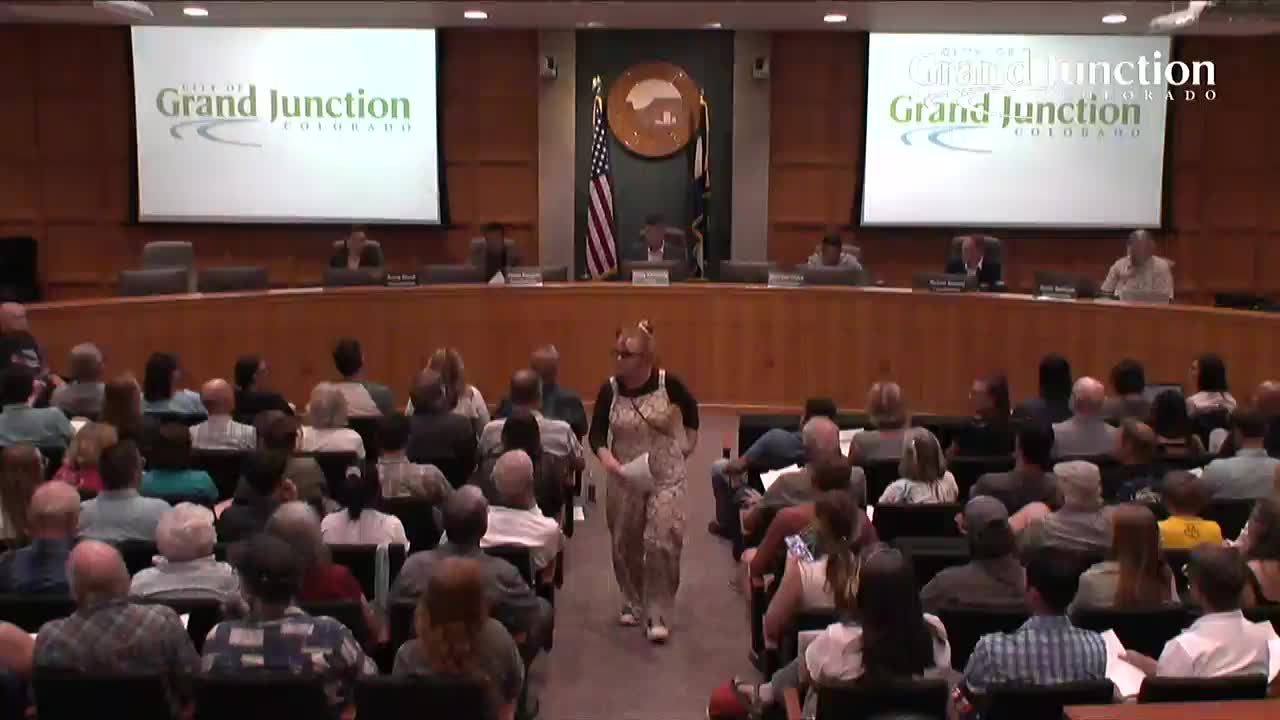
Summary
A months‑long pilot that narrowed lanes on Fourth and Fifth streets drew sharply divided public comment Tuesday. Residents and business owners clashed over safety, traffic flow and process after a 4–3 council vote to cancel the next phase of the plan; council agreed to schedule more discussion at an upcoming workshop.
Mayor Cody Kennedy and members of the Grand Junction City Council faced sharply divided public testimony on Tuesday over a pilot project that narrowed Fourth and Fifth streets to slow traffic and add bike and pedestrian space.
Proponents — many who live in the Hawthorne Park and north‑of‑Grand Avenue neighborhoods — said the changes reduced speeding and made walking and bicycling safer. “The safety improvements have worked well in my favor as a bicyclist and a pedestrian,” Tom Acker said. He cited a city safety summary presented at the workshop showing a 63% drop in crashes during the pilot period.
Opponents — including several downtown business owners and other residents — said the pilot created traffic delays and hurt access to businesses. “For me personally, I am one of 12 hospitality businesses between Fourth and Fifth and Maine and Colorado,” said Josh Nierberg, a downtown property owner. “More than half of my staff uses those corridors on a daily basis and do not drive to work.”
The division came after a May 7 council decision, referenced repeatedly by speakers, that canceled the project’s next phase by a 4–3 vote. Several speakers described the decision as abrupt; others said the council followed public sentiment. Data presented by speakers at Tuesday’s meeting included an analysis referenced by David Lemon showing a decline in crashes from an average of about 5.2 per month (2016–late 2023) to roughly 1.87 per month in the eight months after the pilot began, with no fatalities in that period. Lemon said the city had proposed adjustments in a next phase that would address remaining concerns.
Council members said they heard public concern and also want to avoid repeating a process that left many residents feeling excluded. After hours of public testimony, council agreed to place the Fourth/Fifth discussion on the next council workshop agenda so members can consider alternate designs and implementation details. Council member Ballard said he still intends to proceed with the work to revert the roadway to prior two‑lane geometry while additional options are developed: “I still wanna move forward with the reversion,” he said.
The council did not adopt a new ordinance or final design Tuesday; staff told the council they had received instructions to begin reversion work and that any further changes would be discussed at the upcoming workshop. The council meeting record shows the topic drew an unusually high number of public commenters representing residents, business owners, engineers and neighborhood advocates, who urged both patience for further study and urgency to preserve safety.
The council scheduled a workshop follow‑up to take up design options and next steps, and asked staff to bring traffic analyses, enforcement alternatives, and proposed revisions that could respond to residents’ safety concerns while addressing business access.