Get Full Government Meeting Transcripts, Videos, & Alerts Forever!
Get email alerts on the China Competition topic
No spam. Unsubscribe anytime.
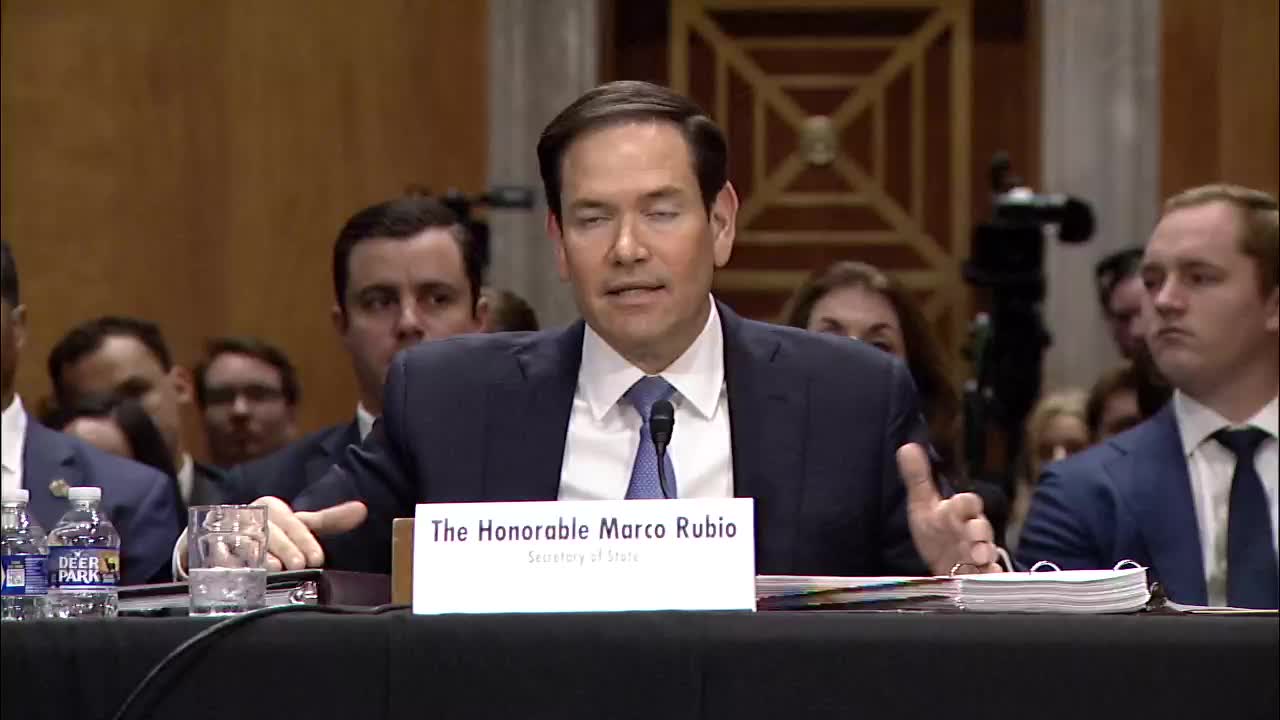
Committee hears Secretary Rubio outline China competition and supply‑chain risks; rare earths and energy cited as priorities
Summary
Secretary Rubio told senators China now dominates critical mineral access and processing globally and that U.S. policy must combine domestic industrial steps with diplomatic and development tools. He flagged the Development Finance Corporation and Millennium Challenge Corporation as tools for private‑sector catalysis.
Senators and the secretary discussed strategic competition with the People’s Republic of China, with Rubio describing China’s global reach into raw materials, processing and export markets and calling it “America’s greatest long‑term competitor.”
Rubio outlined three structural vulnerabilities: China’s access to rare earth minerals worldwide; its processing dominance for those materials; and China’s heavy market share in pharmaceuticals and other critical industrial inputs. “They are a predominant … in their access. And it's one of the points of frustration that I have,” he said.
On development, Rubio argued that the U.S. must catalyze private‑sector growth through tools such as the Development Finance Corporation (DFC) and the Millennium Challenge Corporation (MCC). He said both entities are independent and under review, but that “DFC has an opportunity to potentially even expand” and that MCC reforms aim to improve, not eliminate, the compact model.
Lawmakers asked whether Beijing is stepping into gaps left by U.S. assistance changes. Senators offered examples of Chinese funding in Cambodia, Africa and Latin America; one senator submitted a fact sheet about PRC activity. Rubio rejected the notion that China can replace U.S. humanitarian assistance in kind and characterized Belt and Road lending as “predatory,” saying Chinese projects often lead to indebtedness and require Chinese firms for implementation.
Ending: Senators and the secretary agreed that an integrated, long‑term industrial and diplomatic response is needed to reduce critical‑material dependencies and better align economic and security strategy.