Get Full Government Meeting Transcripts, Videos, & Alerts Forever!
Get email alerts on the Political Independence And Privacy topic
No spam. Unsubscribe anytime.
Senators press Long on presidential directives, statutory limits and taxpayer privacy protections
Summary
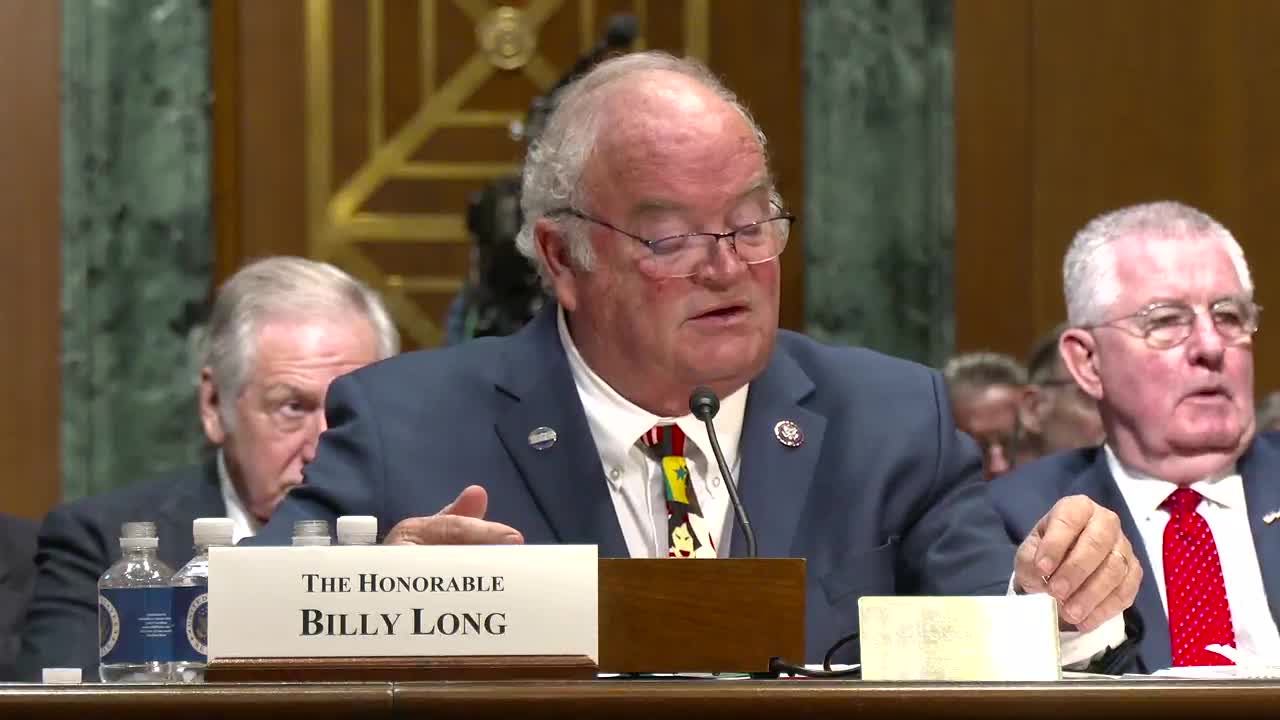
Senators tested Representative Billy Long on whether he would resist presidential pressure to direct audits and on safeguards for taxpayer data, citing a federal statute Republicans and Democrats invoked during the hearing and the Littlejohn leak prosecution.
Senators across the aisle pressed Representative Billy Long on the legal limits of executive‑branch influence over tax administration and on steps he would take to protect confidential taxpayer information if confirmed as IRS commissioner.
The committee repeatedly cited a federal statute — referenced in the hearing as “26 USC 72 17” — that senators said bars members of the executive branch from requesting the IRS to start or stop an audit of a particular taxpayer. Senator Warren read the provision aloud and asked Long whether the president could lawfully direct the agency; Long repeatedly said he would “follow the law” and that, if such a prohibited request were made, he would consult legal staff and “turn it over to the IG” — a reference to the Treasury Inspector General.
Why it matters: Senate members emphasized that the IRS must not be used as a political tool to target opponents or protect allies. Senator Wyden and Senator Warren cited historical abuses and the Nixon era as the basis for statutory prohibitions; they and others pressed Long to commit that he would refuse any unlawful directive and report it to oversight channels.
Privacy and leaks: Senators also discussed recent improper disclosures of taxpayer returns by contractors and government employees. Senator Wyden reminded the committee that the contractor involved in the high‑profile ProPublica disclosures has been convicted and is serving a prison term. Senators asked how Long would protect taxpayer data and whether he would assert strong penalties and safeguards; Long responded that protecting taxpayer data is “utmost” and referenced Section 6103 of the Internal Revenue Code as a core confidentiality obligation.
Nominee's pledge and limits: Long told senators he would follow the law, consult legal staff and abide by OGE ethics controls. He repeated that he did not intend to allow political direction of IRS investigations: “I'm not gonna have anybody direct me to start audit for political reasons,” he said . Committee members asked for explicit procedures, with Senator Whitehouse asking Long to codify guardrails to prevent circumvention; Long said he would work with the Department of Justice and other career officials to ensure appropriate internal controls and reporting to inspectors general where required.
What remains unresolved: Senators pressed Long for clearer, unequivocal answers about whether he would say “no” to presidential requests and immediately report them. Long repeatedly answered that he would follow the law and consult legal staff; several senators said they wanted a direct commitment and asked for follow‑up in writing.