Get Full Government Meeting Transcripts, Videos, & Alerts Forever!
Get email alerts on the Syria Policy topic
No spam. Unsubscribe anytime.
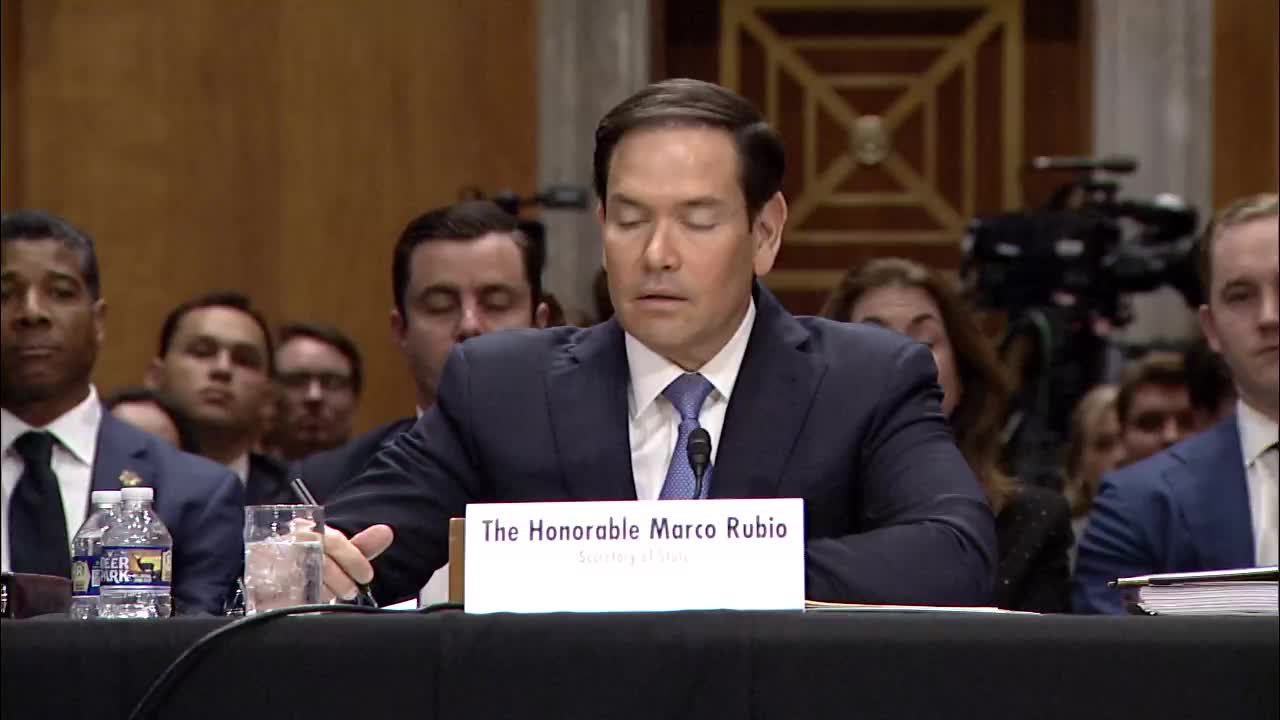
Senate questions security hurdles after State Department tells lawmakers sanctions relief cleared for Syria
Summary
Secretary Rubio said the administration lifted some Syria sanctions to allow neighboring countries to assist a transitional authority and urged Congress to consider broader legal changes, while emphasizing security constraints for reopening an embassy in Damascus.
Senate Foreign Relations members pressed Secretary Rubio on the administration’s decision to suspend or lift sanctions on Syria and the next steps for reengaging with Syrian authorities.
Rubio said the move aims to enable neighboring states and partners to provide assistance and to encourage the formation of basic governance and security institutions. “The lifting of the sanctions’ most immediate impact will be to allow neighboring countries to begin to assist [the transitional authority] to build governance mechanisms,” he said, adding that waivers under the Caesar Act will not alone attract private investment.
Committee members emphasized that any reestablishment of a U.S. diplomatic presence must meet security requirements. Rubio said opening an embassy in Damascus is “entirely driven by security concerns,” noting the need to ensure safe evacuation routes, medical‑evacuation plans and protection against armed groups. “You have to be able to get people out. We have all kinds of requirements that are there for a reason,” he said.
Rubio described the transitional authority as fragile and said it may have only “weeks, not many months” before risking collapse into renewed civil war if governance and aid do not flow. He cited high levels of displacement and mistrust inside Syria: “They are dealing with deep internal distrust in that country.”
Lawmakers sought clarification about the legal and congressional steps needed to make sanctions relief, waivers and any subsequent investments durable. Rubio urged congressional cooperation for broader statutory fixes that could encourage private investment if the transitional authority takes the necessary political steps.
Ending: Rubio urged continued engagement and regional cooperation, and said the administration will return with further details as it develops implementation plans tied to the security conditions on the ground.