Get Full Government Meeting Transcripts, Videos, & Alerts Forever!
Get email alerts on the Historic Windows 413 S River Lane topic
No spam. Unsubscribe anytime.
Historic Preservation Commission approves Andersen Fibrex windows for 413 South River Lane after debate over repair feasibility
Summary
After an extended discussion about whether original windows could be repaired economically and functionally, the Geneva Historic Preservation Commission approved replacing four front windows at 413 South River Lane with Andersen Fibrex full-divided-light windows; commissioners asked staff to document feasibility reasoning.
The Geneva Historic Preservation Commission on May 20 approved replacing the front windows at 413 South River Lane with Andersen Fibrex full-divided-light windows, after a lengthy discussion over whether historically significant windows could be repaired.
Commission members and staff reviewed competing cost estimates and functional assessments before the vote. Jesse, assistant planner for the city, presented the case materials and updated pricing, telling the commission the applicant provided an Andersen in-kind replacement proposal and a repair estimate from Miller's Millwork. The staff memo included an updated replacement cost for the alternate materials at $9,968.
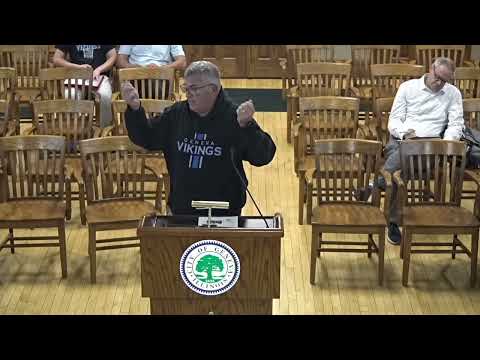
The applicant, who identified himself as Keith, told the commission he had sought multiple opinions and that a repair contractor who inspected the windows said the sash and sash weights show so much “play” that the windows would not achieve a tight seal even after restoration. “He said ... you could pick up one handle of the window and drop it down,” Keith said, summarizing the repair contractor's assessment that the historic sash characteristics would persist after work. He said preserving the look of the house is important but that maintenance and energy loss were driving his preference for replacement.
Commissioners focused on how to interpret the commission's window policy language about “feasible” and “cost-effective” repairs. Commissioners noted the policy allows aluminum‑clad wood or other contemporary alternate materials where repair is not feasible. One commissioner observed the difference between the repair and replacement quotes was roughly $4,000 in total for the windows under discussion and said that percentage difference could tip feasibility judgments.
Commissioners and staff also discussed specific product details: Pella and Andersen proposals, simulated‑divided lights versus interior spacer bars, and Fibrex as an acceptable material under the city policy. Staff confirmed the applicant included storm sash, screens and related work in the repair comparison so that bids would be apples‑to‑apples.
After discussion, a motion to accept the Andersen Fibrex replacement with full divided lighting, matching external and internal colors to existing windows was moved and seconded. The motion carried; roll call in the transcript recorded at least one named affirmative vote (Dean Zellner: “Aye”) and subsequent “Aye” responses before the meeting moved on. The action was recorded as approved and staff said they would finalize permit paperwork for the building department.
The commission separated discussion from decision in the record: members said they exhausted preservation options and weighed both functional utility and economic cost before approving a replacement they considered visually consistent with the historic façade.
The applicant may still pursue grants or incentives mentioned later in the meeting; commissioners noted the existence of a city adaptive‑reuse grant program but did not condition the approval on grant funding.
Commissioners asked staff to document in the file the factual basis for the feasibility determination (estimates, inspection notes and the scope of repairs considered) so future similar cases are judged consistently.