Get Full Government Meeting Transcripts, Videos, & Alerts Forever!
Get email alerts on the Natural Resources Code topic
No spam. Unsubscribe anytime.
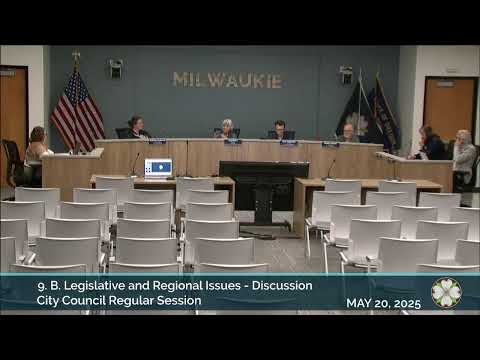
Council Continues Hearing on Natural Resources Code Update; Staff to Rework Bench/Exemption Language
Summary
City planners presented proposed updates to Milwaukie92s natural resources code to align tree rules, add a narrowly constrained clear‑and‑objective path for small disturbances in water quality resource areas, and simplify habitat mapping procedures.
The Milwaukie City Council continued a public hearing on proposed changes to the city92s natural resources code after staff reviewed a package of amendments that would better align tree regulations, create a narrowly defined administrative path for limited disturbance of water quality resources, and simplify how habitat conservation area (HCA) mapping is updated.
Senior Planner Brett Culver summarized the draft changes and the reasons staff brought them to council. The amendments aim to: (1) reduce duplicative reviews by better integrating the recently revised tree code with resource protections in the zoning code; (2) provide a limited clear‑and‑objective review path for some water quality resource (WQR) disturbances that can stand in for discretionary decisions in constrained residential lots; and (3) clean up the HCA mapping language and procedures because regional data sets previously referenced are not consistently maintained.
On the limited disturbance concept, staff proposed a conservative formula to allow small, ministerial approvals for sites with already constrained amounts of non‑habitat area. Culver said the draft caps a single WQR disturbance at 800 square feet, subject to site thresholds, native tree retention, proximity to the top‑of‑bank or wetland edge, and a required restoration plan for temporary disturbance. The intent is to provide a predictable path for limited housing‑related improvements while preserving the city92s most protected water features as a general rule.
Council members and planning commissioners asked detailed questions about implementation. Several asked how the code would classify the quality of a WQR, how the 800‑square‑foot figure was chosen, and whether small park furniture or benches installed near a water feature should be exempt. Staff described field examples and photos of existing benches and sidewalk pads and said they had reduced an earlier proposal from 5 square feet of disturbance to 3 square feet in a draft exemption for “at‑grade” outdoor furniture — but staff and councilors noted the ownership question (publicly owned parks vs. privately accessible natural areas) needs more work because some community‑accessible natural sites are owned by conservancies rather than the city.
Culver also said the HCA layer the city uses was initially supplied by Metro at a regional scale, and the draft code clarifies how the city will verify and adjust mapped HCA boundaries during site review; the intent is to avoid repeated formal map change procedures for minor verification corrections while still preserving a clear link between zoning and mapped resources.
No amendments were adopted at the hearing. Councilors and staff agreed the package largely addresses needed clarifications, but asked staff to revisit the language governing small exemptions (benches, picnic tables, very small pads) and the public‑property limitation added to that exemption. Planning staff asked for time to rework the wording so the exemption does not unintentionally exclude community‑access natural areas that are not city‑owned. Council continued the hearing and asked staff to return with refined language; the council set a continuation date for a future meeting to finalize the ordinance after the bench/exemption language is refined and staff completes requested clarifications.
The hearing included no public testimony requiring immediate staff responses; staff reported one written comment previously submitted to the planning commission and said other notifications generated informational inquiries. Planning staff will return with revised ordinance text and updated findings as requested.