Get Full Government Meeting Transcripts, Videos, & Alerts Forever!
Get email alerts on the Comprehensive Plan Land Use topic
No spam. Unsubscribe anytime.
Plan Commission directed to update comprehensive plan after strategic land‑use survey highlights demand for trails and connectivity
Summary
The Plan Commission was directed to start an update of Riverwoods' comprehensive plan, and trustees heard a Strategic Land Use Committee report showing residents rated sidewalks, paths and connectivity highest among desired amenities.
Trustees voted to direct the Plan Commission to begin updating Riverwoods' comprehensive plan, and the board received a presentation from the Strategic Land Use Committee that prioritized sidewalks, multiuse paths and improved connectivity as top resident requests.
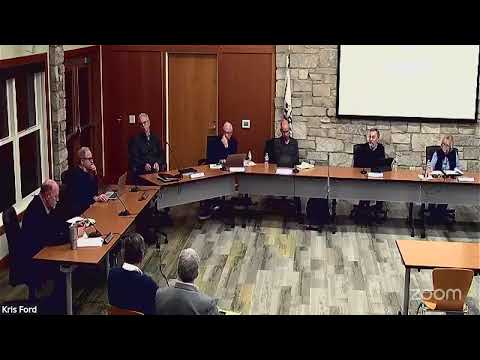
Chair Breakoff of the Plan Commission noted the commission had not met for several months and proposed starting chapter‑by‑chapter updates to the 2019 comprehensive plan. Trustee Jamerson moved and trustees approved directing the Plan Commission to proceed with an update at its earliest convenience.
Separately, Trustee Clayton presented the Strategic Land Use Committee's survey results and site review. The survey (open Jan. 6–Feb. 7) collected 355 contributions, of which committee analysis treated 76 unique IP addresses and 92 unique responses as the core sample. The committee reported the top requested amenity was sidewalks and paths (both natural trails and roadside sidewalks) and the top requested improvement was walkability and connectivity.
The committee reviewed village properties and opportunity sites including the Village Hall campus, the Chianti wetlands parcels, the Federal Life parcel, the former fire station site, the woodland preserve, the community garden and portions of the Wolters Kluwer property. Findings included that Chianti contains high‑quality wetlands unsuitable for development but suitable for passive recreation and an educational boardwalk; the woodland preserve has existing pathways but limited parking and access; and a 7.8‑acre Milwaukee Road parcel within the village has potential for more active recreation.
The committee recommended a two‑track strategy: short‑term, low‑cost "wins" (expand the community garden, complete raised pathways west of Village Hall, improve access to the woodland preserve); and long‑term planning tied to larger redevelopment opportunities (negotiate community amenities on the Wolters Kluwer redevelopment and retain the Federal Life parcel for active recreation if the site is not redeveloped commercially).
Trustee Trevino asked whether the survey had frequency‑of‑use data; the committee and consultants said the survey asked how residents currently use open space but the sample size and survey design did not yield reliable estimates of hours or frequency of use. Chair Breakoff observed that the lands ideas overlap with the draft sustainability and climate action plan and recommended coordination.
Why it matters: the board gave the Plan Commission an explicit charge to update the village's comprehensive plan and received a prioritized list of resident preferences and candidate village properties to guide short‑term investments and conversations with developers.