Get Full Government Meeting Transcripts, Videos, & Alerts Forever!
Get email alerts on the Vehicle Use Policy topic
No spam. Unsubscribe anytime.
Franklin County adopts vehicle-use policy requiring driver-record checks
Summary
The Franklin County Commission voted to adopt an amended vehicle use and travel expense policy that authorizes checks of employees' driving records and directs the county to begin reviewing current drivers to seek insurance savings and reduce liability exposure.
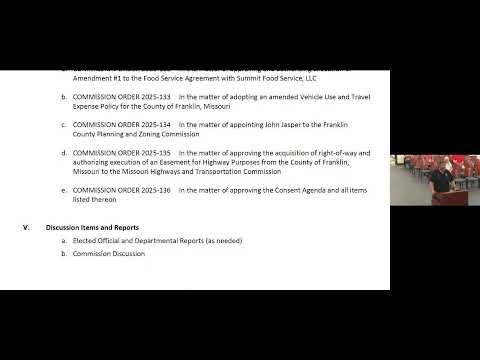
The Franklin County Commission voted to adopt an amended vehicle use and travel expense policy that requires checks of employees' motor vehicle records and authorizes the county to begin reviewing current drivers, the commission said during its public meeting. The commission approved the change as Commission Order 2025-133.
County commissioners and staff discussed when the checks will start, who will run them, and how the county should pay for the checks. Commissioner Angela asked for clarity on the effective date and whether the checks would be done annually, noting that records are run at hiring and asking, “So annually, will that then start January 2026 or annually starting effective when this is passed?” The commission chair and county staff responded that they plan to begin reviewing the current list of drivers promptly and then run reports on an annual basis going forward.
Officials discussed costs and administration. Staff said individual motor vehicle record checks cost about $5.17 each and estimated Franklin County likely has between 100 and 200 employees who drive county vehicles, which yields roughly $1,000 in annual costs at the low end. Jeanette Stevens of the clerk’s office was identified in the meeting as the person who currently maintains driving records for the county. Commissioners debated whether Human Resources or the clerk should oversee the checks and whether costs should be paid from the general fund and then charged back to departments or billed directly to departmental budgets.
The purpose, commissioners said, is to reduce liability and to obtain better insurance rates. One speaker described the county’s exposure under sovereign-immunity limits and cited the need for an insurance policy to cover a potential gap; commissioners noted the county’s insurance provider recommended running motor vehicle records and may be able to run them if authorized. As one commissioner said, if the costs of running the records exceed the expected insurance-rate savings, the county can revisit or terminate the policy.
The commission approved Commission Order 2025-133 by voice vote. The motion passed and the chair announced the order had been approved.
Implementation steps identified during the meeting included: beginning a review of current drivers immediately, determining whether the insurance company can run records without county cost, clarifying whether HR or the clerk will maintain and monitor records, and deciding how to allocate the $5.17-per-record cost among departments or the general fund. No dollar-amount funding decision for ongoing checks was adopted at the meeting.