Get Full Government Meeting Transcripts, Videos, & Alerts Forever!
Get email alerts on the School Closure Facility Consolidation topic
No spam. Unsubscribe anytime.
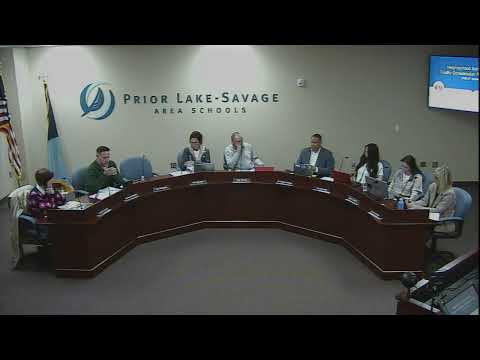
Prior Lake-Savage Area Schools presents plan to close one elementary, move district office and redraw boundaries
Summary
District leaders proposed closing Westwood as a neighborhood elementary, relocating the district services center to Greenwood, and selling the district office to help cover a projected budget shortfall; board postponed action to July while staff prepares boundary scenarios, staffing plans and sales steps.
Board Chair White and district staff presented a proposal Thursday to consolidate facilities, including closing Westwood Elementary as a neighborhood school, relocating the District Services Center (DSC) into Greenwood, and marketing the current DSC property for sale.
The proposal, presented as a first draft, would be used to reduce structural costs so the district can meet an estimated $4 million in additional reductions the administration says will be required for the 2026–27 school year if state funding does not change. Chair White asked administration to delay any vote until a July board meeting so staff could answer questions and vet boundary and staffing consequences.
Superintendent Thomas said the district has run “a very lean system” and is facing a mix of factors — flat enrollment, state underfunded mandates and local revenue shortfalls — that together are creating the budget pressure. “This is a very challenging conversation that we have to engage in,” Thomas said, adding that staff will bring vetted recommendations and are not seeking action at the work session.
Director Powers, who led the facility analysis, said staff examined multiple scenarios and identified Westwood as the most feasible neighborhood school to remove from the elementary rotation because it has the lowest projected enrollment and does not house the district’s Spanish-immersion program. Powers described Greenwood as structurally easier to adapt for combined district office, community education and some special-education functions and said the DSC building is a commercially zoned property that the district could market.
Powers estimated an as‑is sale value for the DSC of roughly $2.5 million to $3.5 million and described an internal projection that combined moving and remodeling costs might be offset in part by sale proceeds. He said a commercial realtor (Saron Properties) provided the valuation estimates; the board asked for that supporting documentation. Powers also warned of the risk of “mothballing” unused school buildings, citing examples from other districts where closed schools sat empty for years.
Staff identified several implementation tasks if the board ultimately approves a consolidation plan: redraw attendance boundaries, relocate central-office services and IT infrastructure, plan staffing assignments, and estimate transportation cost changes. Marcus Moazzo, the district’s director of technology, confirmed ongoing conversations with the district fiber vendor and said “they've ensured that we have a 10 gig connection to that site,” noting fiber termination and relocation would be part of the move cost.
Administration laid out timing constraints the board must consider: the district needs to notify the Minnesota Department of Education (MDE) of an intent to close a building by mid-October to meet enrollment and staffing timelines for the 2026–27 year. Human-resources staff said May 1 is the typical target for notifying employees of tentative assignments and recommended boundaries and staffing scenarios be available well before that to avoid disrupting kindergarten registration and open-enrollment planning.
Board members pressed staff on specifics: how sale proceeds could be used (capital-only proceeds vs. operating needs), whether the district would place conditions on a sale, how special-education and SAGE/gifted programming would be accommodated, and whether moving district staff into an existing school building (high school, middle school, Edgewood) might be preferable to renovating Greenwood. Director Powers and other staff said they would provide the analyses and the supporting valuations and cost estimates requested by directors.
After discussion the board did not vote and directed staff to continue preparing the materials and boundary scenarios and to accept written questions from board members before the next meeting. Chair White recommended the board defer formal action until July to allow additional vetting and community engagement; several board members agreed. Until the board takes formal action, the district will treat the proposals as recommendations and continue planning work.
The board meeting materials and staff comments included these quantifiable clarifications from the session: previous budget reductions of roughly $3 million to $4 million in past cycles; a projected biennium deficit staff described as $5 million to $6 million; district building utilization around 70 percent of capacity; approximately 1,420 open‑enrolled students into the district and about 867 leaving; the Spanish‑immersion program draws “over a hundred” open‑enrolled students; life‑skills center‑based special‑education enrollment increased from about 39 to about 65 in recent years; and an internal staff estimate that roughly 50–60 central‑office staff would be affected by a DSC relocation. Transportation cost changes were stated to be “unknown” until boundaries are redrawn.
Next steps staff outlined to the board included producing three boundary scenarios, providing the real‑estate valuation and sale‑process documentation used for the DSC estimate, detailing estimated remodeling and IT relocation costs for Greenwood versus other buildings, and producing staffing and timeline plans tied to MDE and district staffing deadlines. Board members requested those materials and said they will submit specific questions in writing to administration ahead of the next work session.
The board’s work-session discussion emphasized that any closure or boundary change would be local action; staff noted the only state filing required is notifying MDE of an intent to close by the mid‑October window. The board will revisit the topic in a future work session (June 9 or June 16 calendar options were discussed) and expects a decision timeline that would allow boundary work and staffing assignments to proceed for the 2026–27 school year if a closure is approved.