Get Full Government Meeting Transcripts, Videos, & Alerts Forever!
Get email alerts on the Conditional Use Storage topic
No spam. Unsubscribe anytime.
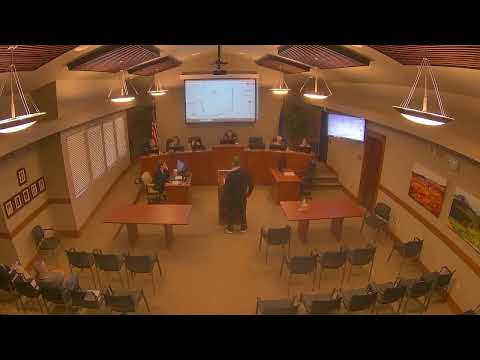
Planning commission defers decision on conditional use permit for storage at parcel with long neighbor disputes
Summary
Parowan staff presented a contentious application from Russell Emery for a conditional use permit to allow RV and truck storage on commercially zoned land; the commission set a public hearing after staff recited a history of code violations, neighbor complaints and suggested restrictive conditions.
The Parowan Planning and Zoning Commission took no final action on a conditional use permit application from Russell Emery for storage of RVs and trucks on a commercially zoned parcel, instead scheduling a public hearing after staff described a lengthy history of code violations, neighbor complaints and operational concerns.
City staff told the commission the application was received too recently to permit required 300‑foot notice and a public hearing at this meeting, but staff offered background and cautioned commissioners to be “very judicious.” Staff said there is “a history of nuisance‑like conditions” on the property, that Emery had at times lived in an RV on the site in violation of city ordinance, and that the city has concerns about an unpermitted water connection and possible sewer use. Staff said the city’s record shows prior enforcement actions and negotiated agreements that, staff alleged, have not been honored.
The planner listed suggested preconditions for any future permit decision: site cleanup, “absolutely no living on the site in stored RVs by him or his customers,” operating hours limits, no utilities plugged into stored RVs, a legitimate business EIN and building permits before work proceeds, fencing between commercial and residential where applicable, and an automatic revocation clause if criminal prosecution for specific conduct succeeds. The planner said these were suggestions intended to mitigate documented concerns and noted that some issues are hard to prove (for example, proving living in an RV), so operational limits and monitoring might be considered.
Applicant representative Dennis Cheek told the commission Emery is not living on the property, that the owner wants to clean up the site, and that the proposed storage use could improve the parcel’s marketability. Emery addressed the commission directly and disputed several city allegations: “I don't dump sewage. I don't have a septic. . . . I'm a father. I'm a grandfather. I'm not a monster,” he said, and denied current residence at the site.
The commission confirmed it cannot approve or deny the permit without the required public notice and hearing. Staff said the city must provide at least a 10‑day notice to neighbors within 300 feet; the commission set a date to publish and hold the required public hearing so neighbors and the applicant can present evidence and comment. The scheduling of a public hearing does not indicate approval or denial; the commission will consider testimony, evidence and any recommended conditions at the public hearing before making a final decision.