Get Full Government Meeting Transcripts, Videos, & Alerts Forever!
Get email alerts on the Shoreland Ordinance topic
No spam. Unsubscribe anytime.
Beltrami County holds public hearing on planned shoreland ordinance changes; action paused pending DNR sign-off
Summary
Beltrami County Commissioners opened a public hearing on proposed amendments to the county shoreland ordinance and heard staff outline reorganized lake tables, clarified definitions and modest changes to lot-size, setback and resort-density rules; the board will await Minnesota DNR conditional approval before voting.
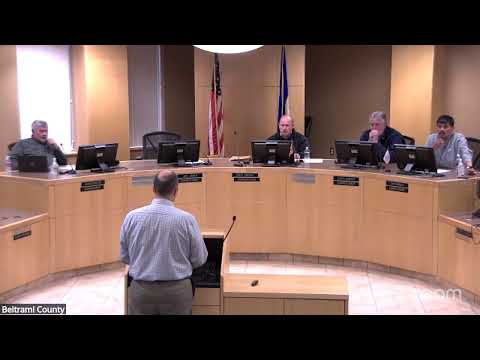
Beltrami County Commissioners opened a public hearing on proposed amendments to the county shoreland management ordinance and heard a staff presentation outlining reorganized tables, clarified definitions and several modest standard changes. Brent Rood, Environmental Services Director, presented the draft and said the county will wait for conditional approval from the Minnesota Department of Natural Resources before asking the board to adopt the ordinance.
Why it matters: The shoreland ordinance governs land use along lakes and rivers across Beltrami County. Changes to definitions, lot-size standards, setback rules and resort-density calculations affect property owners, townships planning for sewer, and shoreland development patterns on lakes including Upper Bridal Lake, Lake Bemidji and Upper Red Lake.
Rood told the board the revisions are a “smaller bite” than a previous overhaul and are intended to make the ordinance “easier to use and understand.” He summarized that the planning commission held a public hearing on April 7, revised the draft, and on April 28 voted to recommend approval to the county board. Rood said he has been in contact with a DNR staff member and that the county is still working through questions with the agency; he said, “we are waiting for the DNR official the conditional approval they'll give.”
Key proposed changes described in the presentation include:
- Definitions and organization: lake and river lists will be combined and alphabetized so property owners can find their lake by name rather than by classification. Several definitions (bluff, top of bluff, deck vs. patio) are clarified.
- Deck and patio height: the height threshold that distinguishes a deck from a patio would change from 12 inches to 30 inches to align with building-code railing requirements.
- Lot sizes: the draft proposes raising the GD lot-size minimum from 20,000 to 30,000 square feet, a change Rood said would primarily affect Upper Bridal Lake because wetlands there make the smaller lot standard impractical for building homes, septic systems and wells.
- Sewered areas: the draft includes provisions that would allow smaller lots in areas where Northern Township intends to provide sewer service around Lake Bemidji; Rood said those changes correspond to existing Minnesota DNR allowances for sewered shoreland.
- Setbacks and DNR harbors: the draft would allow a reduced setback in some locations that are classified as DNR harbors (for example, some canals on Upper Red Lake) by applying roughly half of the typical setback in constrained situations so reasonable proposals can be considered without frequent variances.
- Resorts and density: the ordinance would change the way resort density is calculated (moving from an average livable-floor-area formula to a structure-based approach). Rood said the intent is to simplify and make density easier to predict, but commissioners raised concerns the change could reduce allowed density for some existing resorts that currently benefit from the old livable-area formula. Rood said he has spoken with at least one resort owner and that staff will continue conversations before returning to the board.
- Guest quarters and other structure rules: the minimum height for guest quarters proposed to increase from 15 feet to 20 feet; some prescriptive language (for example, mandating shared septic systems) was removed.
- Solar collectors: the draft adds standards for residential solar collectors to prevent lining shorelines with panels; the staff noted standards will limit placement in shoreland areas.
- Septic and earthmoving: septic-system standards will be referenced to the county septic ordinance rather than duplicated; for large earthmoving projects the draft clarifies when a land-use or conditional-use permit will be required (Rood said “if they're moving over 20 dump trucks of dirt, they're gonna need a conditional use permit to do that”).
- Permits: staff proposed extending the standard land-use permit length from one year to two years to reduce administrative burden.
Commissioners discussed the resort-density change at length. One commissioner noted that in some cases the new measurement would increase allowed square footage in tier 2 but could reduce allowances in tier 1 for resorts with larger lodges; Rood said staff will continue to work with resort owners and will not require removal of existing structures during implementation.
The board opened the hearing on a motion by Commissioner Gould, seconded by Commissioner Carlson, and closed it by motion of Commissioner Carlson, seconded by Commissioner Winger. No final adoption vote was taken; the board will not act on the ordinance until the county and DNR finalize conditional approval and staff return with any revisions.
What’s next: Rood said staff will continue conversations with the DNR and with affected resort owners and townships, “measure twice and cut once,” and bring a final ordinance back to the county board for action after receiving conditional DNR approval.