Get Full Government Meeting Transcripts, Videos, & Alerts Forever!
Get email alerts on the Pretrial Supervision topic
No spam. Unsubscribe anytime.
County reports early gains from six-month pretrial supervision pilot; jail-day savings estimated
Summary
A six-month county report on a new pretrial supervision program showed 25 people served (32 cases), mostly low-risk placements, with preliminary data suggesting reduced jail days and a notional cost savings to the county.
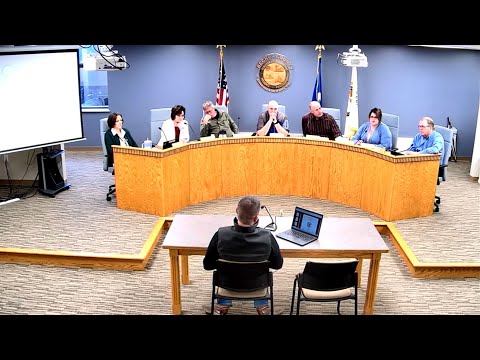
Becker County probation staff presented a six-month status report on a pretrial supervision program the board authorized in November. Staff told commissioners the program served 25 individuals covering 32 cases over the first half-year and that most participants remain compliant.
According to the presentation, 20 clients were male and five female; 17 clients were from Becker County, seven were from outside the county and one was listed as homeless. Two clients completed their supervision during the six-month period and 22 were continuing successfully; staff reported one unsuccessful termination (absconded or violated conditions). Risk screening results showed four people assessed as high risk, eight as medium and 13 as low. The MINPAT screening instrument was used for 16 eligible clients, and staff used additional assessment where eligibility rules previously excluded a client.
Probation staff reported 2,015 combined days of community supervision across the cohort and used a $60 per-diem benchmark to estimate a potential jail-cost avoidance of roughly $120,000 compared with holding those individuals in custody. The presenters emphasized that the notional savings are an estimate because the county still operates the jail and associated fixed costs; the program’s value, they said, is compliance monitoring, reduced unnecessary jail time and earlier access to treatment services.
Program staff said they will provide another report at 12 months and a multi-year analysis later to show recidivism, failure-to-appear rates and net fiscal impact.
“Right now we’re at the six-month review. We’re going to do another one in a year and then another in two years, which will give you a compiled data set of how pretrial has been going and the continued efforts that are being put behind it,” the probation presenter said.