Get Full Government Meeting Transcripts, Videos, & Alerts Forever!
Get email alerts on the Childcare Ffn topic
No spam. Unsubscribe anytime.
Lakes & Prairies program outlines supports for family, friend and neighbor child caregivers
Summary
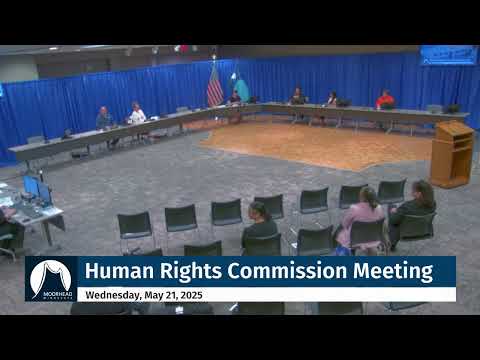
A navigator from Lakes & Prairies Community Action Partnership described services for informal child caregivers — including training, equipment kits, help navigating the Child Care Assistance Program and steps to become an eligible nonlicensed provider — during a Moorhead Human Rights Commission meeting.
Migdalia Caballero Medina, a family friend and neighbor (FFN) navigator with Lakes & Prairies Community Action Partnership, told the Moorhead Human Rights Commission that her team offers outreach, training and material supports to informal child caregivers and helps them navigate state child-care payment systems.
Caballero Medina said the program supports caregivers who provide care outside licensed settings — “grandma, friend, a neighbor” — and that staff offer home visits, trainings, mental-health referrals and free materials such as books and first-aid kits. “Anytime you need help with anything, we are here to support you,” she said.
The presentation stressed why the work matters: Caballero Medina noted that early childhood development is concentrated in the first five years of life and that lack of child care depresses workforce participation, quoting a caregiver: “I can work because I found childcare.” The navigator said Lakes & Prairies supports families searching for care, offers professional-development opportunities for providers and helps employers and policymakers understand child-care needs.
Program services described in the meeting include start-up and retention grants for caregivers starting or struggling to maintain informal care, quality-rating and improvement supports (noted to operate in North Dakota), professional-development trainings, and the FFN-specific work that connects caregivers to resources and scholarships. Caballero Medina said FFN kits handed out by the program can include blocks, puzzles, bilingual books, music, booster seats, smoke and carbon-monoxide detectors and other safety items. She also said the program offers CPR trainings and assistance applying for scholarships and grants.
On payment and eligibility, Caballero Medina explained that the Child Care Assistance Program (CCAP) is the family-facing benefit and that caregivers who wish to receive CCAP must become “legal nonlicensed” providers under county procedures. She said requirements for that status can include being at least 18 years old, U.S. citizenship or lawful-resident status, a background study (including fingerprinting) and pediatric CPR; counties administer the process and timelines vary. “It could be a month. It could be less. It could be more,” she said, describing how processing time depends on submitted documents and background checks.
Commission members asked how many children a nonlicensed provider may care for; Caballero Medina said informal caregivers may care for their related children plus one unrelated family, and that the program can then help them “take them through the phases” toward a licensed operation if they want to expand and accept state payments.
Caballero Medina asked the commission to “bring us to the table” when local stakeholders discuss child-care policy and funding, and to help promote the FFN work in the region. She identified the program’s geographic coverage as 21 Minnesota counties plus work with tribal nations (Red Lake and White Earth) and quality-improvement work in parts of North Dakota.
The presentation included brief video excerpts from FFN navigators and caregivers across Minnesota; the meeting’s technology issues delayed some playback but the presenters summarized the key supports shown in the video. The commission did not take a formal vote on the presentation; staff and commissioners discussed follow-up outreach and promotion.
Ending: Caballero Medina and her colleague offered to provide additional local contacts and materials to city partners and invited the commission to promote FFN services and to include Lakes & Prairies staff in local child-care planning discussions.