Navy, NNSA say warhead for sea‑launched cruise missile selected; senators press risks of integrating nuclear weapon on Virginia‑class submarines
Get AI-powered insights, summaries, and transcripts
SubscribeSummary
The Navy and NNSA described standing up a program office and selecting a warhead family for the nuclear‑armed sea‑launched cruise missile (SLCM‑N). Senators raised concerns about integration impacts on Virginia‑class attack‑submarine conventional missions, cost and industrial capacity.
Navy Strategic Systems Programs and the National Nuclear Security Administration told the Senate subcommittee they have established a program office for the nuclear‑armed sea‑launched cruise missile (SLCM‑N) and have selected a candidate warhead family, while senators voiced concerns about integration cost, platform impact and schedule risk.
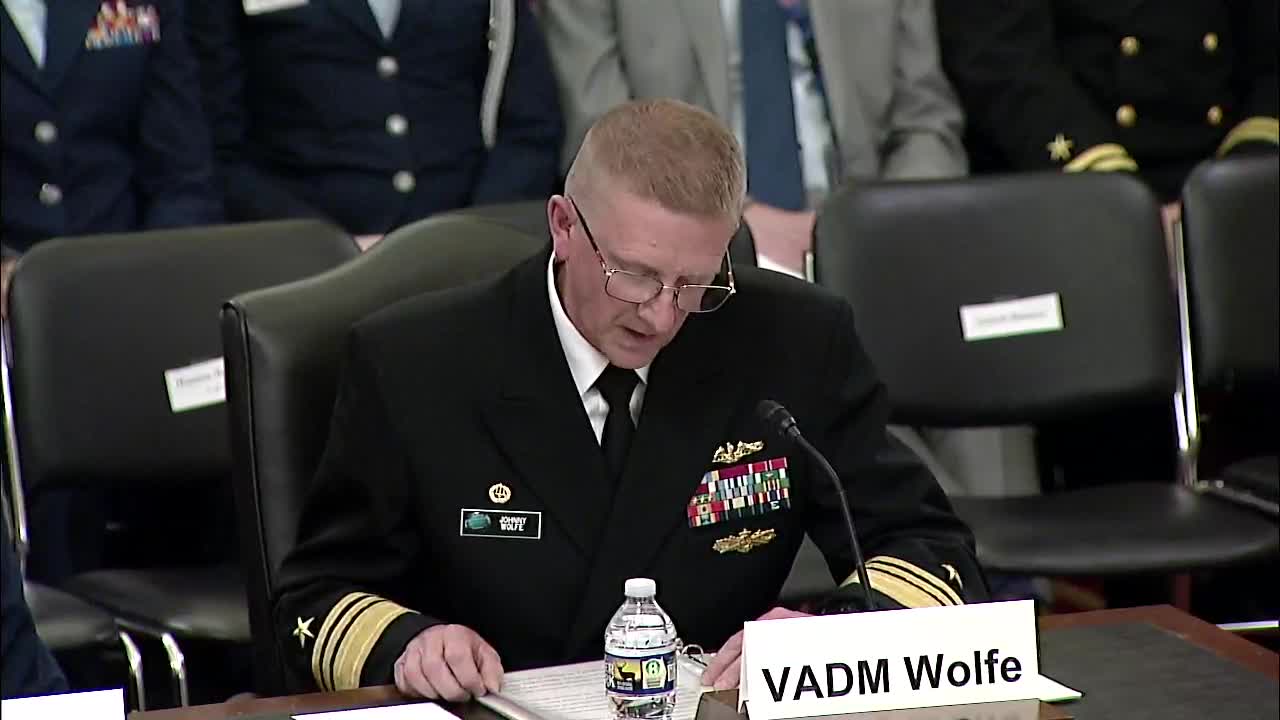
Admiral Johnny Wolfe, director of Strategic Systems Programs (SSP), said SSP "has established a SLCM‑N program office" and is conducting assessments to deliver a weapon system that meets requirements. NNSA Deputy Administrator David Hoagland said his agency ran a disciplined warhead selection process and identified the W80 family as most suitable for the Navy’s requirements.
Why it matters: The SLCM‑N program would introduce a nuclear‑armed cruise capability on a surface or submarine platform and requires engineering integration, weapons‑to‑platform interfaces, and security and handling infrastructure. Senators warned that integrating a nuclear weapon onto the Virginia‑class attack submarine could reduce the platform’s conventional capability and impose significant additional costs.
Technical and schedule points - SSP said the office has been able to "focus on what are the things that we need to do to get to meeting the requirement of 2034," and to work with NNSA on warhead family selection. - NNSA described a warhead selection process using more than 30 metrics and chose the W80 family as the best fit for the program’s requirements. - Witnesses briefed the committee that platform integration will require new infrastructure, crew training and procedures; Admiral Wolfe said the greatest integration risk is adapting the weapon into a platform not originally designed for nuclear weapons.
Congressional concerns Senator Tammy Duckworth and Senator Mark Kelly (remarks in transcript) and others raised specific operational concerns: possible impacts on torpedo loadouts, changes to port access and maintenance, additional personnel aboard the submarine, and long‑term costs. Senator Kelly said he was “concerned we come out of this … and the likelihood that we have to use the conventional part of this … is rather high,” and warned that altering the Virginia‑class could reduce a current conventional advantage.
Industrial base and cost Witnesses noted the effort will require industrial capacity for warhead work and integration work across suppliers; senators and witnesses discussed initial program funding and cited CBO cost estimates for the SLCM‑N program development and production that suggest multi‑billion‑dollar program costs beyond initial appropriations.
Ending note: Navy and NNSA witnesses said they will continue joint work with STRATCOM, the fleet and industry to refine concepts of operations and integration approaches, and emphasized early warhead selection and a standing program office are intended to accelerate design and cost‑informed decisions.