
Senate appropriators warn FY26 "skinny" budget would undercut DOE research and clean‑energy programs
Get AI-powered insights, summaries, and transcripts
Subscribe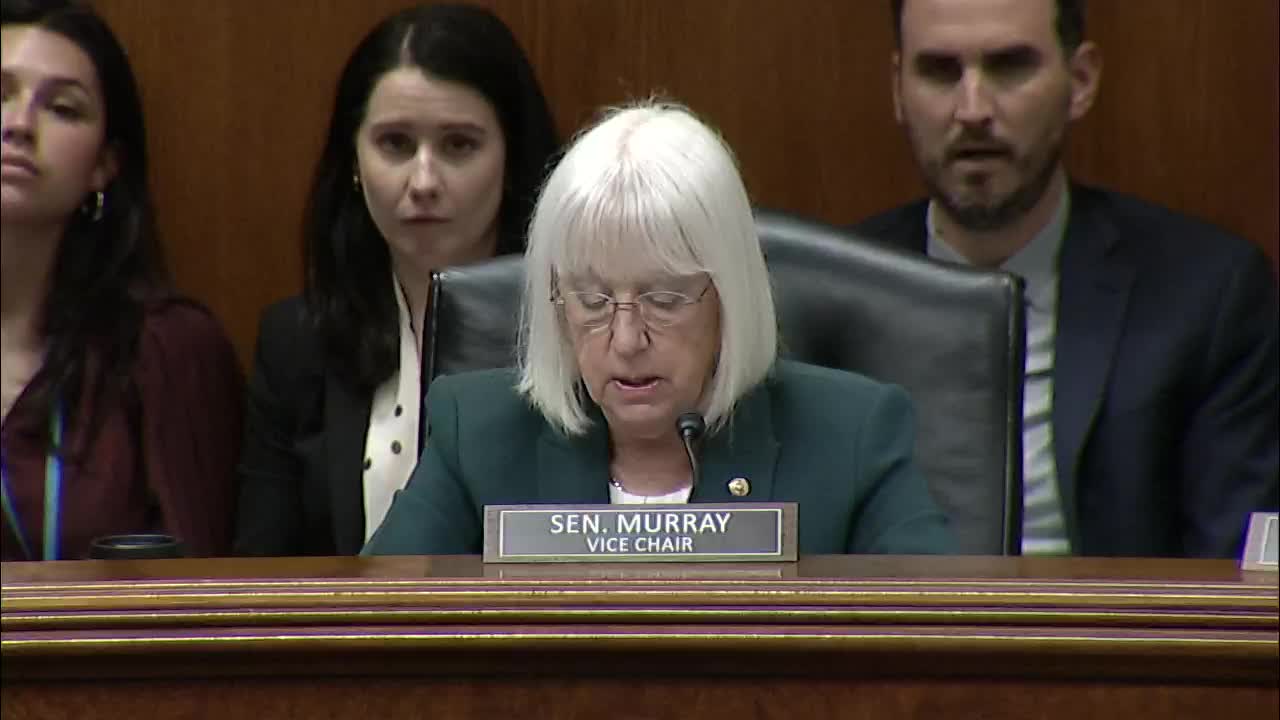
Summary
Senators from both parties criticized the administration's proposed FY26 "skinny" budget for steep cuts to the Office of Science, the Office of Energy Efficiency and Renewable Energy and programs created by recent laws, and raised concerns about Hanford cleanup funding and strategic priorities.
WASHINGTON — At a Senate Appropriations subcommittee hearing, Energy Secretary Chris Wright defended the Trump administration’s fiscal year 2026 “skinny” budget, while several senators warned the proposed cuts would undermine U.S. research capacity, clean‑energy deployment and long‑running cleanup obligations.
Ranking Member Senator Patty Murray told Wright the budget “completely guts the nondefense half of your mission,” and accused the administration of proposing steep reductions to core programs. “Your budget proposes ripping 75% out of the energy efficiency and renewable energy program,” Murray said, and said the proposal would “slash $1,100,000,000 from the Office of Science” and cut roughly $15,000,000,000 in programs created by the Bipartisan Infrastructure Law.
Why it matters: Senators framed the proposed reductions as inconsistent with stated administration goals to spur innovation, lower consumer energy costs, and strengthen U.S. competitiveness. Several members pointed to specific consequences: reduced research funding for AI, fusion and quantum computing; less support for hydrogen hubs, battery storage and advanced manufacturing; and the risk of delaying the Hanford high‑level waste mission if funding is held flat.
Wright said the request would “return DOE to its core mission” and prioritize affordable, reliable energy and nuclear stewardship. He argued the labs have “drifted into things that are not fundamental basic science” and that DOE can “be both increase efficiency and drive innovation.” On nuclear energy, Wright emphasized commercialization of advanced reactors and the Loan Program Office as a financing tool.
Senators pushed back on the message and the mechanics of the proposal. Senator Cooney urged the department to provide a full budget request beyond the single‑page “skinny” outline that committee staff had received, and asked how cuts to the Office of Science would not impede work on AI or quantum research. Wright said the labs’ top priorities would not be cut but did not provide a complete line‑item budget that day.
Several senators also warned that freezes, contract cancellations and staffing reductions at DOE have already slowed projects that Congress funded. Murray said the department had not supplied a required FY25 spending plan and accused the administration of “impoundment” if it withholds funds Congress has appropriated.
The hearing included repeated requests for more detailed budget documentation and for assurances that statutory cleanup milestones, including at Hanford, would not be delayed by flat or reduced funding. Wright told lawmakers DOE would follow law and review projects, but senators pressed for concrete accounting of programmatic impacts.
Next steps: The committee left the record open for additional questions for the record and said it expects a fuller budget submission and briefing materials. Several senators signaled they will seek more detailed line items and staffing information before advancing appropriations work.