
House subcommittee presses VA on specially adapted housing: processing times, caps and outreach gaps
Get AI-powered insights, summaries, and transcripts
Subscribe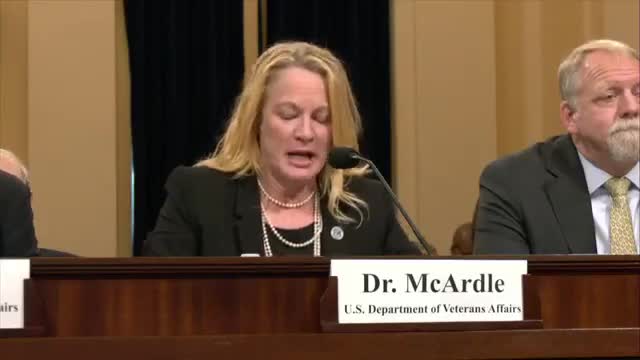
Summary
Witnesses and lawmakers discussed delays in Specially Adapted Housing (SAH) grants, the program’s funding caps, recent administrative changes and outreach shortfalls that may leave some newly disabled veterans unaware of benefits.
WASHINGTON — Lawmakers on the House Veterans' Affairs Subcommittee on Economic Opportunity and VA officials spent a large portion of a Wednesday hearing examining the Specially Adapted Housing grant program, debating how quickly veterans can learn about and use the benefit and whether grant caps keep pace with construction costs.
The SAH program provides grants and related assistance so severely service‑connected disabled veterans can adapt homes for accessibility. Dr. Rachel McArdle, deputy executive director for Rehabilitation and Prosthetic Services at Veterans Health Administration, told the committee the program approved more than 2,000 grants annually in six of the last seven fiscal years and that VA centralized financial management for SAH disbursements in fiscal 2020. Jason Latona of Veterans Benefits Administration said VA approved over 2,300 grants in fiscal 2024.
Why it matters: SAH grants fund modifications or construction that allow veterans with catastrophic injuries to live independently. Lawmakers and nonprofit partners warned that paperwork, regional inconsistency and cost pressures can delay needed work — in some cases for months to more than a year — and can leave veterans with large out‑of‑pocket expenses.
Key details from testimony: - Processing and timing: VA officials told the committee that eligibility decisions by the compensation service average three to six months depending on complexity and that, from application to delivery, specially adapted housing projects can take six to 12 months. Latona said VA has an expedited process for veterans with rapidly progressing conditions such as amyotrophic lateral sclerosis (ALS) that narrows the initial scope to speed approvals. - Grant caps and inflation: VA witnesses said the department uses an industry cost‑of‑construction index to adjust maximum grant amounts annually. The hearing record shows the SAH maximum grant was $121,000 in the current fiscal year. Witnesses and members said further indexing or higher caps may be necessary to match local construction and labor cost spikes. - Administrative changes: VA centralized financial management for SAH disbursements in 2020 and eliminated third‑party escrow agents and a $500 escrow fee, a change VA said strengthened internal controls and reduced unnecessary fees. VA is modernizing the SAH Special Home Adaptation System; the first phase is expected to begin in July 2025. - Outreach and transition assistance: Members pressed VA to integrate information about SAH and other adaptive benefits into military Transition Assistance Program (TAP) briefings so service members who are medically separating learn about eligibility before they leave the service. Chairman Van Orden and others urged VA to proactively notify eligible veterans by mail, email and phone. - Nonprofit partnership experience: Tom Landwermeyer, president and CEO of Homes for Our Troops, told the committee his organization has built 409 specially adapted homes in 45 states and uses SAH eligibility as a screening tool; he said coordination with VA can speed approvals and that regional inconsistencies persist.
Committee direction and follow‑up: Members asked VA for data showing staffing levels, timelines and regional variation for SAH reviews and inspections. Several representatives said Congress should consider legislative fixes — for example, raising grant caps or tying annual increases explicitly to an inflationary index — if administrative adjustments do not close the gap between grant amounts and local construction costs.
Ending: VA officials told lawmakers they are improving automation and project oversight and will provide additional data to the subcommittee. Lawmakers pressed for faster delivery for medically urgent cases and for stronger outreach so eligible veterans learn about SAH before leaving active duty.