Get Full Government Meeting Transcripts, Videos, & Alerts Forever!
Get email alerts on the Budget topic
No spam. Unsubscribe anytime.
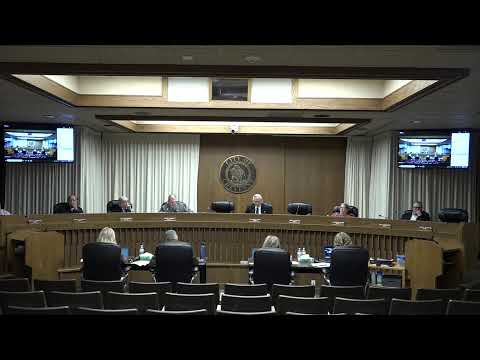
Cheyenne committee approves $74.4 million FY2026 budget after votes on policing, pay and planning
Summary
The Cheyenne Committee of the Whole recommended approval of a $74,417,876 fiscal 2026 municipal budget on May 20, 2025, adopting a set of amendments including a $100,000 reserve allocation for police overtime focused on speed and noise enforcement and rejecting several proposed shifts of functions and one-time cuts.
The Cheyenne Committee of the Whole voted May 20 to recommend adoption of an ordinance appropriating $74,417,876 for the city's fiscal year beginning July 1, 2025, after debate and a series of amendments to the draft budget.
The vote followed a full review by the mayor's office and the city treasurer and weeks of department work sessions. Mayor Collins presented the book and described the spending plan as "a balanced budget of $74,417,876, up 3.8% or $2,770,000 from this time last year." The ordinance was advanced to the full council as amended; the budget ordinance takes effect July 1, 2025.
The budget and why it matters
The nut of the package is that the city presented a recurring budget that, according to the mayor, offsets a $1,775,000 revenue loss tied to recent residential property tax legislation through new revenue from commercial annexation and other sources. "The annexing of our North Range Business Park increased revenues and made up for the revenue we lost with the recent legislation reducing property taxes," Mayor Collins said. The mayor and treasurer told the committee they view the annexation and increases in franchise fees and building permits as central to balancing the plan while keeping recurring expenditures aligned with recurring revenues.
Major line items, revenue trends and staffing
The draft covers roughly $74.4 million for municipal operations and capital. Major revenue drivers listed in the presentation include sales taxes, franchise fees, property taxes, state direct distributions, building permits and several mineral- and vehicle-related receipts. The mayor highlighted a 48% increase (about $2.6 million) in gas and electric franchise fees and a 31% rise ($710,000) in building-permit revenue; he also flagged a projected sales-tax decline of approximately $900,000 (about 3.65%). Cable franchise fees and lottery receipts are each forecast lower by about $100,000.
The budget as presented contains 451.1 full-time-equivalent positions, a decrease of 0.3 FTE from the current year, and includes one net new authorization: an additional prosecutor in the city attorney's office. "The office currently has 2 prosecutors handling about 6,000 cases a year. This volume is unmanageable," Mayor Collins said, supporting the single new position.
Officials cautioned that the city will absorb about $1 million in firefighter salaries after a federal SAFER grant that funded nine firefighter positions for three years expires in FY2027.
Public comment and nonprofit partners
Several nonprofit leaders and agency directors addressed the committee during public comment as part of the budget discussion. Erin LeBlanc, director of the Laramie County Senior Center, described growing demand for senior services and thanked the city for continued support. Britney Tennant of the Cheyenne Animal Shelter and Casey Mullins of public health each described services their organizations provide and the funding frameworks they use; Mullins reiterated a memorandum of understanding that splits certain public-health operating costs between the city (55%) and Laramie County (45%). Those remarks were part of the committee's broader review of community-support line items.
Key amendments and formal outcomes
The committee considered several amendments during the session. Notable outcomes included:
- Police overtime for speed and noise enforcement: The committee approved an amendment to allocate $100,000 from general fund reserves to the police overtime line (the administration will report a salary/benefits breakdown). Mayor Collins and police leaders said the allocation will support targeted enforcement of speeding and vehicle-noise violations; Collins said early patrols had yielded citations and equipment violations. The city intends to use overtime funds for Friday- and Saturday-night targeted enforcement and other proactive patrols.
- Transfer of parking enforcement from the police department to the compliance division: Councilwoman Aldridge moved, with Councilman Moody seconding, to move the parking division budget and positions out of the Cheyenne Police Department and into the Department of Compliance. The proposal prompted extended debate over staffing, code and ordinance amendments, appeal processes, and potential community friction. Chief Francisco said the existing parking function includes a manager, two full-time parking-control staff and one part-time staffer and that "those folks would go with the function" if it were moved; he also said parking enforcement can create avoidable conflict for sworn police. Director Eric Fountain (Compliance) said he would prefer to re-staff a transferred division rather than inherit existing employees. City Attorney John Brody warned the council that moving the function would require revisions to city code and the enforcement/appeal process. The motion failed on a council roll-call: the committee recorded five members opposed and four in favor.
- Reallocation to increase a city-council staff member's salary: Councilwoman Aldridge moved to reduce professional-development lines in several departments and add roughly $22,550 to the city council's regular-employee pay line to address a perceived pay disparity for a longtime city staff member. The measure sparked discussion about job classifications, pay bands, and precedent for exceptions. Human-resources staff and the treasurer advised that a reclassification and updated job description is the preferable process; HR committed to delivering a reclassification review to the council by the next Committee of the Whole. The amendment failed.
- Plan Cheyenne (comprehensive/community plan) funding: Council members debated a $250,000 line for a Plan Cheyenne update (listed as a one-time professional-services item). Planning Director Charles Blum and staff said the plan governs land-use policy and contains action statements the city routinely relies on for zoning and development decisions; they argued a consultant-aided update would correct conflicts among the plan, the transportation element and the parks-and-recreation plan. Opponents called it a high-cost update when targeted amendments might suffice. A motion to remove $235,000 from the planning professional-services line and return it to reserves failed.
Other amendment attempts: Several other proposed cuts or reallocations were discussed and did not pass, including motions to reduce mayoral memorial/trophy supplies and to remove $50,000 in community-support funds for Art Cheyenne. The committee considered, but did not adopt, multiple smaller adjustments to professional-development and contracted-services lines.
Discussion versus formal direction
Throughout the hearing, council members and staff clearly distinguished discussion items from formal actions. Multiple speakers pressed for follow-up work rather than immediate changes ' for example, Director Fountain requested time to propose a staffing plan if parking enforcement were to be moved; HR recommended an updated job description and market re-evaluation before making individual pay exceptions. The city attorney cautioned that code revisions and appeal-process changes would be required for some proposed transfers.
What happens next
The Committee of the Whole recommended adoption of the FY2026 budget as amended; the ordinance and the record of amendments will be forwarded to the full City Council for final consideration. The ordinance covers the fiscal period beginning July 1, 2025, and the administration and departments said they stand ready to implement the agreed changes and to provide requested reclassification and staffing analyses at upcoming meetings.
Quotes from the meeting
"We are on the home stretch for our fiscal 20 26 budget," Mayor Collins said, presenting the spending plan. "This budget does include 1 new position, a prosecutor in the city attorney's office. The office currently has 2 prosecutors handling about 6,000 cases a year. This volume is unmanageable."
Chief Francisco, Cheyenne police chief, described the difficulty of mixing law-enforcement duties with parking enforcement and said, "folks would rather get arrested for murder than get a parking ticket," arguing some communities separate the functions to reduce conflicts with citizens.
Councilwoman Aldridge argued for moving parking to the compliance division, saying in debate, "parking is not about fundraising, but it's about compliance." Director Fountain responded that any transfer should include time to re-staff and retool the function.
Ending
The committee completed its review after nearly three hours of presentation, public comment and amendment debate. The governing body approved a set of changes that prioritize targeted public-safety enforcement and defer several one-time work items pending further staff analysis; the committee forwarded the budget to the full council for final adoption before the July 1 start of FY2026.