Get Full Government Meeting Transcripts, Videos, & Alerts Forever!
Get email alerts on the Foreign Policy topic
No spam. Unsubscribe anytime.
Secretary of State says U.S. will refocus foreign policy on national interest; USAID programs folded into State Department
Summary
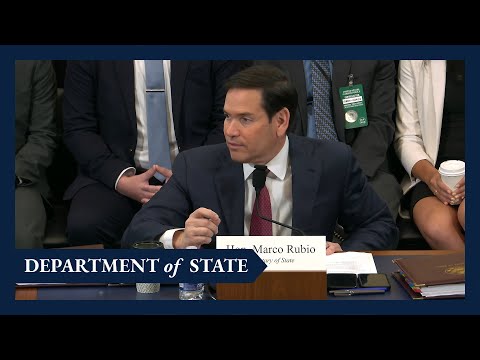
An official identified in the transcript as the secretary of state said the United States will reorient foreign policy around national interest, place USAID programs under the State Department and prioritize measurable outcomes, citing a recent rapid response on Syria as an example.
An official identified in the transcript as the secretary of state told listeners the United States will return its foreign policy “to be centered on our national interests.” He said every dollar and action must “have measurable outcomes” that make the country “safer,” “stronger” or “more prosperous.”
The secretary described a reorganization that moves some USAID functions under the Department of State and cancels certain USAID contracts that “didn't serve the national interest,” saying foreign aid should be part of the State Department’s policy toolbox rather than “charity.” He said ambassadors and regional bureaus should drive policy because “the best ideas in that building come from the ground up from our embassies.”
Why it matters: folding USAID programs into the State Department changes which offices will control foreign-aid decisions, the secretary said, and he told the audience the change will produce “more accountability and more oversight opportunities for your committee down the road.” He said the United States will remain “the largest contributor of foreign aid” and will still give more than the next 10 countries combined, with Germany the nearest donor behind the U.S.
The secretary used Syria as an example of why faster, decentralized decision-making matters. He said action last week — including sanctions relief followed by EU follow-on steps — enabled regional partners to provide donor funds to a transitional authority and possibly avert collapse into civil war that “would become a playground for ISIS and other jihadists.” He argued that the traditional, centralized interagency process could have taken six to nine months and left the U.S. unable to act.
He framed the reorganization and contract cancellations as part of a broader priority-setting approach. He said the United States entered an era of “near peer competition” about 12 to 14 years ago and that policy must be geared to confront a “near peer competitor and adversary in the state of China.” He urged that foreign-aid programs be consistent with embassy agendas in each country, noting that ambassadors sometimes found USAID programs “in contradiction” with missions on the ground.
The remarks also included operational details and limits he described: he receives “10, 15 select cables” each night from posts abroad and criticized internal clearance processes that require many sign-offs and can delay decisions. He said some USAID contracts were canceled as part of the reorganization while others were retained and integrated into State’s toolkit.
The secretary referred to his confirmation hearing and to a desire to move decision-making closer to embassies and regional bureaus; he said the changes aim to produce measurable outcomes tied to U.S. national interest. He thanked the audience at the end of his remarks.