Get Full Government Meeting Transcripts, Videos, & Alerts Forever!
Get email alerts on the Summer Safety Initiative topic
No spam. Unsubscribe anytime.
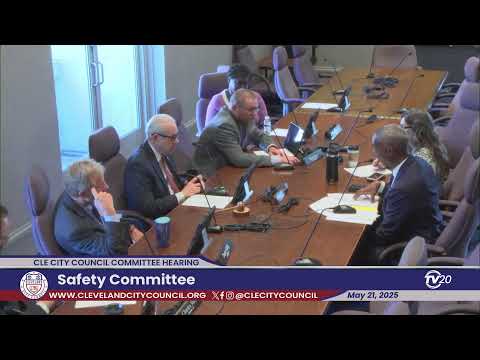
Officials brief committee on Summer Breeze Initiative; council raises concerns after large Airbnb party and response delays
Summary
City public-safety officials outlined the mayor’s 2025 Summer Breeze Initiative — a concentrated, multiagency summer safety effort focused on four hot-spot areas — and described federal, state and local partnerships; council members pressed the administration about a recent large Airbnb party that they say took hours to disperse and about 911/311
City public-safety officials briefed the Cleveland Public Safety Committee on the mayor’s summer safety plan — the 2025 “Strike Force Summer Breeze Initiative” — describing a targeted, multiagency approach to combat violent and quality‑of‑life crimes during the summer months and saying the effort will concentrate resources in four identified hot-spot areas while maintaining citywide services.
The director said the initiative will run through the summer months (May through August) and is based on mapping Part 1 crime statistics to identify concentrated areas on Cleveland’s East and West sides. The initiative, the director said, combines an “all-of-government” approach: building-and-housing, streets, aging services and others addressing quality-of-life issues while specialized law-enforcement units and federal partners focus on crime suppression. He said strike-force partners include ATF, DEA, FBI, HSI and the U.S. Marshals Service; local partners include the county prosecutor’s office and state agencies such as the Ohio Highway Patrol, the adult parole authority and the Ohio Criminal Investigative Unit. The initiative will also use warrant sweeps and real-time crime-center intelligence.
Committee members asked how the initiative will affect regular zone patrols and response times. The director said the summer initiative relies primarily on specialized units and partner agencies and “doesn’t have anything to do with our regular patrols,” though patrol officers may be asked to assist on overtime when needed. He reassured members that “the cards [zone cars] will still be assigned to the respective districts” and that other parts of the city will continue to receive service.
Council members pressed the administration about a recent incident in which an Airbnb rental became a large party that dozens or hundreds of people attended. Councilman Casey described calls beginning about 10:30 p.m., and said 911 callers were initially told “we have no cars to send.” He said the State Highway Patrol arrived and reported waiting for Cleveland police; Casey said it took “a call from me to the chief at 01:00 in the morning” to get city cars from other districts to the scene and disperse the event. The administration acknowledged the incident, said the chief and director had discussed it, and agreed it should not have taken that long; the director said supervisors should have authority to escalate responses without a council member contacting the chief.
Council members also discussed the recently passed nuisance ordinance, urging residents to report complaints through 911 to build the CAD record that supports nuisance abatement. The director said the new nuisance law strengthens the city’s ability to hold property owners responsible and that Assistant Director Schachner was meeting with police command staff to explain procedures for applying the law.
Council members asked the administration and law department to consider additional steps regarding short-term rentals, including notification procedures for event rentals; staff said they would work with the law department on possible legislative or administrative options. Council members also asked for a briefing comparing zone-car plans before and during the initiative to assess whether concentrated activity creates service gaps; the director agreed to provide a more detailed presentation on the initiative and its relationship to regular patrol operations.
Action/Status: The committee received the briefing. The administration agreed to provide a more detailed summer-initiative briefing for council, to clarify how patrol assignments and overtime will be used, to review supervisor decision-making and to work with the law department on Airbnb/nuisance follow-up.