Get Full Government Meeting Transcripts, Videos, & Alerts Forever!
Get email alerts on the Solid Waste Recycling topic
No spam. Unsubscribe anytime.
Raymore reviews curbside trash, recycling and monthly bulk pickup as staff plans resident education campaign
Summary
At a council work session, city staff and Constable Sanitation described service levels, recycling contamination, hydraulic/automation risks and the operational challenges of monthly bulk-item pickups; staff said it will roll out a coordinated resident education campaign and will review hauler rates in June.
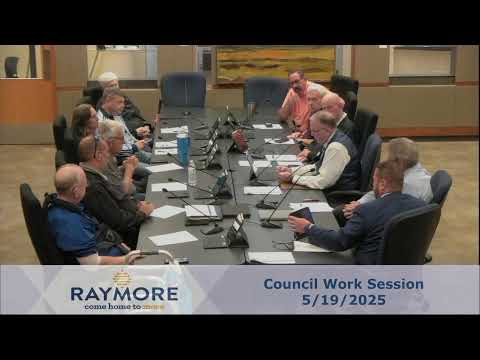
Raymore City Council heard a city staff and Constable Sanitation presentation on the city’s curbside solid-waste program, including recycling contamination, hydraulic-system spills and the operational strain created by monthly bulk-item pickup, city staff and contractor representatives said.
City staff said the briefing aimed to outline current service statistics, performance measures and planned next steps so staff and the hauler can “continue to refine and essentially make that service as the best it possibly can be, for the residents.” Mister Murdoch, city staff, told the council that Raymore has “over 8,000 people that are trash customers, and we have, just over 6,000 recycling customers here in Raymore.” He also said the city’s tracked miss rate “hovers right around 1%” over recent months.
The presentation emphasized three recurring operational issues: contamination of single-stream recycling, safety and maintenance concerns tied to automated hydraulic arms on side-load trucks, and the labor and routing impacts of monthly curbside bulk collection. George, a Constable Sanitation representative, described bulk pickup as “just [an] additional stream, and it’s going to challenge your capacities,” saying heavy fluctuations in participation sometimes require extra trucks and increase missed stops.
On recycling, Murdoch and Constable staff said loads are taken to a regional materials recovery facility in Harrisonville for sorting. The facility reports aggregate contamination data, not town-level figures; Murdoch said the city could ask the processor to segregate Raymore loads for a fee. George and Murdoch identified Styrofoam as a common contaminant in single‑stream recycling and urged residents to discard it with trash because it is not recyclable in the local stream.
Speakers described automation and maintenance details for side-load arms: Murdoch noted most Raymore side-load trucks use New Way or Labrie arms and listed components that can fail on those systems. The presentation and Constable staff explained the company uses Third Eye cameras on many trucks to improve visibility and incident review; George said, “We, use a company called Third Eye.” Murdoch said the operation performs pretrip/posttrip inspections, and drivers also run ground controls to exercise arms while outside the truck.
Staff and the hauler described steps the city and Constable plan to take: an education campaign to reduce contamination and curbside hazards, clearer guidance that a broken lid can be replaced without replacing an entire cart, and continued tracking of misses so Constable can respond (typically within 24 hours). Murdoch reminded the council that the contract includes an annual rate review — “Constable will submit a letter to us indicating what the index is for the year, and then a proposal for the rates for the upcoming year” — and that staff will present rate information to the council in June.
Councilmembers asked about enforcement and practical steps residents can take. Several suggested reminding residents to move vehicles off the street on collection day to improve truck access and to pull cans in promptly after pickup to reduce wind-blown litter. Constable staff said drivers sometimes stop for yard-waste placed early or on off days, and that crews become familiar with regular routes over time, which helps service consistency.
The presentation closed with staff and the hauler offering to customize outreach materials for Raymore and to coordinate a summer/fall campaign leading into the holidays; no formal action or vote was taken at the meeting.