Get Full Government Meeting Transcripts, Videos, & Alerts Forever!
Get email alerts on the Parking Enforcement topic
No spam. Unsubscribe anytime.
Safety committee debates towing for repeat parkers and higher parking fines
Summary
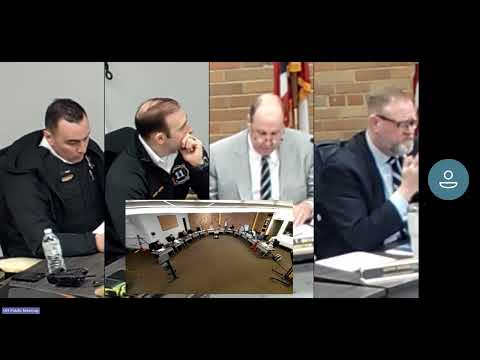
University Heights safety committee considered amendments to the towing/impound rules and an increase in parking fines, heard operational limits from police, and deferred a final decision on towing while referring a fines proposal to city council.
University Heights safety committee members on April 7 discussed proposed changes to code language that would allow impounding vehicles after repeat parking violations and considered raising parking fines.
The committee focused on amendments to “code section 40407(a)(1) and (a)(10)” and related impound and release language and the separate parking-penalties proposal in code section 452.999. The police chief warned that a six‑month “look back” to identify people with two or more violations would generate a large administrative list; a test run produced roughly 1,000 matching entries. Committee members asked staff to pursue options to limit that burden before sending towing language to council.
Why it matters: city officials said tickets alone have not stopped repeat illegal parking around John Carroll University and other areas. The proposed changes would let officers impound vehicles when a registered owner has two or more parking citations (paid or adjudicated) within a six‑month period or when a vehicle has two outstanding citations. Supporters said stronger consequences could deter chronic violators; opponents warned of disproportionality if people who already paid tickets were towed.
Police operations and administrative limits came to the fore. Police reported the current tow list based on two outstanding unpaid citations typically contains 20–40 vehicles; extending the search to a six‑month window that includes paid/adjudicated citations would create roughly 1,000 data points to review. The department said the current tote/record is shared as a read‑only file accessible to officers, and that making a searchable, field‑usable list would require changes to reporting systems and workflow.
Chief Rogers told the committee, “with just a 6‑month look back period … that generates approximately 1,000 data entry points that we have to consider and go through to try to generate a parking toll list.” He warned officers would need an integrated, searchable system in their cars to use such a list efficiently.
Committee members offered alternatives to reduce administrative burden: raise the threshold from two to three or more offenses in six months to target higher‑frequency offenders; start the list prospectively (e.g., begin compiling on a future date) to avoid an immediate, large retrospective workload; or raise fines instead of expanding towing. One councilmember said, “If you pay 2 tickets, but you still decided you're gonna keep parking illegally, that's telling me you want your car towed,” while others cautioned that towing a vehicle after the owner had paid prior tickets would be unusual and possibly disproportionate.
Officials also noted practical constraints: the city’s existing towing contract and ordinance authorize the director of public safety to designate motor vehicle pounds; United Towing has been the contracted vendor for many years. Printing new tickets with revised fine amounts will require court proofing and could take weeks to months; staff said they have a significant inventory of existing tickets to resolve. Tow response for nonblocking parking removals typically ranges around a half hour, though priority calls for accidents get faster service.
Action and next steps: the committee did not advance the towing amendment to council at this meeting. The chair withdrew a motion to move the towing item to council and asked police and the law department to bring back options at the next safety committee meeting, including: (1) operational approaches to produce an integrated, searchable tow/report list; (2) modeling the effect of changing the repeat‑offender threshold (2 vs. 3+); and (3) ticket/printer timing. Separately, the committee voted to refer the parking penalties amendment (code 452.999) — which would set a $75 fine if paid within 30 days and $150 for later payment — to the next city council meeting for consideration.
The committee also heard that enforcement alone has not yet resolved the problem in areas adjacent to John Carroll University; some members said university parking policy and off‑campus shuttling agreements should be pursued in parallel. Police agreed to return with technical options to manage the data and a clearer operational plan before council consideration.
The committee expects further staff reports and revised drafts at its next safety meeting before taking any final legislative action.