Get Full Government Meeting Transcripts, Videos, & Alerts Forever!
Get email alerts on the Criminal Justice Treatment Courts topic
No spam. Unsubscribe anytime.
Mohave County recovery court honors graduates; judges, clinicians emphasize intensity and community supports
Summary
At a Mohave County Adult Recovery Court commencement, Superior Court Judge Rick Williams and program staff highlighted the program’s strict supervision, expanded admissions and community treatment partnerships as several participants from Bullhead City, Lake Havasu and Kingman graduated.
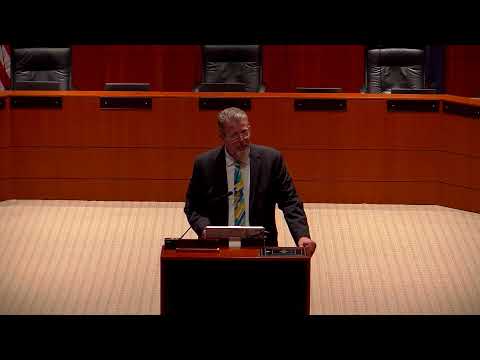
Mohave County Superior Court held an adult recovery court commencement recognizing participants who completed the county’s treatment-court program in Bullhead City, Lake Havasu and Kingman. Superior Court Judge Rick Williams, who helps run the program, told the audience the local recovery court began in Kingman in January 2012 and is designed for people assessed as moderate- to high-risk and moderate- to high-need.
The ceremony underscored how intensive the program is and why staff call graduation a milestone. “It’s about the toughest program there is in the criminal justice system,” Judge Rick Williams said, describing a regimen that typically includes random drug testing at least twice a week, weekly meetings with probation officers and hundreds of hours of programming ranging from substance-use treatment to GED and work-readiness training.
The program’s aim is to couple accountability with treatment, officials said. Ashley La Flame, a behavioral health technician with Mohave Mental Health who addressed graduates, praised the court team and singled out Judge Williams and treatment court coordinator Susan Davidson. “Judge Williams strikes the perfect balance between accountability and support,” La Flame said, and added that the team updates practices when evidence indicates a change is needed.
Graduates and program staff described both personal progress and program changes that broadened access. Graduate Jessica Famaza said she was once told by a presentence investigator she was not a recovery-court candidate because of her charges; she told the ceremony that “the program has since then changed the admission requirements, which has allowed more people to receive the benefits of the recovery court program.” Famaza also said the team’s involvement helped her after an accident and that she believes the program “has saved my life and saved me from myself.”
Speakers connected recovery to community supports. La Flame cited research and told the room, “Research has shown that connection is the opposite of addiction,” language Judge Williams later echoed in his closing remarks, saying the program succeeds because it brings courts, probation, treatment providers and community groups together. The transcript names Mohave Mental Health, WestCare, Revive, Southwest Behavioral Health, Terros, Hildy’s House, Oxford House and Hope Lives among organizations that provide services or housing for participants.
Several participants described rough starts, sanctions or arrests and credited residential programs, sober-living houses or peer support for helping them sustain recovery. Judge Williams said participants commonly spend about 14 to 18 months in the program and may attend roughly 100 court hearings before graduating. The ceremony included promotions through program phases as well as formal graduation recognitions; staff presented commemorative coins and certificates and invited family members for photographs.
Family members, probation staff and community providers attended the ceremony. Judge Williams closed by calling the recovery court a community program rather than only a court or probation initiative and urged graduates to maintain the connections they built during treatment.
The commencement included remarks and personal stories from graduates including Shane Bradshaw, Jessica Famaza, Sapo ("Sop") Asuna, Julia, Jonathan Springfield, Melissa Braun, Jennifer Downey, Steven Tyler Heldt, Juanita Ballard, Leticia Fortune, Georgie (Lupe) and John Morrow. The program’s treatment-court staff and partner agencies were named frequently during the ceremony.