Get Full Government Meeting Transcripts, Videos, & Alerts Forever!
Get email alerts on the Parks Recreation topic
No spam. Unsubscribe anytime.
Troy residents urge council to add flood‑resistant baseball complex to parks master plan
Summary
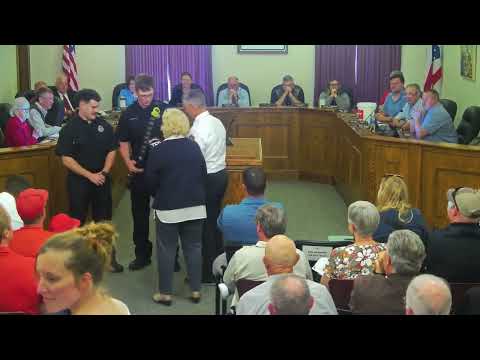
Dozens of residents and youth‑sport leaders urged Troy City Council on May 19 to include development of new flood‑resistant baseball fields in the city’s parks master plan and to begin a transparent discussion about funding.
Dozens of residents and youth‑sport leaders urged Troy City Council on May 19 to include development of new flood‑resistant baseball fields in the city’s parks master plan and to begin a transparent discussion about funding.
“We are not asking for extras, we’re asking for the essentials, safe, playable, dependable fields,” said Grant Westfall, speaking for his father, Miami County Commissioner Wade Westfall, and the local baseball community. Westfall asked the city to use land acquired with help from the Paul G. Duke Foundation, the Patent Tom Robinson Fund and the Miami County Park District.
Why it matters: Speakers said regular flooding at the current Troy complex forces frequent game cancellations and heavy volunteer effort to restore fields, and prevents Troy from hosting tournaments that bring visitors, hotel stays and local spending.
Organized youth and regional baseball groups framed the request as both a quality‑of‑life and economic development issue. Greg Beamer, vice president of baseball operations for Midwest Ohio Baseball, told council the league “brings teams. We bring families. We bring opportunity when infrastructure is in place.” Leanne Stewart, director of the Miami County Visitors and Convention Bureau, said visiting teams would generate hotel and restaurant revenue.
Local coaches and parents described repeated spring flood damage and related problems. “I don’t think I remember a spring that didn’t flood on these young kids,” said Frosty Brown, who said he helps run Troy Junior Baseball’s concession and operations. Joyce Dean, a longtime volunteer and real‑estate agent, said the complex’s bathrooms have black mold and that concession spaces are unusable after floods.
Coaches also cited practical barriers beyond flooding: Ryan Raderman, a T‑ball coach, urged improved parking and handicap accessibility for grandparents and spectators who rely on strollers or wheelchairs. Several speakers described the volunteer time required to repair fields after storms; Paul Wick, president of Troy Junior Baseball, said volunteers had worked for weeks to reopen a single field this season.
Some speakers quantified the potential regional draw. Ian Unger said tournaments can include “100 to 125 teams” across age groups, an estimate the council used to illustrate how tournaments could benefit Troy businesses if dependable fields were available.
What residents asked the council to do: include flood‑resistant fields in the parks master plan, open a transparent dialogue on the project’s cost and funding partners, and collaborate with the local baseball community on design and scheduling. Multiple speakers emphasized that they do not expect the city to fund the entire project alone but asked for municipal leadership in planning and prioritizing the project.
Council action: No ordinance or resolution was introduced or voted on during the meeting; the topic was aired during the public‑comment portion and returned in council comments for later consideration.
Community context: Speakers said the site under consideration is city‑owned land the community acquired several years ago with foundation and county involvement. League and recreation leaders told the council they want fields that are reliable for practices, local league games and larger tournaments that keep families and economic activity in Troy.
Looking ahead: Speakers asked the city to begin feasibility work and cost estimates and to coordinate with volunteer organizations on maintenance and operations. Council did not set a timeline or direct staff to prepare legislation during the meeting.