Get Full Government Meeting Transcripts, Videos, & Alerts Forever!
Get email alerts on the Enterprise Reimbursement topic
No spam. Unsubscribe anytime.
City finance director defends enterprise reimbursement plan, urges new study to update methodology
Summary
Management services director Christie Donnelly reviewed the city’s enterprise reimbursement program, explained its legal and accounting rationale, and recommended a new reimbursement study in early 2026; council members debated the method’s defensibility, potential fiscal impacts and legal risks but took no formal vote.
Christie Donnelly, Lompoc’s management services director, opened a lengthy review of the city’s enterprise reimbursement plan at the May 20 council meeting, saying the interfund charges recover measurable general‑fund costs that enterprises—water, wastewater, electric and solid waste among them—impose on shared services.
Donnelly told the council that the 2016 HF&H consultant study had recommended full‑cost allocation for three categories (public safety, government facilities and right‑of‑way maintenance) and that the city had undercollected versus the 2016 baseline. She recommended a phased correction in recent budgets and proposed commissioning a new reimbursement study in early 2026 to ensure legal defensibility and updated methodology.
"When our utility operations use public safety services or city‑owned facilities, it's only fair that they reimburse the general fund for those costs," Donnelly said, adding that the enterprise reimbursement is not a revenue measure but a cost‑recovery practice intended to prevent cross‑subsidy under Proposition 218.
The presentation included dollar figures from the prior study and staff calculations: the 2016 report allocated about $5.08 million; the city was receiving roughly $3.08 million in reimbursements in 2022; staff proposed a multi‑year phase‑in target near $6.5 million adjusted for CPI. Donnelly said eliminating the reimbursement program without replacement would force $3.11 million in general‑fund cuts, primarily affecting police and fire, and estimated layoffs consistent with that shortfall.
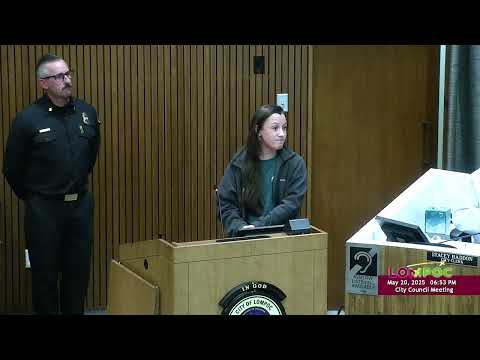
Council members and the mayor questioned the study’s methodology and past consultant choices. Councilmember Ball recalled an earlier ad hoc review and litigation threats in other jurisdictions and urged caution; several council members supported a new, defensible consultant study. Police and fire officials in the chamber warned that abrupt reductions could impair emergency response.
No formal council action was taken at the meeting. Donnelly recommended initiating a new reimbursement study in January or February 2026 and continuing phased adjustments in the interim; council members verbally supported securing an updated, defensible analysis before making further rate or assessment changes.