Get Full Government Meeting Transcripts, Videos, & Alerts Forever!
Get email alerts on the Community Wildfire Protection Plan topic
No spam. Unsubscribe anytime.
County Fire Safe Council outlines Lompoc Valley wildfire plan, requests local participation
Summary
The Santa Barbara County Fire Safe Council presented a draft Community Wildfire Protection Plan for the Lompoc Valley, described the plan’s nonregulatory role and requested city help recruiting focus‑group participants and partner signatures from county and state agencies.
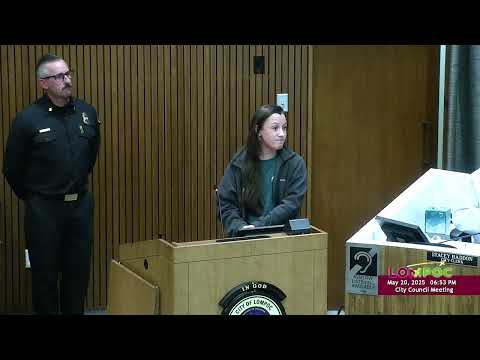
Monica Matthews, project manager for the Santa Barbara County Fire Safe Council, introduced a proposed Community Wildfire Protection Plan (CWPP) for the Lompoc Valley at the Lompoc City Council meeting on May 20.
Matthews said the CWPP is “a plan and a process” that lists recommended fuel‑treatment projects and measures to reduce structure ignitability and that the process is as important as the final document for building community relationships and accessing grants. "A key piece of this is this document lists projects that you want to see for your community so that they can get funding at the federal level, at the state level, through private foundations," she told the council.
The Fire Safe Council, a 501(c)(3) nonprofit, said the Lompoc Valley has substantial wildfire exposure: about 85% of the valley is at high or very high hazard severity. Matthews described a development timeline that includes focus groups, a vulnerability map and signatures from the county Board of Supervisors, County Fire and typically Cal Fire for final sign‑off.
Council members asked about the plan’s regulatory effect. Councilmember Bridge asked, "Is it an enforcement document or an information document?" Matthews answered that the CWPP is “completely nonregulatory,” adding that partners such as fire and law enforcement may have regulatory authorities but the council’s CWPP would not impose new regulations.
Matthews asked council and city staff to help recruit focus‑group participants and to advise on local partners. The presentation closed with a pledge to publicize an anticipated public meeting in mid‑2025 and to keep the council and city clerk informed about outreach.
The council took no formal vote on the CWPP; staff and the Fire Safe Council said they would return with public‑engagement dates and draft materials for review.
For residents: the Fire Safe Council maintains a project website for updates and said it will hold multiple focus groups in the valley and produce a draft CWPP by mid‑next year.