Get Full Government Meeting Transcripts, Videos, & Alerts Forever!
Get email alerts on the Geologic Hazard Budget topic
No spam. Unsubscribe anytime.
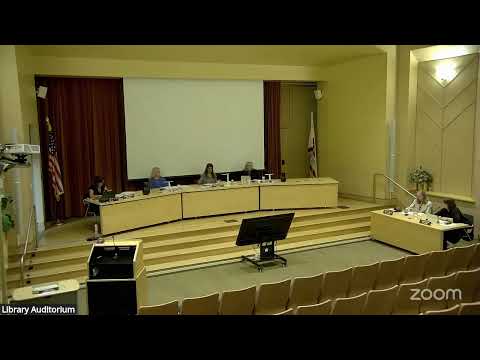
Orinda GAD approves 2025–26 budget, sets assessments at 90% of limit and OKs manager contract amendment
Summary
The Orinda Geologic Hazard Abatement District board on May 20 approved the fiscal year 2025–26 budget, set property assessments at 90% of the engineer limits for Wilder and Orinda Oaks, updated the CPI reference month, and approved an amendment to the GAD manager services contract with NGO.
The Orinda Geologic Hazard Abatement District (GAD) board unanimously approved the district’s fiscal year 2025–26 budget and set assessment levies at 90% of the engineer-determined assessment limits for the Orinda Oaks and Wilder developments during its May 20 meeting.
The action also updated the annual consumer price index (CPI) reference month to December and approved an amendment to the GAD’s service agreement with its manager, NGO, the board was told. The board approved both items by unanimous voice vote.
The budget staff presented calls for $720,785 in proposed expenses for 2025–26, including roughly $94,000 earmarked for GAD management and about $590,000 for preventive maintenance and operations. The staff report projected revenue of “a little over a million dollars” from assessments and interest and estimated the fund balance at about $4.8 million at the end of the fiscal year if no major repairs are required.
“The action being considered this evening before the board is adopt a Windagadd resolution, 2 20 25 or '25 approving the fiscal year 25, 26 budget for the Orinda GAD, setting assessment levies at 90% of the assessment limit for fiscal year 25, 26 for the Orinda Oaks and Wilder developments, and updating the annual consumer price index reference month to December,” GAD manager Harry Wellston said during his presentation.
Wellston gave the board the levy numbers the engineers set as limits and the levies the board would adopt at 90%: assessment limits of $3,695.03 for Orinda Oaks and $3,974.62 for Wilder, producing levies of $3,325.53 and $3,577.16, respectively, at the 90% rate. Wellston said the board has used the 90% levy level since fiscal year 2022–23 to allow reserve accumulation while the communities’ engineer reports are fulfilled.
Board members asked about the timing of transfers of remaining development parcels and the kinds of events that would trigger drawing on reserves. “Within maybe the next year or two, possibly,” Wellston said when asked about remaining transfers, adding that resource-agency review processes have delayed some acceptance steps. On major repairs, he said the GAD plans for responses to large-scale geologic events such as landslides or significant earth movement but has not budgeted a major repair this fiscal year.
The board’s treasurer, Doug Lesserow, introduced an amendment to the service agreement with NGO to account for an annual pay adjustment and additional work tied to transfer activity. “The services agreement was originally signed on 01/01/2012,” Lesserow said, and requested an administrative increase of roughly 2½ percent with additional amounts potentially payable when activity levels (for example, transfer work) occur.
Board members also discussed routine preventive work funded in the maintenance line: ditch and detention-basin cleaning, heavy-rainfall monitoring, weed and roadside abatement in Wilder where the GAD accepted new responsibilities, and minor slope/erosion responses. Wellston said those items are the largest share of the maintenance budget.
After public questions clarifying the GAD’s role — “a geologic hazard is any natural movement of soil or earth movement,” Wellston said — the board approved GAD Resolution No. 02/25 adopting the 2025–26 budget, setting levies at 90% of limits, and updating the CPI reference month to December. The board then approved an amendment to the NGO services contract by unanimous vote.
Board action: the budget resolution and the contract amendment passed unanimously; the meeting record shows voice votes but does not include an itemized roll-call tally.
The GAD manager said spring monitoring had been completed and that spring maintenance (weed abatement and related work) was underway; staff also said they plan minor open-space slope repairs over the summer. The staff report said current reserves are adequate to respond to significant geologic events but have not yet reached the long-term target in the original engineering forecasts.
What happens next: staff will continue monitoring, complete the spring maintenance program, and pursue remaining transfer items with developers and resource agencies. The approved budget will fund operations and continue reserve accumulation at the adopted levy rate.