Get Full Government Meeting Transcripts, Videos, & Alerts Forever!
Get email alerts on the Trust Lands Energy topic
No spam. Unsubscribe anytime.
SITLA says trust lands revenue supports schools; geothermal, uranium and coal leases expanding
Summary
The School and Institutional Trust Lands Administration outlined leasing activity, energy and mineral revenue collections for public schools, and growing interest in geothermal, critical minerals and uranium projects on trust lands.
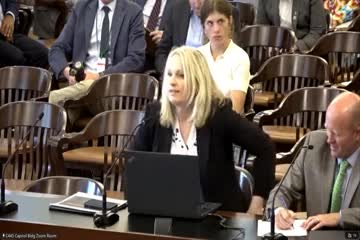
Michelle McConkie, director of the School and Institutional Trust Lands Administration (SITLA), told the committee that trust lands exist to generate revenue for public schools and other beneficiaries, and that energy and mineral leases remain a major revenue source.
McConkie said SITLA managed about 3.3 million acres of surface estate and about 4.5 million acres of mineral estate under the trust mandate and that the agency generated "just under 130,000,000 in revenue" last year, with roughly $110,000,000 going to public schools. "Our ultimate charge," she said, "is to make money for school children," and SITLA—s leaders described their work as balancing near‑term revenue and long‑term stewardship.
SITLA described recent activity in multiple commodity areas: oil and gas (UN Basin and Paradox Basin), coal (including Fossil Rock, which SITLA said is on trust lands), geothermal (including the FORGE project and private geothermal demonstrations such as the Fervo project), and minerals such as uranium, lithium and potash. McConkie said the agency completed a land exchange under the John D. Dingell framework (federal land exchange) and that those parcels are now available for development under state control.
Committee members asked about recycling and disposal responsibilities for utility‑scale solar panels; McConkie said SITLA requires reclamation plans and bonding from lessees and typically posts bonds with SITLA for cleanup while counties manage zoning and land‑use approvals.
McConkie said SITLA is actively engaging with industry on geothermal and other prospects and highlighted the agency—s role as an owner that can move faster than some federal processes because it acts more like fee land in many transactions.