Get Full Government Meeting Transcripts, Videos, & Alerts Forever!
Get email alerts on the Water Rights Royalties topic
No spam. Unsubscribe anytime.
City staff to bring formal agreement with Cimarron Terrace water users proposing higher royalties, metering and tap limits
Summary
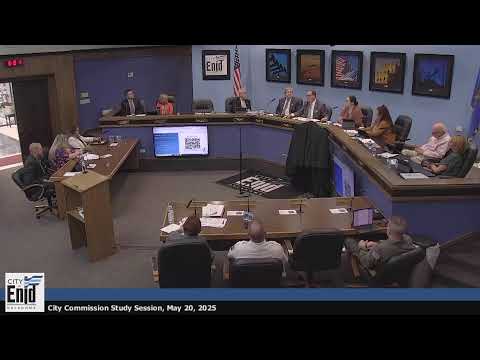
City staff told the Mayor and Board Commissioners they will return with a formal agreement for the Cimarron Terrace Water Association that would raise royalty payments to 53¢, increase minimum payments and require metering and signed addenda for existing taps; no vote was taken at the meeting.
Gerald, a city staff member, told the Mayor and Board Commissioners the city will return at a future meeting with a formal agreement with the Cimarron Terrace Water Association that would change how the city pays royalties for water drawn from well fields located in the Ames and Drummond areas.
The draft agreement would raise the unit royalty to 53¢ (indexed every five years and applied retroactive to January 2025), raise minimum payments by changing the minimum basis to an eighth-acre unit, require identification and metering of taps on city transmission lines, and include an addendum landowners must sign to limit authorized uses of those taps. "The Cimarron Terrace is, an organization that the city's worked with since the seventies," Gerald said, and the association's representative has approved a tentative version of the agreement.
Why it matters: the staff estimate for applying the new 53¢ rate to recent payments is roughly $200,000 more per year; staff said the current New Year budget includes an increase that anticipates the agreement. The changes affect owners who tap into the city's Ames/Drummond transmission lines; they do not change the rights of property owners to use separate private wells.
Key provisions discussed included: a new minimum payment structure calculated on an eighth-acre unit that staff said would make minimums higher (staff cited an example figure of about $13,800 for a six-40-acre parcel under the new minimum formula), indexing the per-unit rate to 53¢, metering of taps, and a contractual addendum that would memorialize permitted uses—staff said the old leases generally allowed one house per leasehold and livestock use up to a natural grazing capacity but prohibited commercial feedlots. Gerald said the addendum would allow the city to investigate suspected misuse, notify the owner, and, if warranted, terminate a tap.
Staff estimated the city currently has "in the vicinity of 33 plus" taps on the affected lines; the addendum process anticipates identifying those taps, having the owners sign, and then bringing those signed addenda to the commission for approval at future meetings. Gerald described the long history of informal arrangements dating to leases from the 1950s and said Carol, a staff researcher, had compiled the historical and technical material that underpins the addendum.
The commission did not act on the agreement at the meeting. Gerald said the Cimarron Terrace representative had told staff the association approved the tentative agreement internally and that staff would bring the same agreement back to the commission, "minus any changes that you might have," at a later date.
Ending: Staff will return with the formal agreement and individual addenda for signed taps for commission consideration at a future meeting; the commission did not set a final adoption date at this session.