Get Full Government Meeting Transcripts, Videos, & Alerts Forever!
Get email alerts on the Oil And Gas topic
No spam. Unsubscribe anytime.
Utah oil and gas production rises; division pushes permit reform and updated bonding rules
Summary
The Division of Oil, Gas and Mining reported rising oil and gas output, outlined permit‑processing reforms and said it will propose updates to long‑unchanged bonding requirements to protect taxpayers and landowners.
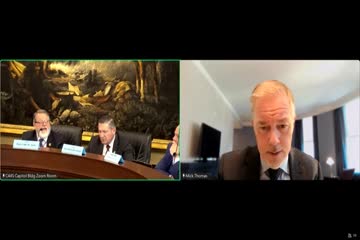
Mick Thomas, director of the Division of Oil, Gas and Mining, told the committee that Utah produced ‘‘just over 65,000,000 barrels in calendar year '24,'' and that natural gas production also increased year‑over‑year. Thomas said the state—s oil and gas industry has grown rapidly and the division is pursuing permit reform, workflow modernization and ways to assist operators through federal and state processes.
Thomas described fiscal savings the division achieved by shifting board notices and dockets to electronic delivery and by removing the requirement for an on‑site court reporter in board hearings. He also told the committee the division is working with stakeholders to modernize bonding for oil, gas and mining — the last update to bonding structure was in 2002 — and expects to present rulemaking drafts for the board to consider.
On mining, Thomas said the state has approved an expansion of the Fossil Rock coal mine in Emery County and is evaluating other coal mine applications, while also supporting fast‑track approvals for projects the administration considers critical. He described implementation of standardized reclamation cost estimators and use of best practices for bond estimates.
On oil and gas specific concerns, Representative Shelley asked about pending federal changes to bonding levels; Thomas said the state is actively monitoring federal actions and that the industry has been shifting production to fee and state lands in part to reduce federal permitting exposure. "Holistically ... making sure that the oil and gas industry in the state, especially Utah ... making sure that the regulations are modernized and favorable to the people in the industry is a primary goal," Thomas said.
Thomas emphasized the economic role of fossil fuels in the state, estimating the industry—s total economic impact in 2024 at about $17 billion and noting coal and natural gas remain important sources of dispatchable baseload power while the state pursues longer‑term options like nuclear and geothermal.